

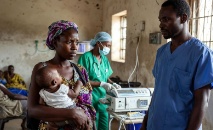

At the same time, out-of-pocket medical expenses continue to dominate household budgets, with public healthcare facilities often under-equipped, understaffed, and overwhelmed. Limited access to reliable public services ranging from consistent electricity and clean water to quality education and transportation forces ordinary Nigerians to rely heavily on extended family networks, community solidarity, religious groups, and sheer personal ingenuity to survive and protect their loved ones.
Recent discussions in Nigerian media outlets, policy think tanks, and social platforms have increasingly focused on primary healthcare reforms, the ripple effects of insecurity in various regions, and the everyday strategies families employ to prioritize survival, mutual support, and incremental progress despite deep systemic constraints.
Healthcare stands out as one of the most acute sources of strain for Nigerian families today. Many households regularly confront inadequate facilities, chronic shortages of medical professionals, and risks of negligence or substandard care that can lead to devastating, often preventable outcomes. High-profile tragedies, such as the recent death of author Chimamanda Ngozi Adichie’s young son at a private hospital in Lagos in early January 2026, have ignited widespread public outrage and renewed calls for accountability.
The case has spotlighted systemic issues including poor monitoring during procedures, shortages of essential drugs and equipment, and questions around medical decision-making in high-pressure environments. While this incident involved a prominent family, it mirrors countless everyday experiences where ordinary Nigerians face financial ruin from unexpected medical bills, sell land or possessions to cover treatment costs, or travel abroad often to India, the United Kingdom, or neighboring countries for care that should be available locally.
These patterns have fueled demands for stronger primary healthcare systems, wider adoption of national health insurance schemes that actually cover meaningful portions of expenses, aggressive reforms to retain doctors and nurses who are leaving in large numbers (the so-called brain drain), and stricter oversight of both public and private facilities to minimize negligence and restore trust.
The economic hardships that compound these healthcare challenges are equally severe and multifaceted. Persistent inflation has pushed the prices of staple foods like rice, yam, beans, garri, and cooking oil beyond the reach of many low- and middle-income households, forcing parents to make heartbreaking choices between feeding their children adequately, paying school fees, or covering rent. Rising costs for education—from uniforms and textbooks to examination fees—have led some families to withdraw children from school temporarily or shift them to less expensive (and often lower-quality) alternatives. Utility bills, particularly for electricity and fuel, consume a growing share of budgets, while unreliable power supply compels many to rely on expensive generators or solar alternatives.
In northern and central regions plagued by insecurity—banditry, farmer-herder clashes, kidnapping for ransom, and insurgent activities—violence has uprooted entire communities, separating loved ones, destroying farmlands, and eroding traditional livelihoods. Climate-related pressures, including flooding in the south and desertification in the north, further compound vulnerabilities by damaging homes, crops, and water sources.
In response, Nigerian families have leaned heavily on informal coping mechanisms: remittances sent home by relatives working abroad (especially in the UK, US, Canada, and Gulf countries), small-scale businesses run from home or market stalls, rotating savings groups known as “ajo” or “esusu,” mutual aid among neighbors, and bartering of goods and services. These strategies reflect deep-rooted cultural values of collective responsibility, ubuntu-like solidarity, and intergenerational support that have long helped Nigerian households mitigate individual hardships and maintain social cohesion even in the toughest times.
Amid these overlapping difficulties, powerful narratives of hope, adaptation, and quiet innovation continue to emerge from Nigerian communities. Many families, despite limited resources, prioritize education as the single most important investment for their children’s future parents working multiple jobs or sacrificing personal comforts so that sons and daughters can complete secondary school or pursue vocational training. Others seek out preventive health measures when possible, such as community immunization drives, antenatal clinics run by NGOs, or traditional herbal remedies combined with modern medicine.
Grassroots and community-driven initiatives have proliferated: local cooperatives providing low-interest loans for small enterprises, faith-based organizations distributing food and medical supplies during crises, youth groups organizing clean-up and security patrols in neighborhoods, and women’s associations supporting one another through childbirth, illness, and bereavement. These efforts demonstrate that resilience in Nigeria is not merely passive endurance but active, creative problem-solving rooted in cultural strengths.
Advocacy from health experts, professional bodies such as the Nigerian Medical Association (NMA), civil society organizations, and international partners like the World Health Organization, UNICEF, and the African Development Bank has grown louder and more coordinated. Experts repeatedly emphasize critical policy priorities: full and timely implementation of the national health budget (which has historically fallen short of the Abuja Declaration target of 15% of total government spending), expansion of primary care access through revitalized health centers and community health workers, accelerated enrollment in the National Health Insurance Authority schemes with better coverage for vulnerable groups, incentives to reverse medical brain drain (including improved working conditions, competitive salaries, and security for practitioners), and targeted programs to address inequality, gender disparities in healthcare access, and the specific needs of displaced populations.
This current moment in Nigerian history represents a pivotal juncture. While systemic challenges inadequate infrastructure, corruption, policy inconsistency, and external shocks persist and show no signs of disappearing overnight, the resilience of families remains one of the country’s most powerful assets. Rooted in unbreakable unity, unwavering perseverance, deep mutual aid, and a shared belief in better tomorrows, this resilience stands out starkly against adversity.
It manifests in the grandmother who cares for grandchildren while parents seek work far from home, in the father who walks miles to fetch water so his children can stay in school, in the mother who negotiates with neighbors to share scarce medications during illness, and in the young people who innovate digital solutions or community projects to fill gaps left by the state.
As public discourse grows more insistent on equitable reforms demanding transparency, accountability, investment, and inclusion the national focus must remain squarely on creating structural conditions that strengthen family health, personal security, economic prospects, and social mobility. Only then can the personal and collective strength so vividly displayed by Nigerian families every day translate into lasting, inclusive national progress that benefits every household and generation to come.


Comments (0)
Please sign in to join the conversation.
Loading comments...