


The kerosene lantern flickered on the wooden table, casting long shadows across the peeling walls of the sitting room in their three-bedroom flat in Ajegunle. Outside, the generator from the neighbour’s compound coughed and roared into life, but inside the Adebayos, silence had become louder than any engine. Shade sat on the faded sofa, her wrapper loose around her waist, staring at the bowl of eba and okro soup that had gone cold. Her husband, Olumide, stood by the window, back turned, shoulders heavy like bags of garri after a bad market day.

“You always do this,” Tolu, their 22-year-old son, burst out. His voice cracked with the kind of anger that only comes from watching dreams shrink. “Mummy, you said you would talk to Daddy. Now my NYSC allowance is finished and school fees for Bolu are due again. What kind of family is this?” Olumide turned sharply. “So now I am the enemy? Because fuel price jumped again and my spare parts business is bleeding? You, who finished school and has been rejecting every teaching job because it is not ‘soft life’? You turn on your own father?”
Shade pressed her palms to her temples. This was not the first time. It would not be the last. In that moment, she felt the sharp sting of betrayal, not from outsiders, but from the very people she had carried in her body, the man she had chosen, the home they had built with prayers and pounded yam.
Many of us know this pain too well. It does not always announce itself with shouting. Sometimes it arrives quietly in the long silences at dinner, in the way your daughter now scrolls TikTok instead of asking how your day went, in the WhatsApp group where siblings roast you for not sending money for the village cousin’s wedding. Today, where one bag of rice can make you question your entire existence, family love is being tested like never before.
The hidden reality is that the people we love most are also the ones who can wound us deepest. Because they know us. They know where the soft parts are. When money is tight, when the generator refuses to start, when another “sorry, no vacancy” text comes in, the disappointment curdles into blame. And suddenly, the provider becomes the problem. The nurturer becomes the nag. The child who once ran into your arms now sees you as the ceiling blocking their shine.
Women like Shade in church women’s meetings, are whispering stories between testimonies. Men like Olumide too, inside their cars during endless traffic, are staring at nothing. Young people carrying the weight of “my parents don’t understand.” Grandparents wondering why their own children only call when they need something. The turning happens slowly, then all at once.
For the parents, the hurt runs bone-deep. You sacrificed your youth, skipped meals so they could eat, endured toxic bosses and danfo rides that rattled your spine. Now they look at you and see failure because you cannot afford the lifestyle they watch on Instagram. Olumide, on one of those rare evenings when he opened up, said that the worst part was watching his son’s respect for him drain away like fuel from a leaking tank. “I built this house with my bare hands,” he said, voice thick. “Now they see only what is missing.”
For the children, the pain is different. It is the fear of becoming like your parents, trapped, tired, angry. Tolu had big dreams of tech and remote dollars. Instead, he was home, running errands and watching his mates post Dubai trips. Every time his father shouted, something in him shouted back: Is this what you want for me? Bolu, the quiet 15-year-old, simply withdrew into her books and earphones, carrying the guilt of her school fees like a personal sin.
Even the grandma, Mama Bisi, Shade’s mother who lived with them for some months, once said softly during power outage, “In my time, we endured together. Now everyone is enduring alone.” The loneliness cuts across generations because you go to bed with a heart that feels too big for your chest. You wake up carrying yesterday’s argument like wet clothes. Some mornings, Shade would stand in the kitchen, tears mixing with the onions, wondering if love was supposed to feel this heavy.
Families make the same quiet mistakes that widen the cracks. We assume blood is enough and believe that because we share a surname and a roof, understanding should be automatic. We swallow hurt instead of speaking it. Olumide would bury his fears about the business under silence, while Shade carried the emotional labour of keeping everyone fed and hopeful. Tolu posted filtered smiles online while resentment boiled inside.
We compare. “Look at your mate’s father, he just bought him a car.” “Your sister in Canada sent dollars last month.” We weaponise expectations. The eldest must provide. The mother must never break. The father must never cry. When reality refuses to match these scripts, we turn on each other rather than the real enemies — rising transport costs that swallow salaries, school fees that arrive like annual malaria, the side hustle that promised freedom but delivered more debt.
And modern culture? It pours fuel on the fire. Social media sells “soft life” like pure water on a hot afternoon. Everyone is living their best life except you. Pastors preach breakthrough but rarely talk about the long, grinding Tuesdays of family life. Migration dreams make the person who stays behind feel like a loser. Family obligations stretch from here to the village; burials, chieftaincy titles, hospital bills, while your own children need new uniforms. The pressure to appear “doing well” on the outside makes us rotten on the inside.
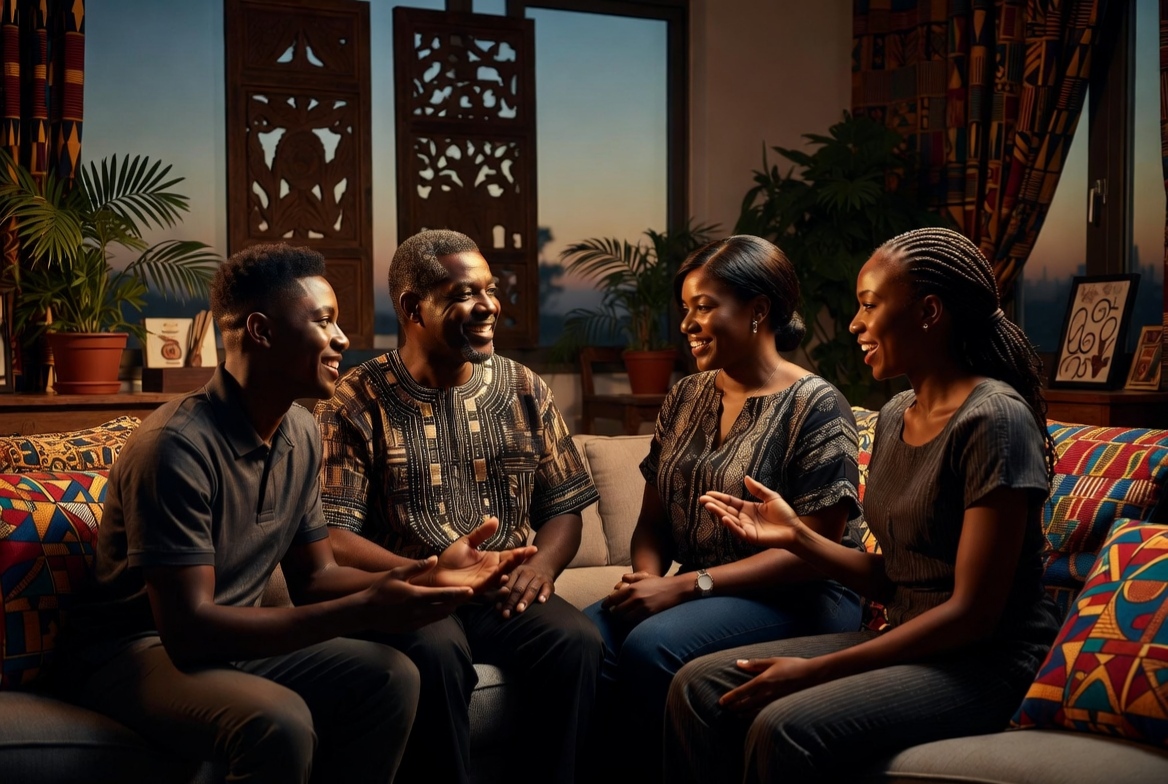
First, create space for truth-telling without destruction. Shade started this accidentally. One night, after another shouting match, she gathered them in the sitting room with only the lantern light. No phones. She spoke first: “I am tired. Not just body tired. My heart is tired. I feel like I am failing all of you.” The honesty shocked them. Tolu’s eyes filled. Olumide looked away, but he listened. When everyone spoke their fears without attack, something shifted. Not perfect peace, but understanding.
Protect the container. Your family is the container holding all of you. When it cracks, everything leaks. This means setting small boundaries. Olumide began saying, “I cannot send what is not there, but let us look at what we can do together.” Shade stopped absorbing every complaint like a sponge. She started saying, “I hear you. Now help me think of solution.”
Find new ways to carry the load together. The Adebayos started a small family meeting every Sunday evening. Not for preaching—for planning. They listed every expense on paper. Bolu suggested selling snacks after school. Tolu, swallowing pride, took a part-time job at a cybercafé. Olumide taught them basic business lessons from his spare parts experience. They were still struggling, but struggling together. The blame reduced.
Unburden yourself by remembering you are not God. You cannot fix everything. Some evenings, Shade would walk to the end of the street, buy one pure water, sit on a bench and just breathe. She allowed herself to feel the weight without pretending it was not there. Olumide found quiet strength in early morning prayers at the mosque down the road—not for miracles, but for the grace to keep showing up.
Teach the young ones that love is not transactional. Tolu’s turning point came the day his father fell ill and could not go to the market. The boy had to handle suppliers for the first time. He saw the stress lines, the calculations, the fear hidden behind “I dey manage.” That evening he came home quieter. “Daddy, I didn’t know it was this hard.”
Look, family will disappoint you. They will turn on you when fear and pressure squeeze them. But they are also the ones who will sit with you in the hospital at 2 a.m., who will laugh at old photos during light-off nights, who will carry your name long after you are gone.
The real unburdening does not come from cutting them off or winning arguments. It comes from choosing, again and again, to see the scared human behind the angry words. From creating tiny pockets of safety where people can say “I am struggling” without being labelled weak. From remembering that the same rising food prices stressing you are stressing them too.
Shade still has tough days. Some evenings the eba still goes cold. But now, when Tolu raises his voice, she hears the fear underneath. When Olumide withdraws, she touches his shoulder instead of matching silence with silence. Bolu talks more.
The lantern still flickers. The generator still roars next door. But inside that small sitting room in Ajegunle, something stubborn and beautiful is growing — love that has been tested by real life and refused to die completely.
What do you do when your own family turns on you?
You pause. You breathe. You choose to turn towards them anyway, even when it hurts. Not because they deserve it every day, but because you do. Because the family you build in the fire is often stronger than the one you started with.
And in the end, that might be the softest life of all.


Comments (0)
Please sign in to join the conversation.
Loading comments...