

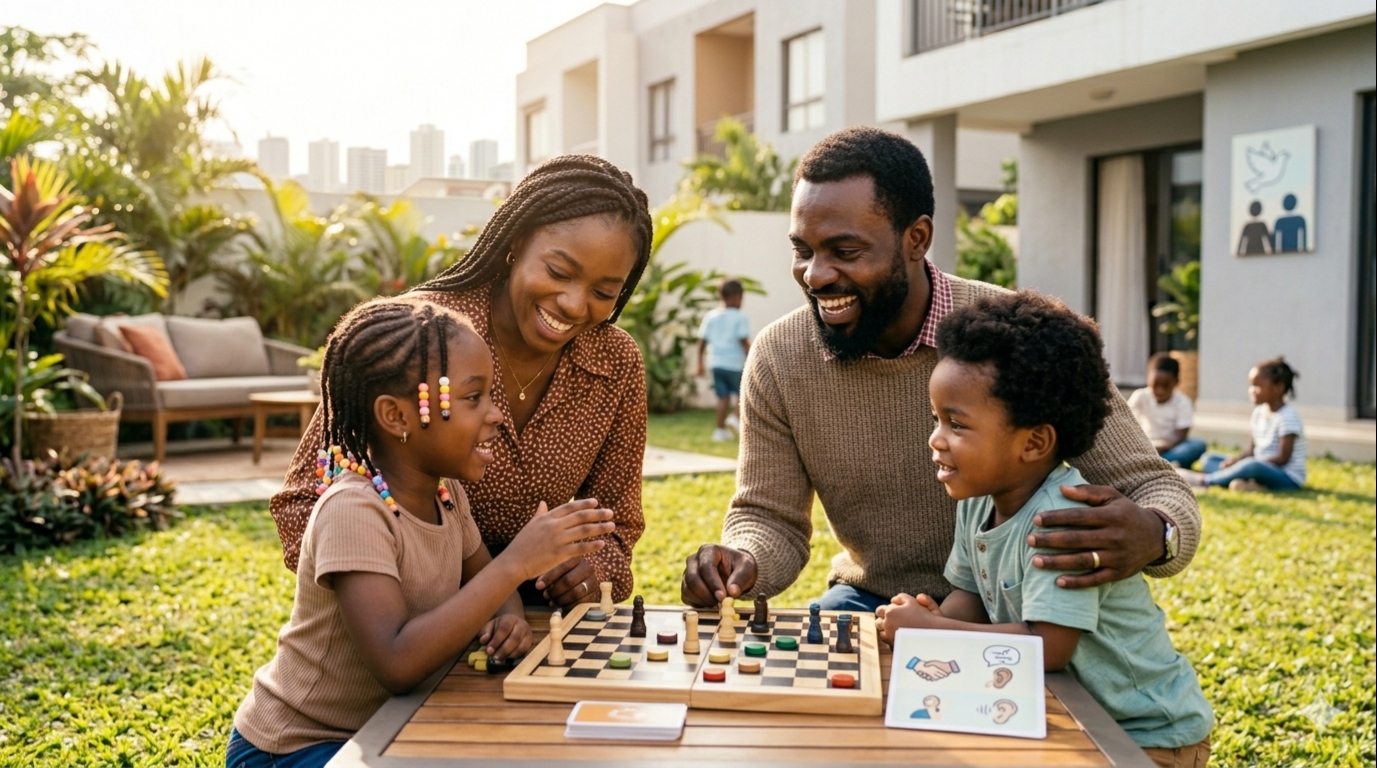
Oladapo, a 38-year-old project coordinator, sat on the sofa with his wife Funke, a 36-year-old bank teller, as their nine-year-old son Tunde and seven-year-old daughter Ifeoma carefully discussed whose turn it was to choose the evening storybook, their voices rising slightly before settling into a fair compromise they reached together. The parents exchanged a proud, knowing glance, remembering how different these moments felt just a year earlier, when minor frictions often escalated into tears or stubborn silences.
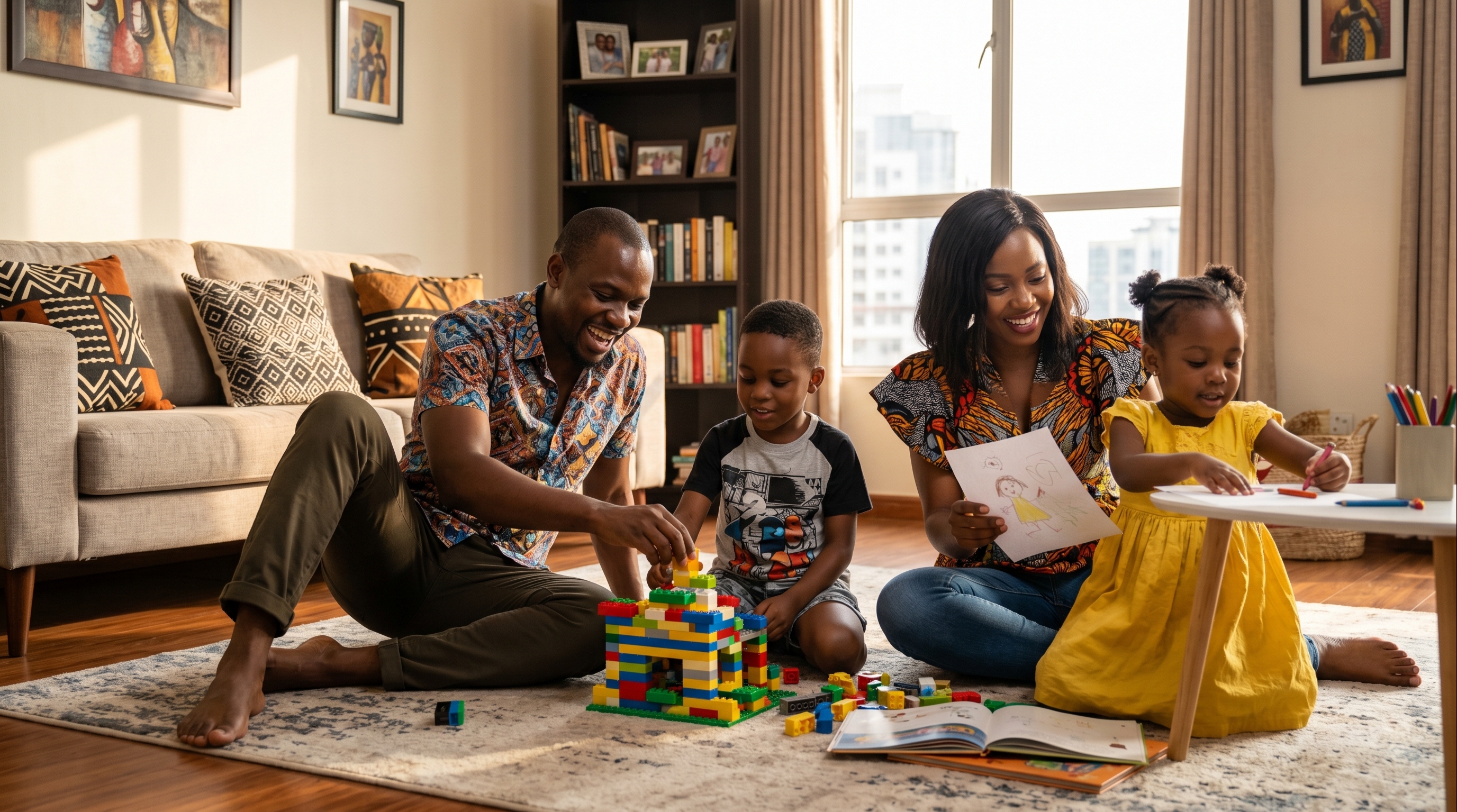
In that peaceful family scene, it was evident how deliberately teaching conflict resolution had transformed their home and was preparing their children to become thoughtful contributors in a complex world. Oladapo and Funke’s story as a dedicated young couple balancing careers, finances, and parenting in today’s Nigeria offers relatable insights for every parent who wants to raise peacemakers.
Several months earlier, life in the same Surulere flat had shown the need for change more clearly. Oladapo and Funke had met fourteen years ago at a youth service camp in Osogbo, where his calm problem-solving during group tasks had drawn her in, and her empathetic listening had impressed him. Marriage followed with the usual hopes and economic realities — rising costs of living, supporting ageing parents, and building savings for the children’s future. Tunde and Ifeoma arrived a few years apart, bringing joy but also the everyday challenges of sibling dynamics, school interactions, and neighbourhood play that tested everyone’s patience.
Flashback further to the early parenting years, when both were focused on providing the best opportunities. They worked long hours, sometimes bringing work stress home, and noticed the children copying quick reactions — raised voices over toys or refusing to share during playtime. Funke recalled quiet evenings when she would reflect on her own childhood in Ibadan, where elders mediated disputes at family compounds with proverbs and fairness. Oladapo thought of his father’s measured words during village disputes. They realised they needed to be more intentional rather than hoping the children would simply “grow out of it.”
One relaxed weekend afternoon, after observing Tunde and Ifeoma work through a disagreement about sharing crayons, Oladapo and Funke decided to make conflict resolution a core part of their family culture. They drew from their experiences, adapted to their busy lives, and developed consistent approaches. Over time, these efforts created noticeable shifts — the children began resolving issues more independently, carrying calm confidence into school and friendships. Here are fifteen practical ways they taught these skills, each woven into their daily family life and explained through the moments that made them effective.
1. Model calm disagreement handling in front of the children.
Oladapo and Funke made sure Tunde and Ifeoma saw them discuss differing opinions on weekend plans or budget choices with respect and clear listening, showing that adults can differ without damaging relationships.
2. Use everyday moments as teaching opportunities.
When a minor sibling squabble arose over TV time, they would pause and guide the children to express feelings using “I feel…” statements, turning routine friction into gentle lessons.
3. Teach active listening through structured turns.
During family dinners, each person shared their day while others practised listening without interrupting, a habit that helped the children understand perspectives beyond their own.
4. Introduce simple problem-solving steps.
They encouraged the children to identify the issue, brainstorm solutions together, choose one, and try it — applied when deciding how to share the limited play space in the small flat.
5. Share age-appropriate stories and proverbs.
Funke told Yoruba folktales of clever animals resolving forest disputes, while Oladapo referenced wise sayings from their grandparents, making the concepts culturally rooted and memorable.
6. Role-play different scenarios during playtime.
On quiet evenings, they acted out playground or classroom situations, allowing the children to practise responses in a safe, fun environment that built confidence.
7. Validate emotions without rushing to solutions.
When Ifeoma felt upset about a friend’s comment, Funke would first acknowledge the feeling fully, teaching that all emotions are acceptable, even as they learn constructive ways forward.
8. Encourage empathy by asking perspective questions.
Oladapo often prompted, “How do you think your sister feels right now?” during moments of tension, helping the children develop an understanding of others’ experiences.
9. Establish family meeting routines for bigger issues.
Once a month, over special rice and chicken meals, they discussed household matters together, giving children a voice and demonstrating collaborative decision-making.
10. Highlight positive outcomes of resolution.
They celebrated moments when the children worked things out, such as Tunde and Ifeoma agreeing on a joint game, reinforcing that peacemaking brings good feelings and stronger bonds.
11. Teach compromise as strength, not weakness.
In situations like choosing outings, they guided the children to find a middle ground, showing that giving a little often creates better shared experiences.
12. Limit adult intervention to guidance only.
As skills grew, they stepped back more, allowing natural consequences and successes, so the children experienced the satisfaction of independent resolution.
13. Connect skills to broader community impact.
They explained how resolving small home conflicts prepares one to contribute positively in school, neighbourhood, and future workplaces, linking personal growth to societal good.
14. Incorporate reflection after conflicts.
In the evenings, they would gently review what worked well and what could improve next time, building self-awareness without blame.



Comments (0)
Please sign in to join the conversation.
Loading comments...