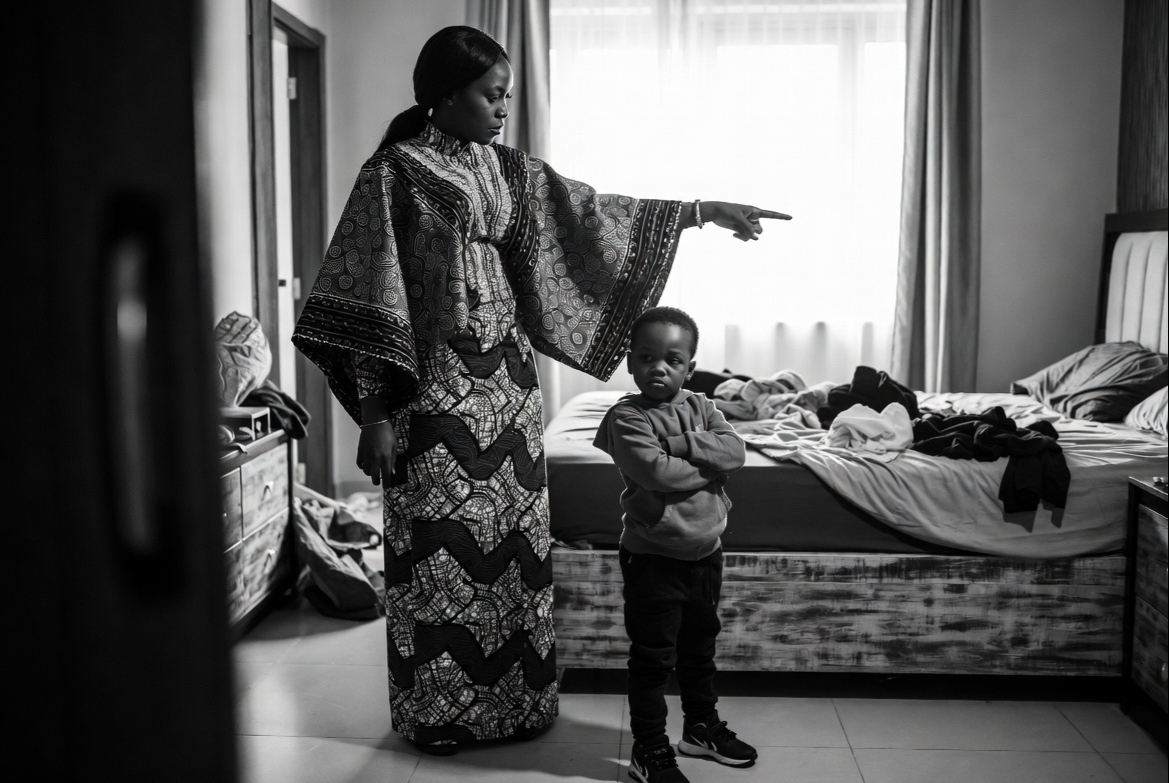


Aromas of spicy isi ewu, steaming bowls of okro soup, and fried plantain filled the air while relatives laughed, played cards, and children chased each other around the mango tree. Then tension exploded. “Stop buying him every toy he sees on TV!” Chinedu’s voice rang out sharply, his face etched with frustration after a long week at the brewery. Ngozi shot back, adjusting her wrapper, “And you think denying him everything makes you the better parent? He only asks because you spoil him when you’re in a good mood!” Their seven-year-old son Emeka stood frozen nearby, clutching a half-broken plastic car, eyes darting between his parents as uncles and aunties fell into uncomfortable silence and the Christmas carols from the radio seemed suddenly out of place. The argument had once again spotlighted how easily children develop endless wants. In that raw moment on that December evening, Chinedu and Ngozi realised their home needed a stronger structure to shield Emeka from the craving culture around him.

Only months earlier, life in their compact Lagos flat had exposed the cracks. Chinedu, a 35-year-old beverage supervisor, and Ngozi, a 33-year-old administrative officer in a trading firm, had met at a friend’s traditional wedding in Awka nine years before. Their marriage brought joy, then Emeka’s arrival, followed by the reality of balancing rent, family support, and the constant barrage of “needs” Emeka picked up from cousins, television, and neighbourhood peers.
Going further back, the early parenting years felt manageable until small patterns took root. During visits to grandparents, Emeka would return with new clothes or gadgets “because Grandma said every child deserves them.” Chinedu sometimes yielded to keep the peace; Ngozi compensated during her own stressed moments. Birthdays became competitions, and “just this once” became a monthly refrain whenever salary arrived. Emeka’s demands grew, mirroring the financial tug-of-war his parents faced but never fully discussed openly. Driving back to Lagos with Emeka quietly playing in the back seat, Ngozi sighed, “He’s learning to want things instead of valuing what we have.”
Over the following months, they adopted and adapted 20 practical strategies that reshaped their home. These weren’t overnight fixes but consistent choices that reduced frivolous cravings while respecting Nigerian family realities.
1. Establish clear family values around money early.
They sat Emeka down during quiet evenings and explained, using simple stories from their own childhoods, that money serves needs first and wants later. This created a shared language that reduced random demands.
2. Model contentment visibly as parents.
Chinedu stopped complaining about not affording the newest phone in front of Emeka; Ngozi proudly reused her bags. Children mirror what they see, so their calm satisfaction with modest possessions spoke louder than lectures.
3. Create a consistent “needs vs wants” chart together.
On a cardboard pinned in the sitting room, they listed essentials like food and school items separately from desires. Emeka helped tick them, turning it into a game that built awareness without shame.
4. Delay gratification deliberately.
When Emeka asked for a trending toy, they introduced a one-week waiting period. Most times, the urge faded, teaching patience in an instant-gratification world.
5. Involve children in age-appropriate budgeting.
Emeka received a small weekly allowance from chores and helped decide its use. Watching his own coin limit choices made him less frivolous with bigger family spending.
6. Set firm, predictable boundaries on gifts from relatives.
They politely briefed grandparents: gifts only on agreed occasions. This curbed the flood of unplanned items that sparked jealousy and more demands.
7. Limit exposure to advertising and social media.
They reduced unsupervised TV time and phone scrolling, replacing it with family storytelling sessions. Fewer influences meant fewer sudden “must-haves.”
8. Emphasise experiences over material items.
Weekend visits to parks, markets, or helping at church events replaced shopping outings. Emeka began requesting “time with Daddy” more than new shoes.
9. Teach the value of maintenance and repair.
Instead of replacing broken toys immediately, they fixed them together. This instilled appreciation and reduced the throwaway mindset common in today’s economy.
10. Use natural consequences without rescue.
When Emeka wasted his allowance on sweets and had none left for a desired item, they held firm. The short discomfort taught responsibility better than arguments.
11. Create family contribution rituals.
Everyone, including Emeka, had daily tasks like watering plants or sorting laundry. Contributing to the home reduced entitlement and built pride in what the family already possessed.
12. Discuss finances honestly but age-appropriately.
During monthly family meetings over garri and soup, they shared general pressures like rising transport fares without burdening Emeka. Transparency without drama lowered anxiety-driven wanting.
13. Celebrate non-material achievements loudly.
Praise for kindness, helping siblings, or finishing homework overshadowed gift-giving. Emeka’s confidence shifted from possessions to character.
14. Build a “gratitude jar” habit.
Each night, they dropped in notes of things they appreciated — electricity returning, a good meal, time with cousins. Reading them weekly reinforced contentment.
15. Align as a united parental front.
Chinedu and Ngozi are committed to discussing requests privately first. No more good-cop/bad-cop dynamics that children exploit for frivolous wins.
16. Introduce saving goals with visual trackers.
Emeka’s drawing of a desired bicycle with coin stickers helped him see progress. The wait built excitement and reduced impulsive cravings.
17. Choose quality time that fills emotional needs.
Ngozi’s evening storytelling and Chinedu’s football playtime met the attention Emeka sometimes sought through demands for things.
18. Prepare responses to peer and cousin pressure.
They role-played gentle replies like “We choose differently in our house” for when relatives showed off new items. This equipped him for extended family gatherings.
19. Review and adjust strategies monthly.
They reflected on what worked—some weeks the chart needed refreshing, others the waiting period extended. Flexibility kept the structure sustainable amid shifting economic realities.
20. Prioritise prayer and cultural wisdom.
Drawing from Igbo proverbs about patience and proverbs on contentment, plus family prayers, they anchored values deeper than trends. This provided spiritual and communal strength.
These strategies emerged gradually through trial and small wins. Flashbacks to easier village days reminded them that structure had always been part of strong African homes; they were simply reclaiming it amid city pressures. Finances remained tight but arguments decreased as Emeka’s demands softened noticeably.