

Chidera Okonkwo noticed it while frying akara for breakfast in her small Surulere kitchen - her younger brother Kelechi's wrists looked like they belonged to someone else's body. He'd been skipping meals for weeks, convinced that eating light and cutting out beans, yam, and groundnut soup would somehow make him leaner and stronger at the same time.
Instead, he was tired by 10 a.m., irritable by noon, and his arms, once solid from years of playing football with the boys on Adeniran Ogunsanya Street, had started to look thin and drained. She sat him down that morning with a plate of moimoi and a question: "Kelechi, who told you that starving yourself is the same thing as eating well?"
People assume that plant-based means rabbit food, or that you have to choose between filling your stomach, building muscle, and losing weight. You don't. And this piece will show you, plainly and honestly, how those three things can live on the same plate.
Wellness Is A Skill
We believe wellness should never feel like punishment. If a lifestyle change leaves you drained, snappy, and constantly thinking about food, something is wrong with the plan - not with you.
Plant-based eating, done properly, is one of the most sustainable ways to nourish a body because it's rich in fibre, slow-releasing energy, and packed with the building blocks muscles actually need.
The problem isn't the food group.
The problem is that most people never learn how to combine plant foods properly to get complete nutrition, so they end up hungry, weak, and blaming "plant-based" for their own miscalculation.
Kelechi had cut out beans because a fitness page online told him legumes cause bloating and slow weight loss. He replaced his usual moimoi and ugba with just rice and vegetable oil, thinking fewer heavy foods meant faster results.
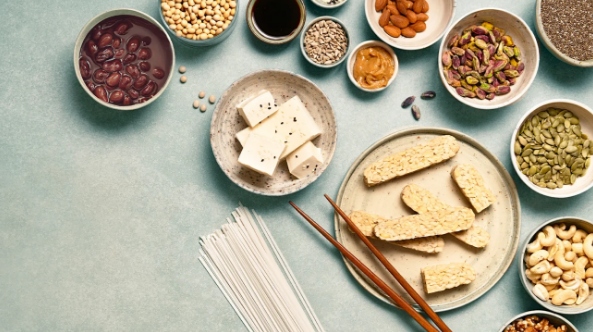
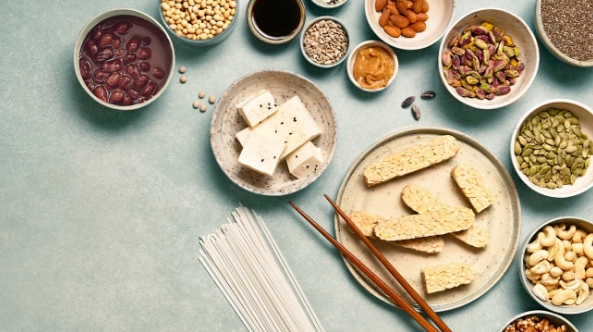
What he didn't know is that beans, lentils, and groundnuts are some of the most complete plant proteins available, especially when paired with grains like rice, garri, or millet.
This pairing, called Protein Complementation, gives the body all nine essential amino acids it needs to repair and build muscle tissue. Cutting beans out entirely didn't make him leaner. It just took away the one food doing the heaviest lifting in his diet.
Chidera, who had spent two years learning about nutrition after her own struggles with fatigue, walked him through it slowly, without judgment, without lecturing him about discipline.
She simply said, "Let's fix your plate before we fix your habits."
Together, they rebuilt Kelechi's meals using foods already familiar to their household:
- Beans and moimoi, rich in fibre and plant protein, to keep him full for hours and support muscle repair.
- Ugu and spinach, blended into soups, for iron and folate - nutrients that fight the fatigue he'd been feeling.
- Groundnut and egusi, used moderately, for healthy fats that support hormone function and steady energy.
- Unripe plantain and yam, swapped in for white rice occasionally, for slower-releasing carbohydrates that don't spike and crash blood sugar.
- Achara and okra, added for extra fibre that keeps digestion smooth and appetite in check.
- Tigernut milk, a local, affordable alternative to dairy, for calcium and a small protein boost.
None of this required a foreign supermarket or a personal chef. It required understanding what was already on the table.
Addressing The Real Fear: "Will I Lose My Strength?"
Kelechi asked it directly: "If I stop eating meat every day, will I get weaker?"
The honest answer is no - not if the plant proteins are varied and consistent.
Muscle doesn't care where amino acids come from; it cares that they arrive regularly and in sufficient amounts.
A diet built around beans, lentils, groundnuts, tofu, and whole grains can absolutely support strength training and muscle recovery.
What matters more than the source of protein is the total quantity across the day and whether the person is actually eating enough because undereating, plant-based or not, will always cause muscle loss.
The Part Nobody Warns You About: Fibre Overload
When people switch quickly to a plant-heavy diet, they sometimes overdo the fibre and end up bloated, gassy, or uncomfortable. Wellness isn't about perfection on day one. It's about a body adjusting at its own pace, without punishment for the process.
Plant-based meals high in fibre and water content, like vegetable soups and bean stews, naturally fill the stomach with fewer calories than oil-heavy, meat-dense dishes.
Someone you love is wasting away chasing the wrong version of healthy, or because you yourself feel stuck between eating enough and eating well?
Plant-based nutrition is about combining what you already know in ways that fill you up, repair your muscles, and support real, lasting weight management.
Start with one meal.
Add one more vegetable.
Pair your carbs with a protein-rich plant food.
Give your body three weeks before judging the results.



Comments (0)
Please sign in to join the conversation.
Loading comments...