

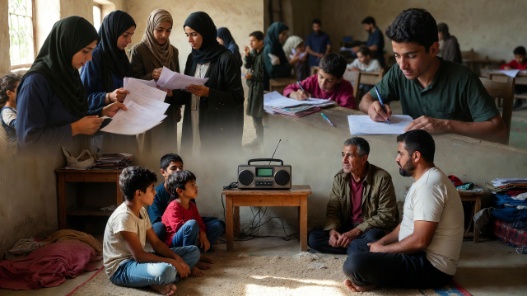
War turns everyday life upside down, and schools are often the first to shut because they are either bombed, used as shelters, or too dangerous to reach. In places like Iran, Ukraine, Gaza, Syria, and Sudan, millions of children have missed months or even years of classes.
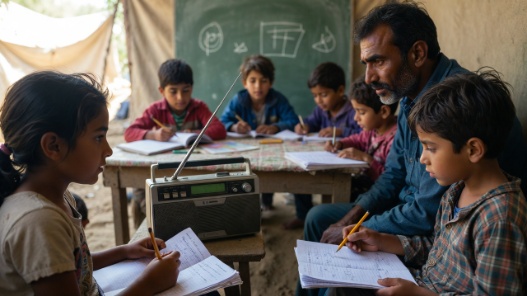
Build a Simple Daily Routine
Children thrive on predictability, especially when everything else feels chaotic. This calls for creating a gentle schedule, even in a shelter or displaced home. Set fixed times for "learning hours," meals, play, and rest.
For example, mornings for reading or maths, afternoons for creative activities. Stick to it as much as safety allows. This is because routines reduce anxiety and make education feel like part of daily life, not an extra burden.
Use Whatever Tools Are Available (Digital or Low-Tech)
If the internet and devices work (even briefly), tap into free platforms. For example, in Ukraine, the All-Ukrainian School Online offers recorded lessons, live classes, and emotional support. Similar apps or government sites may exist locally. When power or data is scarce, switch to offline methods:
Radio broadcasts
Printed worksheets or textbooks sent home by teachers
WhatsApp or SMS for daily exercises; teachers send problems, children reply by text or voice note
Shared community tablets in safe hubs run by NGOs like UNICEF or Save the Children.
Likewise, gather any books, notebooks, or recycled paper for writing and drawing.
Focus on Core Skills with Fun, Hands-On Activities
Keep it basic: reading, writing, maths, and life skills. Turn everyday moments into lessons:
Read aloud from any book or story; family tales count too
Practise maths through counting food rations, measuring ingredients, or simple games
Write letters, draw pictures, or keep a daily journal to process feelings
Use play: build with stones or sticks for geometry, sing songs for language.
In war-prone regions, teachers use radio or text for short, engaging tasks. They equally offer social-emotional support like talking about feelings, breathing deeply together, or playing calming games.
Involve the Whole Family and Community
Parents become the main teachers. Older siblings can help younger ones. Neighbours or relatives might form small safe groups for shared lessons. In Ukraine, community "catch-up" clubs and summer camps in safer areas helped displaced children reconnect. Ask local aid groups (UNICEF, Save the Children, local NGOs) for materials, teacher guides, or temporary learning spaces in tents or shelters.
Prioritise Safety and Well-Being First
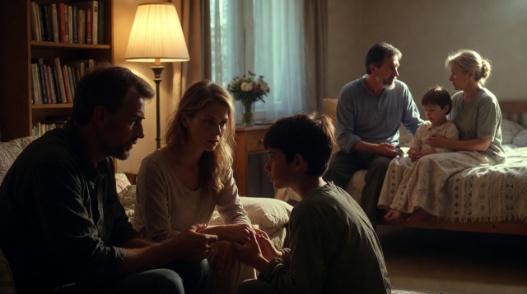
Learning only works when children feel secure. This means that you have to limit their exposure to scary news. Watch for signs of stress such as trouble sleeping, anger, and withdrawal. Then offer extra cuddles, play, or listening time. Praise effort, not just results. Small wins build confidence.
Look Ahead and Stay Connected
War steals classrooms, but it cannot steal a child's right to learn if caring adults keep trying. When possible, link with schools or online teachers for updates. Track progress gently, no pressure. The aim is progress, not perfection. Many children in conflict zones have caught up through these adaptations, gaining resilience along the way.
Comments (0)
Please sign in to join the conversation.
Loading comments...