

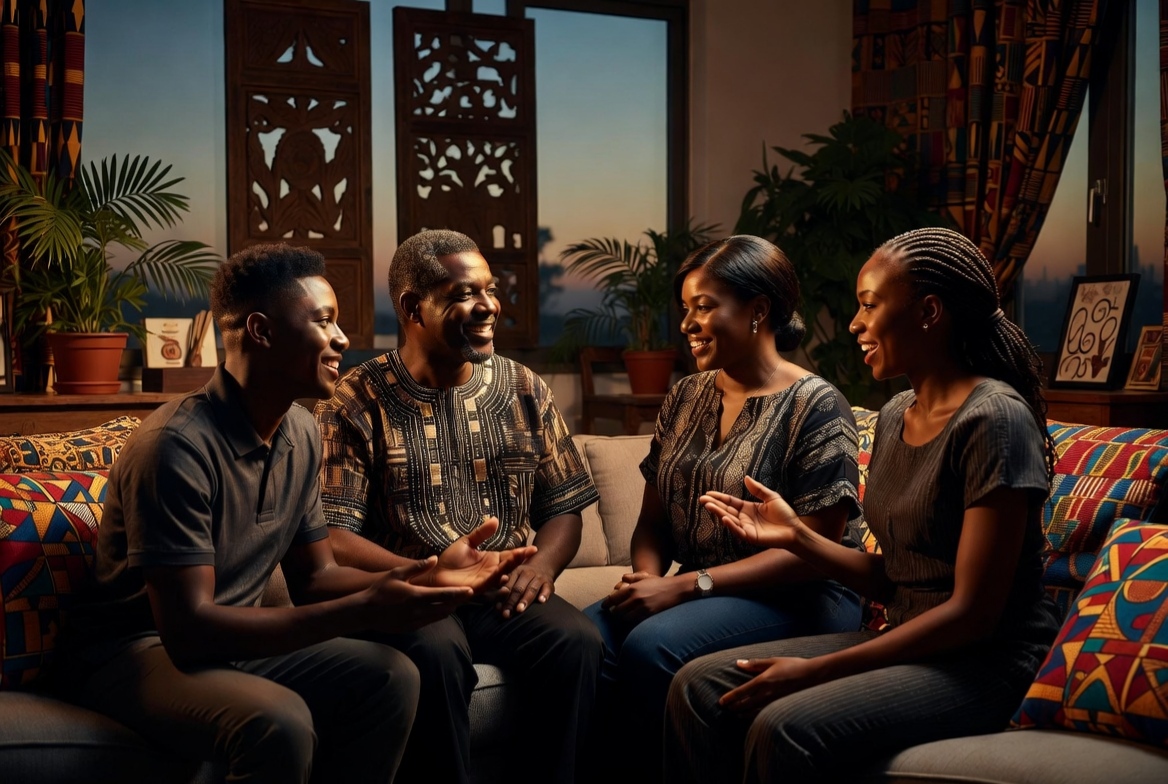
The evening breeze carried the distant sound of generators humming across the neighbourhood as 18-year-old twins Etim and Arit stood in the centre of their family’s living room in Calabar, holding up handmade placards. Their parents, Ekpenyong and Ini Asuquo, sat on the old brown sofa, tired after another long day but curious about what their children had planned. “Mummy, Daddy,” Arit began with a confident yet loving voice, “we have been watching how society is shaping us and our friends, and tonight we want to act out the truth — a dysfunctional society absolutely affects who children become, but parents like you can still light the way.”
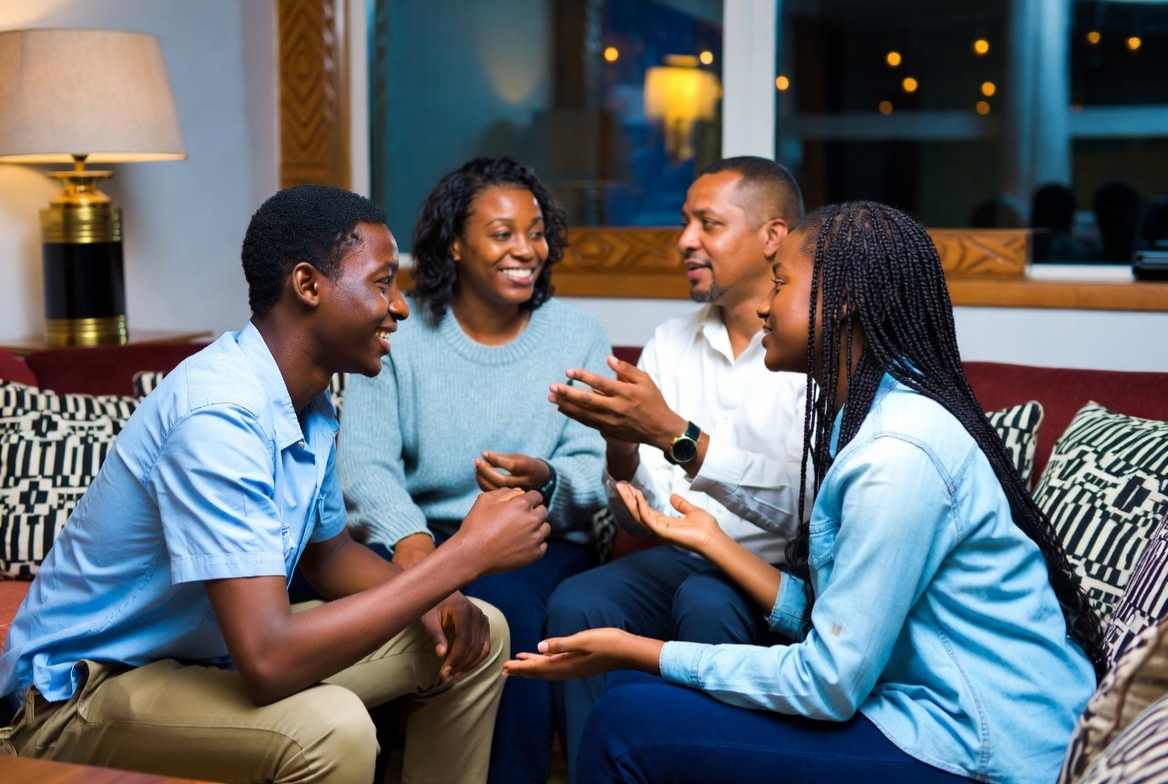
What started as a normal family moment quickly turned into a powerful, emotional performance that left everyone reflecting deeply. The twins had spent weeks preparing skits drawn from real life in Cross River and broader Nigeria, using humour, honesty, and sharp observations to show their parents how external pressures were moulding the next generation. Ekpenyong, a mid-level civil servant, and Ini, a trader at Watt Market, watched with a mixture of pride and quiet discomfort as their children held up a mirror to both family and society.
It all began two weeks earlier during one of those frequent power outages when the family sat outside under the mango tree. The twins had listened as their father complained about rising fuel prices and their mother worried aloud about the kind of friends her children were keeping. That conversation planted the seed. Etim and Arit decided it was time to confront the bigger picture — not to blame their parents, but to partner with them.
Flashback to 2012: When the Cracks First Appeared
By 2012, Ekpenyong and Ini had already been married for several years and were raising the twins in a fast-changing Calabar. The children were starting primary school at a time when public education was declining rapidly, with teachers often absent and classrooms overcrowded. Ekpenyong remembered working extra shifts to afford a modest private school, while Ini juggled her market stall and home duties.
The society around them was already showing signs of dysfunction — unreliable power supply, growing youth unemployment, and the slow erosion of communal values that once defined Efik communities. The twins acted this period out with funny yet pointed skits: little Etim pretending to learn under a leaking classroom roof while teachers shouted on their phones, and young Arit mimicking street hawkers who should have been in school.
The First Major Influence: Failing Systems and Limited Opportunities
Many years later, standing under their makeshift stage light made from a bright bulb and extension cord, Etim addressed the education challenge directly. “Daddy, you worked so hard to send us to school, but we see our classmates dropping out because the system is broken — strikes, poor funding, and certificates that don’t guarantee jobs.”
The practical reality for many Nigerian families is that a dysfunctional society delivers weak institutions. The insight here is clear: parents must become active co-educators. Ekpenyong and Ini nodded as the twins suggested creating a home learning routine — dedicating one hour daily for reading, skill practice, or discussing current events together. Simple DIY steps include using free online resources for supplementary lessons and encouraging practical skills like basic tailoring, coding, or farming on small plots, which are valuable regardless of formal certificates.
The Second Influence: Peer Pressure and Social Media in a Broken Culture
Arit took her turn, acting out scenes of young people chasing validation through phones. “Mummy, society bombards us with unrealistic lifestyles on Instagram and TikTok while our economy makes honest work feel slow.” She recounted how some of their 18-year-old mates were already involved in risky “yahoo” schemes or early pregnancies, pressured by a culture that celebrates quick money over diligence.
The twins highlighted a real challenge: in today’s Nigeria, dysfunctional values spread fast through social media and weak community oversight. Their guidance was practical — introduce “phone curfews” and family media reviews where everyone discusses what they watched. Parents can model critical thinking by openly talking about money, success, and integrity during dinner. Ekpenyong shared how he once ignored these conversations, assuming school would handle it, but now saw the need to counter societal noise with home values.
The Third Influence: Economic Hardship and Survival Mentality
As the performance continued, the twins flashed back to 2020 during the COVID-19 lockdown. Ekpenyong’s salary was delayed for months, Ini’s trading suffered, and the family barely managed. “That period taught us survival,” Etim said, “but society teaches many children that cutting corners is normal when times are hard.”
Economic dysfunction pushes families toward shortcuts. The practical advice the twins offered was eye-opening: build financial resilience together through a family savings jar, small side businesses, and teaching children budgeting from teenage years. Ini particularly liked the idea of involving the twins in her trading decisions so they learn honest entrepreneurship instead of desperation-driven choices common in tough economies.
The Fourth Influence: Eroding Morals and Weak Role Models
In one of the most emotional skits, Arit portrayed a young girl pressured by older relatives to prioritise marriage over personal growth, while Etim acted a boy watching politicians amass wealth through questionable means. “Society shows children that ‘everybody is doing it,’” they explained.
The couple listened attentively as their children stressed the importance of intentional moral formation. Practical steps include regular family value discussions tied to real stories from Cross River history — tales of integrity and community from their Efik-Ibibio roots — and deliberately exposing children to positive mentors through church groups, skill workshops, or extended family elders who still uphold strong principles.
Taking Responsibility in a Broken World
The twins concluded with hopeful, actionable insights, creating a simple “Family Shield Plan” on paper: one weekly deep conversation about societal pressures, monthly skill-building activities, quarterly family goal reviews, and daily small acts of modelling the values they wanted to see. The parents committed immediately — starting with a family meeting every Sunday evening to discuss real issues without pretending everything was fine.
Life in Nigeria will remain challenging with fuel prices will fluctuating, internet trends tempting the youth, institutions continuing to falter, and peer pressure not disappearing overnight. Yet the Asuquo family walked away understanding a powerful truth: while a dysfunctional society shapes children, conscious parents can shape them even more powerfully through presence, example, and deliberate counter-influence.
By acknowledging society’s brokenness without despair, and taking small, consistent steps at home, you can raise children who rise above the dysfunction rather than being defined by it.
The future of your sons and daughters depends heavily on the light you choose to shine at home.


Comments (0)
Please sign in to join the conversation.
Loading comments...