

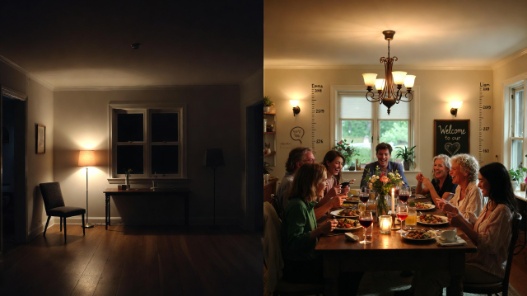
A house is made of walls, windows, doors and a roof. But a home is made of something much deeper. It is built slowly through everyday moments, laughter, arguments, forgiveness, and the small routines that shape family life.
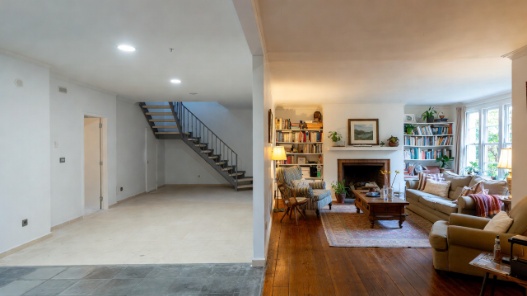
Many people spend years trying to create the “perfect house”. They buy stylish furniture, decorate every corner, and follow the latest home trends. Yet something can still feel missing. That missing piece is often the simple human warmth that turns a space into a place of belonging.
In truth, what makes a house feel like home cannot be bought in a shop.
The Sound of Familiar Voices
One of the strongest signs of a real home is the sound of familiar voices. It is the laughter from the kitchen while dinner is cooking. It is the quiet conversations late at night. It is children arguing over small things and then laughing again moments later.
These sounds create an emotional rhythm that people come to recognise and cherish. Years later, long after your children have grown up, these memories remain.
Shared Routines That Build Connection
Homes are shaped by routines that may seem ordinary at the time. Family dinners. Weekend cleaning. Movie nights. Morning greetings before everyone leaves for the day.
These repeated moments slowly create a sense of stability and comfort. Your children especially grow up feeling safe when life has familiar rhythms. They know what to expect, and that predictability gives them emotional security.
Often, when many adults look back on their childhood homes, it is not the furniture they remember. It is the routines.
The Freedom to Be Yourself
A true home is a place where you can be yourself without fear. It is where messy hair, old clothes, and tired moods are accepted.
Outside the home, many people often feel pressure to perform or impress others. But inside a healthy home, there is space to relax and breathe. Family members do not have to be perfect. They only need to be real.
This freedom creates deep emotional comfort.
Small Acts of Care
Homes are also built through simple acts of care that happen every day.
* A parent checking if a child has eaten.
* Someone making tea for a tired partner.
* A sibling saving the last piece of cake for another.
These actions may appear small, but they communicate love more powerfully than grand gestures.
Memories in the Walls
Every home slowly collects memories. Birthday candles are blown out at the dining table. Quiet tears after a difficult day. Late-night talks that solve problems.
Over time, these memories fill the space with emotional meaning. That is why people sometimes walk into an old family home and feel an instant wave of nostalgia.
The building has not changed much. But the memories attached to it are powerful.
Imperfection Makes a Home Real
Interestingly, perfect houses rarely feel like real homes. Homes that feel alive often have small imperfections.
A scratched dining table from years of meals. Children’s drawings stuck to the fridge. A sofa that everyone loves, even though it is old.
These imperfections show that life is being lived inside the space.
The Feeling of Belonging
Above all, what truly turns a house into a home is the feeling that you belong there. It is the comfort of knowing that someone is happy to see you walk through the door. It is the quiet reassurance that you are accepted, even on your worst days.
That sense of belonging cannot be measured or decorated. It grows through relationships, trust, and time.
In the End, It Is the People
At the heart of every home are the people inside it. They are the ones who fill the rooms with laughter, kindness, and life.
A house may look beautiful in photographs, but a home is something you feel in your heart. Often, the homes people remember most warmly are not the biggest or most luxurious ones. They are the places where love quietly lived every day.



Comments (0)
Please sign in to join the conversation.
Loading comments...