

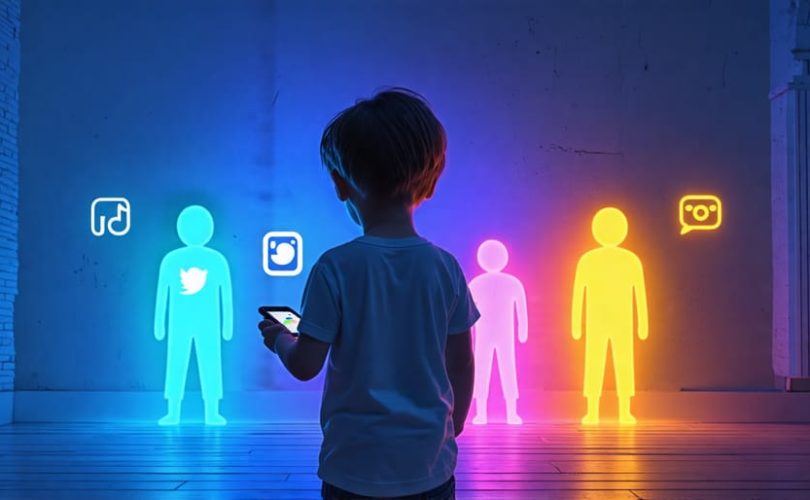
Yasmine had a system. Every Friday evening, after Lina's bath and before dinner, she'd sit on the edge of the tub with her phone, scroll through the day's photos, and pick the best three for Instagram. Lina splashing. Lina laughing at something only a four-year-old finds funny. Lina mid-tantrum, captioned with a joke about "the terrible fours."
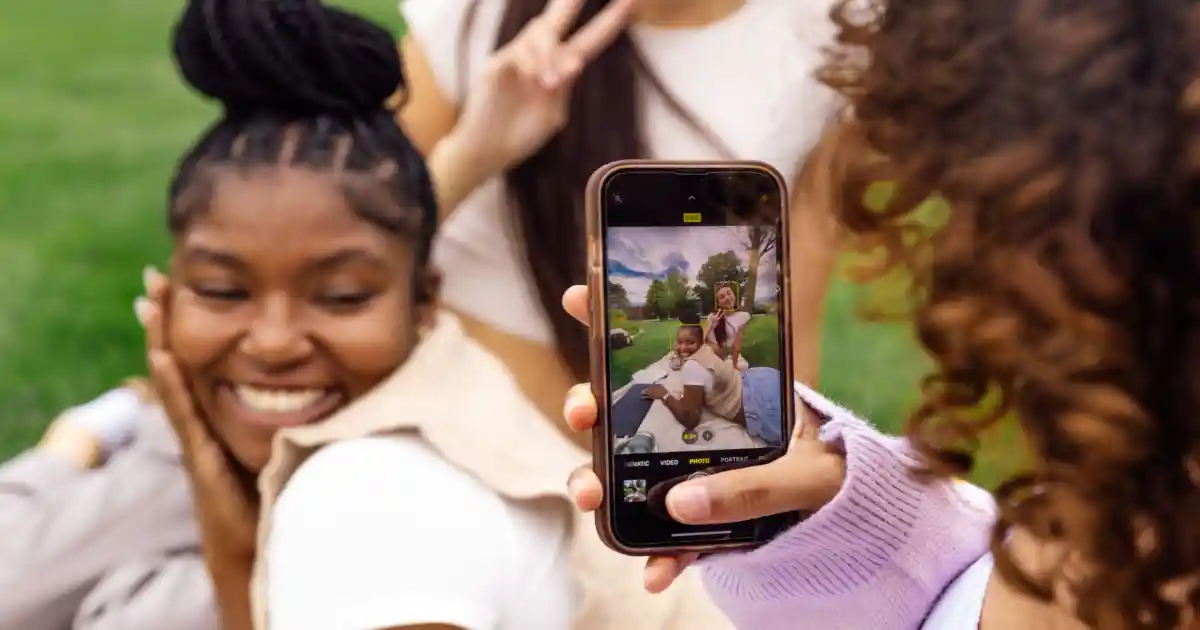
It wasn't reckless because Yasmine loved her daughter fiercely, and every post came from that love. But one evening, Lina looked up from the bathwater and said something that stopped her mother cold: "Mama, why do you always take my picture when I'm crying?" Yasmine laughed it off at first, the way we do when a child says something too sharp for their age. Then she sat with it. Really sat with it.
And that became the start of a conversation she and her husband, Amir, had been avoiding for years because "everyone does it" had always felt like a good enough reason.
That night, Amir pulled up their shared photo album and scrolled in silence for a long time. Nearly 600 public posts featuring Lina since birth, her first steps, her first day of nursery, a video of her crying because her ice cream fell, her reaction to a scary movie scene she wasn't supposed to see.
None of it was posted with cruelty. All of it was posted with pride, the same instinct that makes a grandmother pull out a photo album for a neighbour.
But the internet isn't a photo album, and Amir realised, scrolling that night, that they had unknowingly built a digital footprint for a person who never once consented to it.
What followed was a genuinely difficult conversation between two loving parents trying to figure out where the line actually is. Here's what they came to understand: 23 real, unglamorized reasons that oversharing a child's life online has consequences most parents never see coming until it's already happened.
1. It quietly erodes their right to control their own story. Every photo posted becomes a chapter in a narrative the child didn't write and can't edit later.
2. It builds a digital footprint before they can even spell their name. By the time Lina turns thirteen, algorithms and strangers alike may know more about her childhood than she remembers herself.
3. It can attract the wrong kind of attention. Public posts, even from small accounts, can be screenshotted, saved, or repurposed in ways parents never intended and rarely find out about.
4. It teaches kids that their emotions are content. When tears, tantrums, and vulnerable moments become material for likes, children can grow up feeling watched rather than understood.
5. It shifts the parent-child dynamic toward performance. Some children, without realizing it, begin adjusting their behavior for the camera instead of simply being present in the moment.
6. It can embarrass them later, even if it's "cute" now. What feels adorable at age three can feel humiliating at age thirteen, especially to classmates who find old posts.
7. It normalises surveillance as love. Constant documentation can blur the line between genuine connection and simply capturing evidence of a happy childhood for an audience.
8. It exposes routines that compromise physical safety. School names, home neighbourhoods, and daily schedules can be pieced together from seemingly harmless posts over time.
9. It can affect how the child is treated by peers. Classmates and their parents sometimes form opinions about a child based on curated online content rather than who they actually are.
10. It creates comparison anxiety within the child later on. Seeing a highlight reel of their own childhood can make kids feel pressure to live up to an edited version of themselves.
11. It can strain trust between parent and child as they grow older. Discovering years of shared content without their input often leaves children feeling their privacy was never truly theirs.
12. It invites unsolicited judgment from strangers. Comment sections can turn a proud parenting moment into a source of unexpected criticism about parenting choices.
13. It can be used against the child in unexpected contexts. Old photos and videos have resurfaced years later in bullying situations, school disputes, or even college applications.
14. It reduces spontaneous family moments into curated ones. The instinct to "get the shot" can pull parents out of the experience they're trying to preserve.
15. It can affect the child's sense of ownership over their own image. Some children later report feeling like their childhood belonged to an audience rather than to them.
16. It sets a precedent the child may not want to follow. Kids raised on documented childhoods sometimes struggle with healthy boundaries around their own privacy as teenagers and adults.
17. It can complicate family relationships. Disagreements between co-parents, grandparents, or extended family about what's appropriate to share are more common than most people admit.
18. It opens the door to identity theft risks. Full names, birthdates, and school details shared casually online can be pieced together for fraudulent purposes.
19. It can distort the parent's own emotional processing. Turning a hard parenting day into a funny caption sometimes skips the step of actually working through the difficulty.
20. It teaches children their worth is tied to engagement. Kids who grow up seeing their moments turned into likes and comments may internalise approval as something to be earned publicly.
21. It can be exploited by data-driven platforms. Photos of children are among the most engaged-with content online, which means algorithms are quietly incentivising parents to share more.
22. It removes the element of surprise from milestones the child may want to share themselves one day. A pregnancy announcement, a graduation, a first heartbreak; some stories belong to the person living them.
23. It can make reconciliation harder if the child asks you to stop and feels unheard. Respecting that request early prevents years of quiet resentment from building underneath.

