

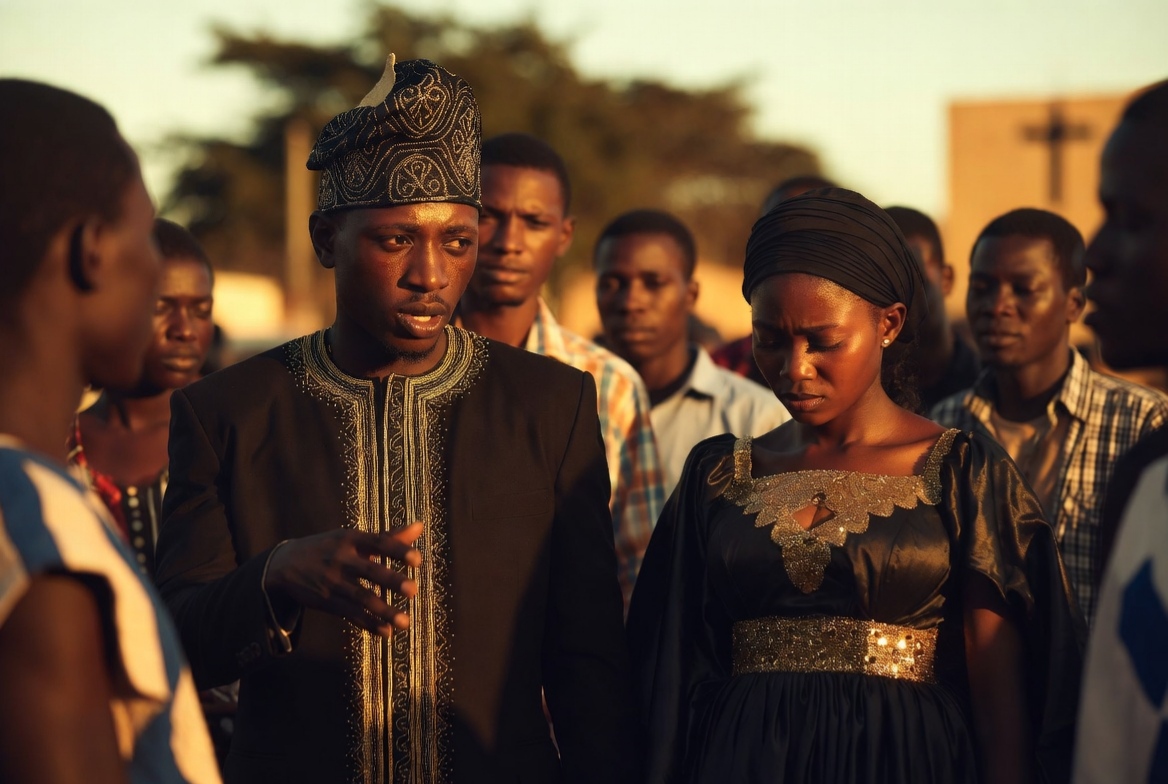
My wife Adebisi and I, Chief Olusegun Adebayo, sat on the wide veranda of our family home in Ikeja, Lagos, this warm May 2026 evening, watching fireflies dance around the hibiscus bushes while the distant hum of evening traffic mixed with the laughter of our grandchildren playing nearby. The scent of her famous pepper soup still lingered from dinner as we hosted a group of young couples from our church for one of our regular marriage talks.

At 71 and 68, we have walked this road for43 years, and the young ones always ask how we kept our bond strong through hustle, economic storms, and family pressures. Tonight, we told them our story and within it, the 22 reasons we guarded our marriage fiercely against name-shaming and dragging third parties into our private matters.
Adebisi smiled, adjusting her wrapper, and began reminiscing. “Remember early 1983, my dear, just months after our traditional wedding in Ibadan? We were young, barely settled in our small Apapa flat with the leaking roof during rains. You came home frustrated from the bank job, and I had burned the stew while trying to impress your mother who visited unannounced.”
1. It preserves the sacred intimacy that only spouses should share. In those early days, we quickly learned that airing each other’s flaws to friends or family created distance. What happened in our little sitting room with the old Philips radio stayed there, allowing us to face issues as one.
She squeezed my hand as we flashed back to 1987, when our first child arrived amid fuel scarcity. “Olusegun was working two shifts, and I felt so alone with the crying baby in the sweltering heat. I was tempted to call my sisters and complain he wasn’t helping enough.”
2. It prevents small conflicts from snowballing into major wars. Once outsiders get involved with their own opinions and loyalties, a simple misunderstanding becomes a battlefield. We chose to talk it through privately under our mango tree at night.
3. It protects your spouse’s dignity and public reputation. Name-shaming turns the person you chose into a character in other people’s stories. In 1992, during a promotion delay that strained our finances, we never let extended family paint him as irresponsible.
4. It maintains unity before your children. Our kids never heard us tearing each other down. During the 1995 economic crunch, when lights were out for days and tempers short, we shielded them from adult battles.
5. It allows genuine resolution instead of performance for an audience. Third parties often push for winners and losers. We found that late-night kitchen talks in our Surulere home, with the smell of garri and okra soup, brought real apologies faster.
6. It honors the marriage covenant you made before God and family. As young Christians, we took seriously that “what God has joined.” Exposing each other unnecessarily felt like breaking that seal, especially in 2001 when career moves tested us.
7. It stops gossip from spreading like harmattan fire. Lagos compounds and family WhatsApp groups thrive on details. We saw cousins’ marriages suffer in the early 2000s because private matters became evening discussion topics across the street.
8. It promotes personal growth and accountability between just the two of you. When I struggled with anger in 1989 after losing my father, Adebisi corrected me privately. That built strength instead of shame.
9. It reduces manipulation by well-meaning but biased outsiders. Extended family sometimes carry old grudges. During our 2008 relocation stress, keeping matters between us prevented external agendas from complicating decisions.
10. It builds emotional safety and trust over decades. Adebisi nodded, recalling 2014 when health scares hit. “Knowing my struggles wouldn’t be used as weapon or entertainment made me feel secure.”
11. It aligns with biblical wisdom on guarding the tongue and the home. We taught our children Proverbs principles by living them — our early years in the 80s showed us how loose words destroy more than sticks and stones.
12. It prevents lasting regret that stains memories. Name-shaming creates scars hard to erase. We watched friends in 1998 divorce over public fights that began with private issues shared too freely.
13. It strengthens direct communication muscles. By 2005, after two decades, we had learned to say hard truths face-to-face in our bedroom with the ceiling fan whirring, no audience needed.
14. It safeguards your mental and emotional wellness. Constant exposure invites judgment that weighs heavy. During my business setback in 2011, our private encouragement kept despair away.
15. It models a healthy marriage for the next generation. Our children and now grandchildren see unity. The young couples listening on the veranda smiled as we described Christmas 2017 gatherings where respect was visible.
16. It avoids unnecessary financial and social costs of drama. Court cases, broken alliances, and damaged businesses often follow public shaming. We kept peace during the 2020 lockdown challenges without adding external fuel.
17. It upholds cultural dignity expected in African marriages. In our Yoruba and broader Nigerian heritage, wise elders handle matters discreetly. We honored that from our 1982 courtship days.
18. It creates room for authentic forgiveness and renewal. Private processing allowed us to move past hurts faster, like after the big argument in 1994 over in-law interference.
19. It prevents outsiders from becoming permanent referees in your home. Once invited, they rarely leave. We learned this early in 1985 and closed the door firmly.
20. It sustains the friendship foundation of your marriage. Laughing together in 2022 about old struggles felt sweet because those stories remained ours alone.
21. It resists the modern culture of public everything. In this social media age, we advise the young ones: your marriage is not content. Our 43 years prove private strength outlasts viral moments.
22. It ultimately leads to deeper, more resilient love. Adebisi and I looked at each other as the evening stars appeared. Every test we faced privately forged a bond that feels richer now, surrounded by family in this Ikeja home filled with photos and memories.
Our perspective, after decades of watching Lagos marriages rise and fall, is simple yet powerful. Name-shaming and unnecessary third-party exposure might feel relieving in the heat of anger, but they slowly poison the well from which you both drink. We weren’t perfect — far from it. There were nights of raised voices and days of cold silence in our early marriage, but choosing discretion gave us space to repair and grow.