

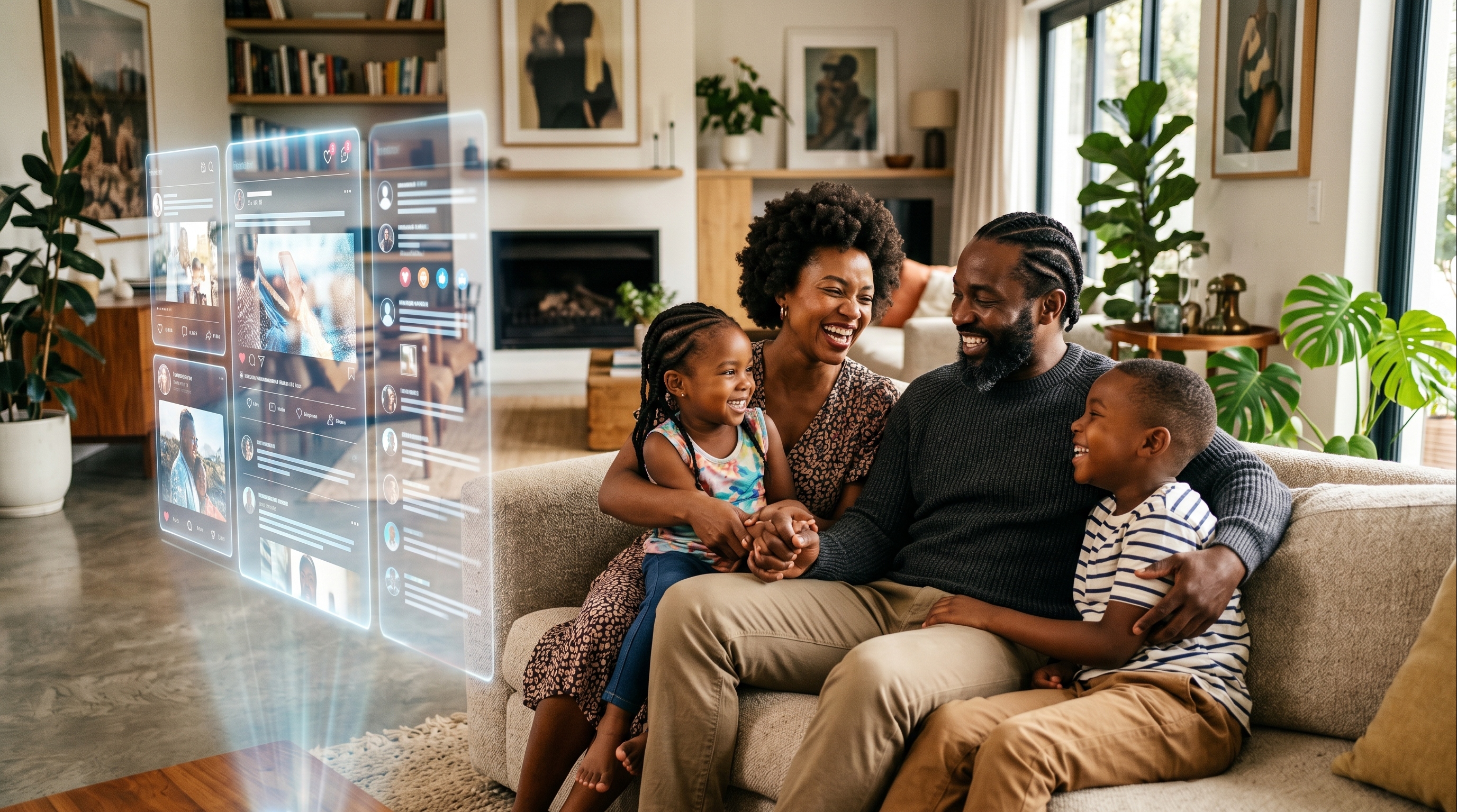
The kitchen in Moussa's home in Nouakchott was the kind of place that told you everything about who lived there. Colourful drawings of camels and houses were pinned to one wall. A stack of Hamza's schoolbooks sat next to a fruit bowl. The window faced a narrow courtyard where the afternoon sun arrived reliably at three o'clock and made the whole room glow a shade of warm amber that no filter could replicate. It was, by any honest measure, a full and living space.
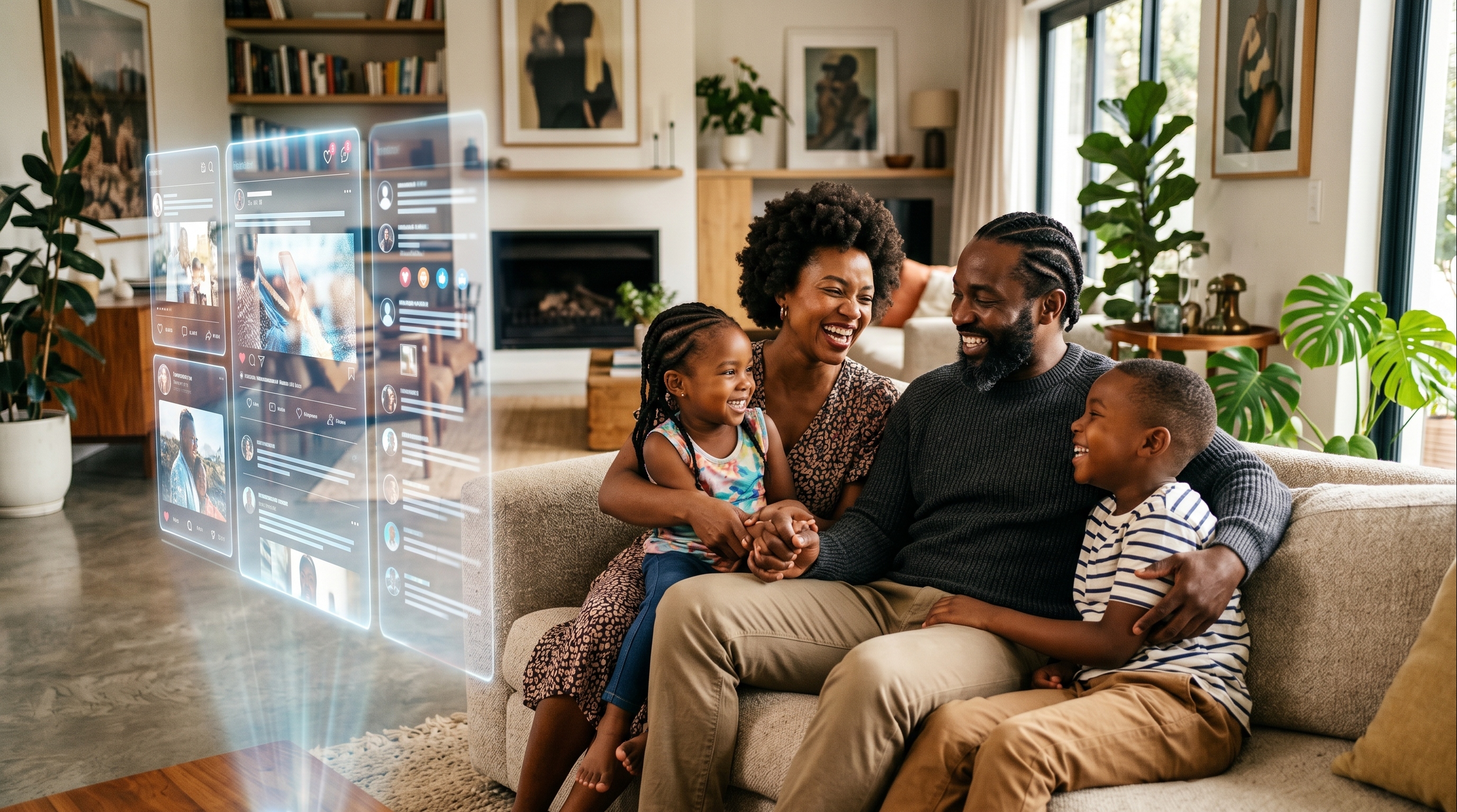
And yet, on the refrigerator, laminated in plastic and anchored by two magnetic clips, was a behaviour reward chart Moussa had downloaded from a parenting website at 11:30 on a Tuesday night; a website based in a country neither he nor his son had ever visited, addressing children in a context his family had no connection to whatsoever.
Hamza had glanced at it on the first day, asked what "star of the week" meant, and then quietly gone back to building something with bottle caps and string in the courtyard. He had not looked at the chart again.
Moussa noticed. But he did not yet understand what he was noticing.
What Is "Second-Created Reality" And Why Should Every Father Know This Term?
Second-created reality is the version of life, parenting, childhood, and family that has been manufactured, packaged, and distributed through digital platforms, influencer content, parenting apps, algorithmic recommendations, and curated social media feeds.
It is not entirely false because it contains real elements, sometimes real research, and often real intentions.
But it is a constructed version of reality, assembled by people who do not know your child, your home, your culture, your economic circumstances, or the specific human being you are trying to raise. It is a reality about children in general, not about your child in particular.
The danger is not that this second reality exists.
The danger is when fathers begin measuring their real children against it.
When Hamza, who is curious and creative and perfectly healthy, begins to look somehow insufficient because he does not match the child in the educational app.
When your household, which is warm and connected and functioning, begins to feel lacking because it does not look like the family on the parenting blog.
That gap is where confusion takes root. And confusion, in parenting, is a genuinely costly thing.
What Parents Are Actually Up Against
The systems your child moves through today are not neutral. They each carry embedded assumptions about what a successful child looks like, what a well-raised child does, what a good father provides, and what a healthy childhood contains. Many of these assumptions are shaped by contexts that are geographically, culturally, and economically distant from your actual life.
This does not make all of it useless. Some of it is genuinely valuable.
But none of it is automatically applicable to your specific child without your active, critical filter. And that filter is the thing second-created reality is most interested in bypassing, because a father who is confused, anxious, and constantly seeking external validation for his parenting choices is a father who keeps scrolling, keeps downloading, and keeps consuming.
Your child cannot afford for you to stay in that loop. Here is why.
Your child is not a project to be optimised. The language of second-created reality around children is frequently the language of productivity around milestones, performance, skills acquisition, and competitive advantage. Your child is a human being in the process of becoming themselves. Those are not the same thing, and treating them as the same thing produces children who are anxious, externally driven, and quietly unsure of their own worth.
Screens show you highlight reels, not real homes. The family on the parenting channel that appears to have it perfectly together has, without exception, a life outside the frame that looks considerably more like yours than you think. The carefully lit, beautifully soundtracked version of parenting you encounter online is not a standard. It is a production. Measuring your real family against it is like measuring your actual face against a billboard.
Your cultural framework is a legitimate child-development tool. The values embedded in your home are not gaps to be filled by Western parenting frameworks. They are simply resources.
Confusion in a father communicates itself to children. Children are extraordinarily sensitive readers of parental energy. When parents are anxious and externally directed, children absorb that anxiety. They begin to feel that they are somehow always slightly wrong, slightly insufficient, slightly not-quite-there. Parents who are grounded and clear, even imperfectly, give their child something to stand on.
The algorithm is not invested in your child's outcome. The platform that serves you parenting content is optimising for your engagement, not your child's flourishing. The content that keeps you scrolling the longest is the content that activates your anxiety, your aspiration, or your fear. None of those emotional states makes you a better parent. Knowing this does not mean abandoning all digital resources. It means consuming them with your eyes fully open.
What your child needs most cannot be downloaded. Presence. Consistency. Honest interest in who they actually are. The willingness to sit on a mat on a Friday evening and receive a hard question with an open heart. These are the things that compound over the years into a child who is grounded, trusting, capable, and genuinely well. No curriculum, app, or influencer can substitute for them.
Second-created reality will keep arriving in your feed, your group chats, your school WhatsApp groups, and the conversations of well-meaning people around you. You do not have to reject all of it. But you must not let it become the primary lens through which you see your child.


Comments (0)
Please sign in to join the conversation.
Loading comments...