

A child whose feelings are regularly received will grow into an adult who knows how to receive themselves, and that inner relationship becomes the foundation for every other relationship they will ever have. We cannot protect our children from a complicated world. But we can equip them with the inner resources to navigate it, and validation, offered consistently and genuinely, is one of the most powerful of those resources.
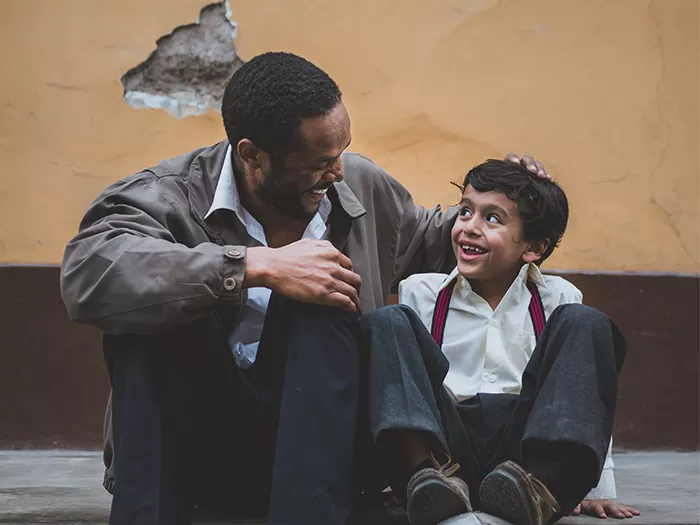
Validation. The word sounds gentle, maybe even soft, and in a culture that has always prized toughness, it can feel dangerously close to weakness.
Validating a feeling and addressing a behaviour are two different conversations, and they work best when they are kept that way. Children who feel emotionally validated at home are less susceptible to peer pressure and more resilient in the face of online negativity. Validation at home becomes armour in the world outside it.
The homework was a mess, and eight-year-old Kelechi was sitting at the kitchen table with tears sliding quietly down his face, staring at his workbook as if it had personally betrayed him. His mother, Ngozi, was standing at the counter, still in her work blouse from the long day she'd had at the hospital, her back aching, dinner not yet started.
She looked at her son, she looked at the workbook, and every instinct from her own childhood rose at once: straighten up, stop crying over something so small, wipe your face and do it again. She had grown up hearing those words.
They had worked; sort of. She had become disciplined, resilient, functional. But there was a room inside her, a small quiet room, that she had kept locked for years, because nobody had ever made it safe to open it. She stood there, in her kitchen, with a choice in front of her that felt both tiny and enormous at the same time.
But what Ngozi was about to discover, in the weeks and months that followed that kitchen moment, is that validating a child's emotional experience has nothing to do with weakness and everything to do with raising a human being who knows themselves, trusts themselves, and can function with honesty and wholeness in a world that will ask a great deal of them.
Here are twelve reasons why, especially in today's world, validation is not a luxury for parenting. It is a cornerstone of it.
01: Validation Teaches Your Child That Feelings Are Information
When Ngozi crouched down beside Kelechi that evening instead of telling him to stop crying, and said quietly, "This is really frustrating, isn't it? You worked hard, and it still didn't come out right. That's a hard feeling," something shifted in the room. Kelechi looked up. Not because the maths had been fixed, but because his mother had just told him, with her presence and her words, that what he felt was real and it made sense. This is the foundational gift of validation: it teaches children that emotions are not enemies to be defeated or embarrassments to be hidden. They are important, useful signals about what a person is experiencing. Children who learn this early become adults who can read their own inner world with accuracy. They don't walk around confused by their own reactions, suppressing things that need attention, or acting out because the feeling had nowhere legitimate to go. They feel something, they name it, and they use it. That is an irreplaceable life skill.
02: It Builds the Kind of Trust That Keeps the Communication Lines Open for Years
Ngozi's friend Adanna was navigating something far more complicated. Her 14-year-old daughter, Zara, had stopped talking to her in a quieter, more unsettling way: she answered questions with the minimum number of words required, shared nothing voluntarily, and had built a life that existed almost entirely outside her mother's awareness. Adanna kept asking herself what had changed. What she hadn't quite traced back was the pattern from Zara's earlier years: every time the child had brought her mother a feeling of confusion, sadness, a fear she couldn't name, it had been met with a correction, a lesson, or a redirect. "That's nothing to cry about." "You're stronger than that." "Let me tell you how to handle this." Over many years, Zara had simply learned: this is not a safe place to bring the real things. Validation, offered consistently from early on, sends the opposite message. It says: bring me the complicated things. I can hold them without making you feel foolish for having them. That message becomes the reason a teenager still talks to you when everything gets hard.
03: It Protects Children From Seeking Validation in Dangerous Places
Children and teenagers who do not receive emotional validation at home simply go looking for it somewhere else. In today's era, that somewhere else is a smartphone. It is social media, with its architecture of likes and comments and followers. It is peers who may not have the maturity or the wisdom to hold someone else's emotional world carefully. It is online communities that can be affirming and warm, but can also be manipulative, exploitative, or simply wrong. A child who has been consistently validated at home builds an internal sense of worth that does not depend entirely on external confirmation. They still want to be liked, naturally, but they are not desperate for it. That distinction, in the age of social media, peer pressure and online influence, may be one of the most protective things a parent can give their child.
04: Validated Children Develop Stronger Emotional Regulation Over Time
There is a deeply counterintuitive truth here that trips up many parents: acknowledging and accepting a child's emotion does not make that emotion stronger or longer-lasting. It does the opposite. When Ngozi sat with Kelechi in his frustration, he calmed down noticeably faster than on the evenings when she had told him to pull himself together. This is not a coincidence. When an emotion is validated, it runs its natural course. When it is suppressed or dismissed, it goes underground, where it tends to resurface later with more force and less context. Children who grow up in emotionally validating homes learn, gradually and almost without realising it, how to manage their own emotional states, because they have been shown, over and over, that feelings are manageable. They don't spiral. They don't shut down. They feel, they process, and they move forward. That is regulation, and it is built through practice.
05: It Gives Children the Language to Understand Their Own Inner World
Kelechi, by the time he was 10, could tell you he was frustrated rather than just melting down. He could tell you he was nervous before a big presentation rather than just getting a stomachache he couldn't explain. He could tell you he was disappointed when the school trip was cancelled. This vocabulary did not fall from the sky. It was built, word by word, through years of his mother naming emotions as they appeared: "It sounds like you're feeling left out." "That must have been really embarrassing." "I think I'd feel nervous too, in your situation." When parents consistently put language to their children's experiences, children acquire an emotional vocabulary that serves them for life. They can articulate what they feel, which means they can communicate it to others, seek help when they need it, and understand themselves well enough to make good decisions. Emotional literacy is a life skill as fundamental as reading, and validation is how it is taught.
06: It Models Empathy in a Way That No Lesson or Lecture Can
Ngozi noticed something happening around Kelechi's ninth birthday that surprised her. His younger sister, five-year-old Amara, had fallen and scraped her knee in the compound, and Kelechi had crouched down beside her and said, "That really hurts, doesn't it? I know. It's okay to cry." He was doing, naturally and instinctively, exactly what had been done for him. Empathy is not a value you can lecture a child into. It is something they absorb from being on the receiving end of it. When children experience adults responding to their inner world with care and attentiveness, they learn that this is how people treat each other. They carry that understanding into their friendships, their future relationships, their workplaces, and eventually, their own parenting. Validation is, in this way, one of the most enduring things you will ever teach your child, because they will teach it forward without even knowing they are doing so.
07: It Reduces Behavioural Outbursts That Come From Feeling Unseen
Many of the behavioural challenges parents find most exhausting have an emotional need sitting underneath them that has not been met. Children who cannot get their inner experience acknowledged through words and connection will find other ways to make it known. The body acts out what the voice has not been allowed to say. Adanna, when she began looking back honestly at the years before Zara's teenage withdrawal, could identify pattern after pattern: the acting-out episodes had almost always followed moments when Zara had tried to express something difficult and been shut down, redirected, or minimised. The behaviour was the symptom. Validation addresses the root, which is why parents who make a consistent habit of it often notice a reduction in the kind of difficult behaviour that had previously seemed random and inexplicable. It is not a magic fix. But it addresses something real.
08: It Separates the Feeling from the Behaviour
One of the most important things to understand about validation is what it is not. It is not agreement. It is not permission. It is not the abandonment of boundaries or consequences. When Ngozi told Kelechi that his frustration made sense, she was not telling him it was acceptable to throw his pencil across the room. Those are two separate conversations, and holding them separately is the real skill. The feeling is always valid. The behaviour is the part that gets discussed, guided, and sometimes corrected. Parents who conflate the two end up dismissing the emotion in an attempt to address the behaviour, and lose both conversations. The most effective parenting holds these clearly apart: first, "I understand what you felt." Then, separately and calmly, "And here's what we need to talk about in terms of how you handled it."
09: It Builds Self-Worth That Doesn't Depend on Performance or Achievement
There is a particular kind of anxiety that has become increasingly common among young people today, and it is the anxiety of a child who has learned that they are most lovable, most visible, most worth attending to, when they are succeeding. When the grades are good. When the performance is strong. When they have something to show for themselves. This is an unintentional lesson that well-meaning parents sometimes teach without realising it by consistently responding to achievement with warmth but to emotional vulnerability with impatience or correction. Validation says something different. It says: you are seen and valued not when you perform well, but simply when you show up and feel things and exist in this family. That is a profoundly stabilising message for a child to carry. It means their sense of worth has a foundation that does not crack every time they fail a test, miss a goal, or face the inevitable disappointments of a full human life.
10: It Prepares Them for a World That Will Often Feel Overwhelming
The world these children are growing up in is genuinely more complex than the one their parents navigated at the same age. The information is faster, louder, and less filtered. The social pressures are more visible and more relentless. The expectations arrive earlier and from more directions at once. Kelechi, by the time he reached secondary school, would encounter things his parents had no road map for: the particular cruelty of group chats, the anxiety of public comparison on social platforms, the speed at which reputations could be made or unmade. A child who has been consistently validated at home arrives at those challenges with something the unvalidated child often lacks: internal steadiness. Not an absence of difficulty, but a practised ability to sit with difficulty without being destroyed by it. That steadiness was built in a kitchen over homework. In a car on the way home from school. In small, repeated moments of being heard.
11: It Heals the Parent Too Often Without Anyone Expecting It
Ngozi had not expected this part. When she began consciously choosing to validate her children's emotions rather than redirect or dismiss them, something started shifting in her own interior landscape. The act of sitting with Kelechi's frustration without rushing to fix it began to feel like a sentence she was saying to herself too, about her own life. She started noticing the emotions she had trained herself to skip past: the tiredness she called fine, the loneliness she called busy, the grief she called the past. Practising validation with your children has a way of reopening the door to your own emotional world gently, not all at once, but persistently. Many parents find that in learning to honour their child's inner life, they begin, for the first time in years, to take their own seriously. That is not a side effect. That, in many ways, is the whole point.
12: It Is One of the Deepest Forms of Love Your Child Will Ever Experience From You
On a Saturday afternoon about a year after that homework-and-tears moment, Kelechi came home from a football match his team had lost, dropped his boots at the door, and sat at the kitchen table without saying anything. Ngozi set a glass of cold water in front of him and sat down across from him. She didn't say "it's just a game." She didn't say, "You'll get them next time." She said, "You really wanted to win that one, didn't you?" Kelechi looked at her. "Yeah," he said. "Yeah, I really did." They sat together for a little while, the afternoon light coming through the kitchen window at a low, warm angle, and nothing needed to be solved or fixed or redirected. He felt it. She received it. And somewhere in that ordinary, unremarkable exchange, something was being built between them that would hold for decades. This is what validation really is, at its most essential: it is proof, offered over and over in small moments, that your child's inner life matters to you. Not because they've earned it. Not because they've performed correctly. But simply, completely, because they are yours.


Comments (0)
Please sign in to join the conversation.
Loading comments...