

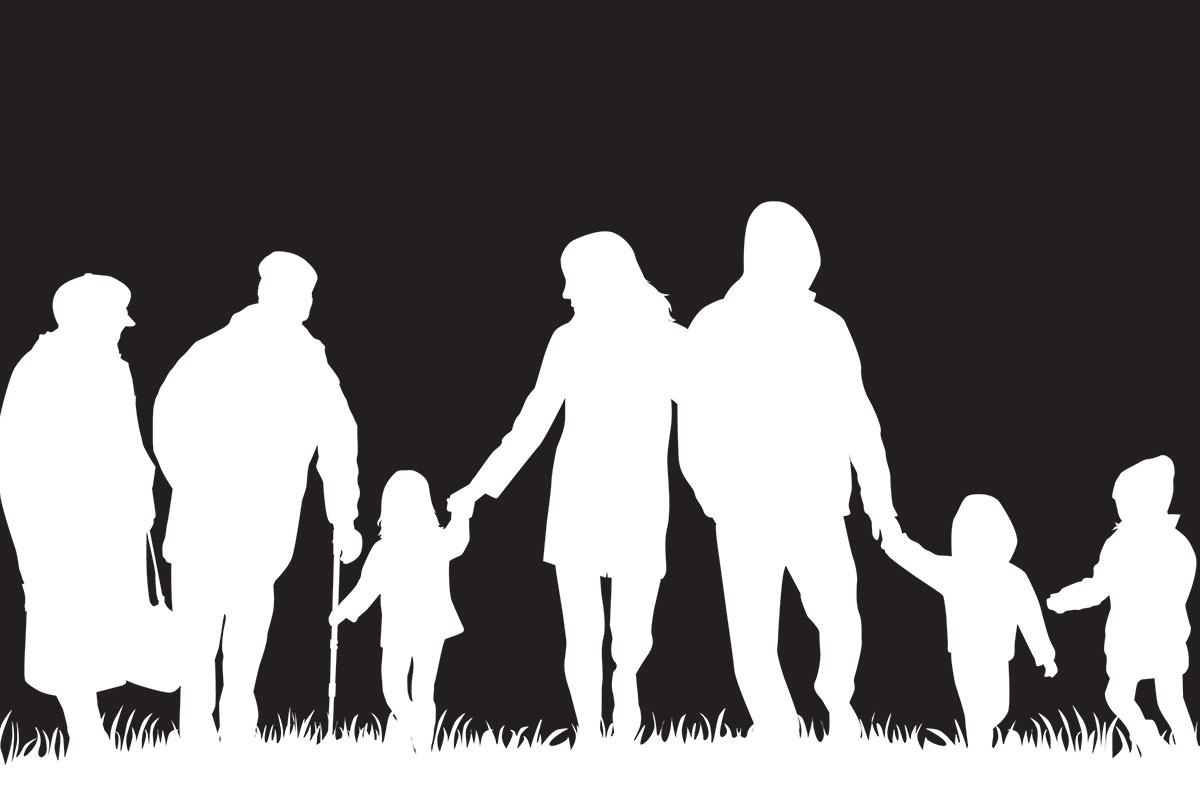
We live in an age that celebrates independence. Self-sufficiency is practically a virtue. But somewhere between the hustle of modern life and the quiet erosion of old traditions, many parents have lost access to something ancient, practical, and deeply human: the village that used to raise the child.

It was morning, and Nour was already behind. Her youngest, three-year-old Rayan, had decided that getting dressed was optional, and was demonstrating this conviction loudly from the middle of the living room floor. Her eldest, seven-year-old Ines, needed her school bag repacked because the worksheet she needed most urgently was the one currently lodged somewhere at the very bottom of the bag beneath a half-eaten biscuit and a drawing of what might have been a horse.
Nour's husband Walid had left for work at six-thirty, the apartment intercom was buzzing with a delivery she hadn't ordered, and her phone was ringing with a call from her supervisor about a meeting that had been moved up by an hour. She stood in the middle of all of it; barefoot on the cool tile, hair still wrapped in a towel, and did what she later described as "the internal scream that has no sound."
She managed. She always managed. But managed is a very different word from thriving, and on that particular Wednesday, the gap between the two felt as wide as the Mediterranean.
Three hours later, when Nour arrived at her mother's apartment in the older part of the city, Rayan finally asleep in the back of the car and Ines quietly colouring at the kitchen table, she exhaled properly for the first time all day.
Her mother, Fatima, set down a glass of mint tea without being asked, settled Rayan onto a mattress in the side room with the easy confidence of someone who has done this ten thousand times, and then simply sat beside her daughter and said, "Tell me."
And Nour, who had been holding the weight of the morning in her chest since seven a.m., put her face in her hands and cried from the sheer relief of not having to explain herself to someone who already understood.
That, in its entirety, is why extended families still matter.
1. Children Grow Bigger and Stronger Inside a Web of Adults Who Love Them
There is a particular kind of confidence that forms in children who grow up surrounded by multiple generations of people who know their name, remember their stories, and are genuinely interested in how they are doing. Ines, Nour's eldest, had a relationship with her grandfather Brahim that was unlike anything she had with any adult in her immediate daily life. He was the one she talked to about things she didn't quite know how to say to her parents because grandparents occupy a different emotional register altogether. They have more time. They have less agenda. They remember what it was like to be seven. When Ines told Brahim that she felt nervous about a new teacher, he didn't immediately problem-solve or reassure her reflexively. He made her a small cup of weak sweet tea, sat her beside him on the balcony, and told her about the first day he walked into a room full of strangers. She went to school the next morning with a story that belonged to her, and a thread connecting her to a lineage of people who had navigated hard moments and come through fine.
2. Extended Family Is an Emotional Infrastructure That Modern Life Cannot Replace
We have built remarkable substitutes for many things our ancestors depended on community for. There are apps for groceries, childcare services, platforms for almost every practical need a family has. But there is no app for the kind of steadying presence that comes from a grandmother who has watched your children since birth, who knows which one needs more patience and which one needs more challenge, who can hold your baby and know from the weight of the cry whether it's hunger or overstimulation. That knowledge is earned through presence, and it cannot be outsourced. Walid's mother, Khadija, came every Thursday afternoon without being asked, without keeping score, and without requiring direction. She simply arrived, observed, and filled the gap she could see needed filling. Some weeks that was helping Ines with her reading. Other weeks it was folding laundry while Nour took a nap she hadn't admitted she needed. This is the emotional infrastructure of extended family that is quiet, consistent, and irreplaceable.
3. Grandparents Transmit Something Schools and Screens Simply Cannot
There is a form of cultural and emotional education that passes between generations through proximity, stories told at the dinner table, the smell of food being cooked the old way, the proverbs offered at exactly the right moment, and the hands that know how to braid hair in a style that goes back further than memory. Brahim was a man who had lived through things that would never appear in any curriculum Ines would study, and yet what he gave her was a kind of rootedness that would quietly anchor her for years before she even had words for it. When children lose access to grandparents through distance, estrangement, or the accelerating pace of modern life, they lose a particular kind of knowing that no amount of screen time or structured enrichment can fully restore.
4. Parents Need Other Adults; Not Just as Help, But as Witnesses
One of the things nobody tells you before you become a parent is how isolating it can be to do this work without someone who sees you doing it. Nour loved Walid. She trusted him completely. But he was also in the trenches with her, and there were moments when what she needed was not a partner who shared her exhaustion but a parent who had survived her exact situation and could tell her, from the vantage point of lived experience, that it passed. Fatima provided that. Not with speeches. Not with advice that wasn't asked for. But with the calm, unspoken authority of someone who had once been exactly where her daughter was standing and had come through it into something gentler. That witness matters more than we talk about. It makes the ordinary difficulty of parenting feel less like a sentence and more like a season.
5. The Village Handles What Two People Cannot
There is a mathematics to parenting that rarely gets discussed honestly: two parents, regardless of how capable or committed they are, are not always enough people to meet the full needs of a child, manage the logistics of a household, pursue their professional lives, maintain their relationship with each other, and still have something left to give to themselves. This is not a failure. It is arithmetic. Nour and Walid were struggling because two people doing the work of an entire support system will eventually feel the weight of that load. Extended family, when it is healthy and engaged, distributes that weight in a way that makes the whole enterprise of raising children feel more sustainable, more joyful, and more human.
6. Cousins Are the First Friends Children Learn to Navigate Complexity With
Ines's relationship with her cousin Sana, who was nine and had strong opinions about everything, was not always peaceful. They disagreed about games, about fairness, about who got to sit in the good chair at the family table. But those disagreements were some of the most important social education Ines was getting. Learning to negotiate with a peer you can't walk away from, in a setting that is safe enough to make mistakes and recover from them, is precisely the kind of emotional intelligence that will serve a child for the rest of their life. Cousins are not just family. They are a training ground.
7. Extended Family Keeps Cultural Identity Alive in Practical, Daily Ways
In a world that is increasingly homogenized, where children are watching the same shows, wearing the same brands, and navigating the same digital platforms, extended family is one of the last truly organic preservers of specific cultural identity. It is where language gets practised in its real, informal register. It is where religious observance becomes something lived rather than explained. It is where the specific texture of a family's particular story gets handed down not through formal instruction but through simple, repeated proximity. Nour's children were becoming Algerian not in any abstract sense, but in the specific, embodied sense of knowing exactly how their grandmother's hands moved when she was cooking something that required patience, and why that mattered.
8. Boundaries Within Extended Family Are a Design Feature
Let's be honest here, because this matters: extended family is not without complexity. There are dynamics to navigate, differences of opinion on parenting approaches, unsolicited commentary that lands harder than intended, and the particular challenge of maintaining your identity as a couple within a wider family system that has its own gravitational pull. Nour and Walid had their share of moments where they needed to recalibrate; where a well-meaning suggestion from Khadija landed in a way that needed addressing, where the boundary between "support" and "taking over" needed gentle clarification. None of that cancelled out the value of the relationship. It was simply the work of maintaining it with integrity. Healthy extended family relationships require the clear, kind, consistent communication about what is working and what needs adjustment.
9. The Modern World Has Changed the Form, Not the Need
Geography has scattered many families in ways that previous generations didn't experience. Work migration, educational opportunity, and the rising cost of living in major cities are real forces that have physically separated extended families in ways that used to be unimaginable. And yet the fundamental human need they served has not disappeared. It has simply had to adapt. For many families today, the extended family village is assembled through voice notes, weekend visits, shared school holidays, and the kind of intentional gathering that requires planning rather than just proximity. It looks different. It takes more effort. But the families who make that effort are building something that their children will feel as a kind of invisible solidity in their lives, long after they've grown up and moved away themselves.
10. The Gift You Give Your Children Is the People You Keep Close
Here is the thing that Nour understood, sitting on her mother's balcony that afternoon with Rayan still asleep inside and Ines's quiet laughter drifting in from the kitchen where Fatima was teaching her, unprompted, how to fold pastry the right way: the most significant thing she could do for her children was not to protect them from difficulty or to give them every advantage, but to ensure that they were held inside a web of people who genuinely loved them. The world they were growing up in was fast, loud, and often overwhelming. But children who know, in their bones, that there are multiple people in their corner move through that loud world with a different kind of steadiness. Not because life is easier for them, but because they are never carrying its weight entirely alone.
Extended families are one of the most sophisticated support systems humanity has ever designed. And in a changing world, they matter more, not less.

:max_bytes(150000):strip_icc()/Parents-HowToApologize-eee179a2361f4796a34eb8543fb8f619.jpg)
Comments (0)
Please sign in to join the conversation.
Loading comments...