

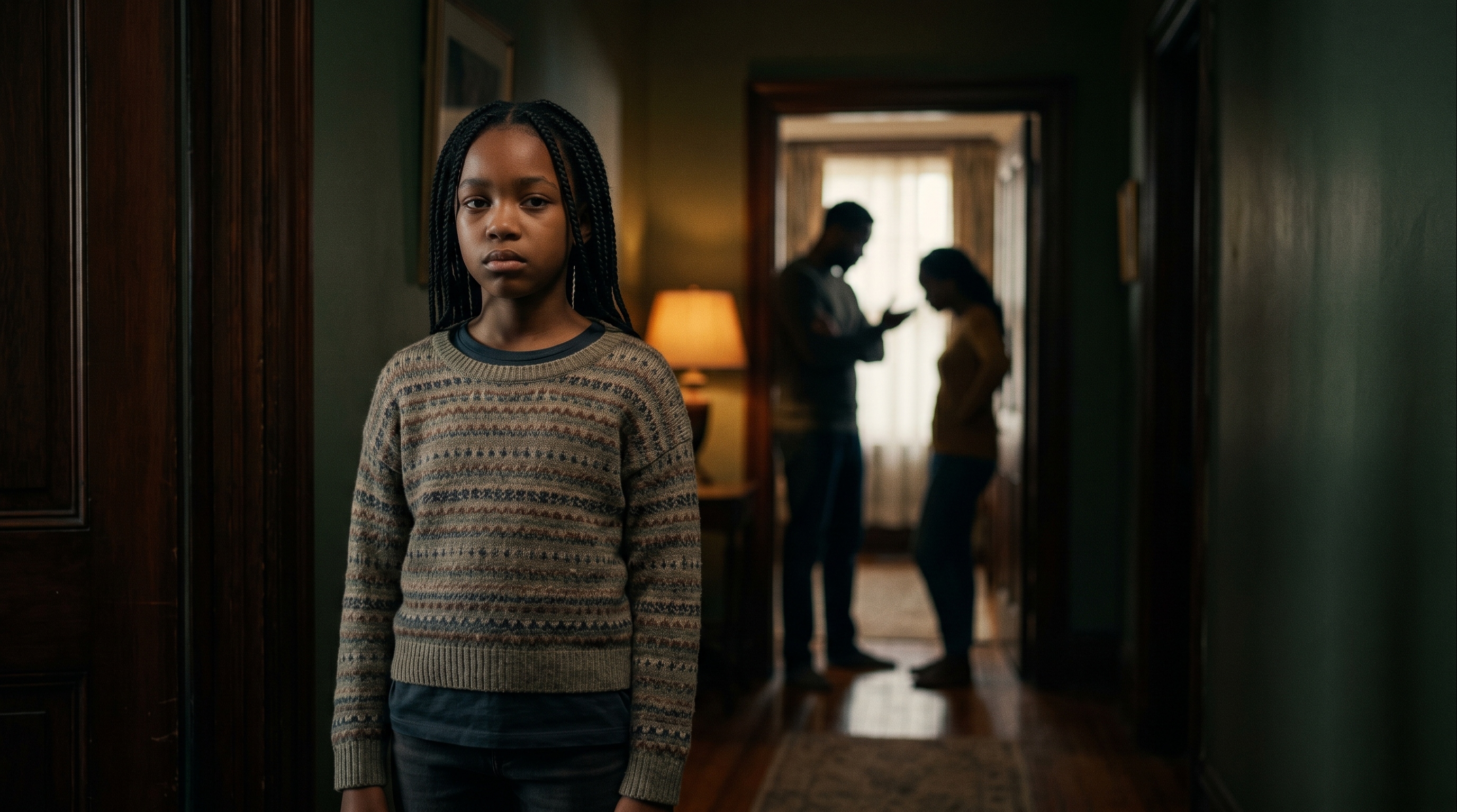
Eight-year-old Aminata Diallo stands at the edge of the doorway, clutching her school bag tightly, watching her father, Mamadou, slam a cup on the table because the tea was lukewarm. Her mother, Fatoumata, moves quietly, head low, refilling the kettle without a word. Aminata does not ask for breakfast that morning.
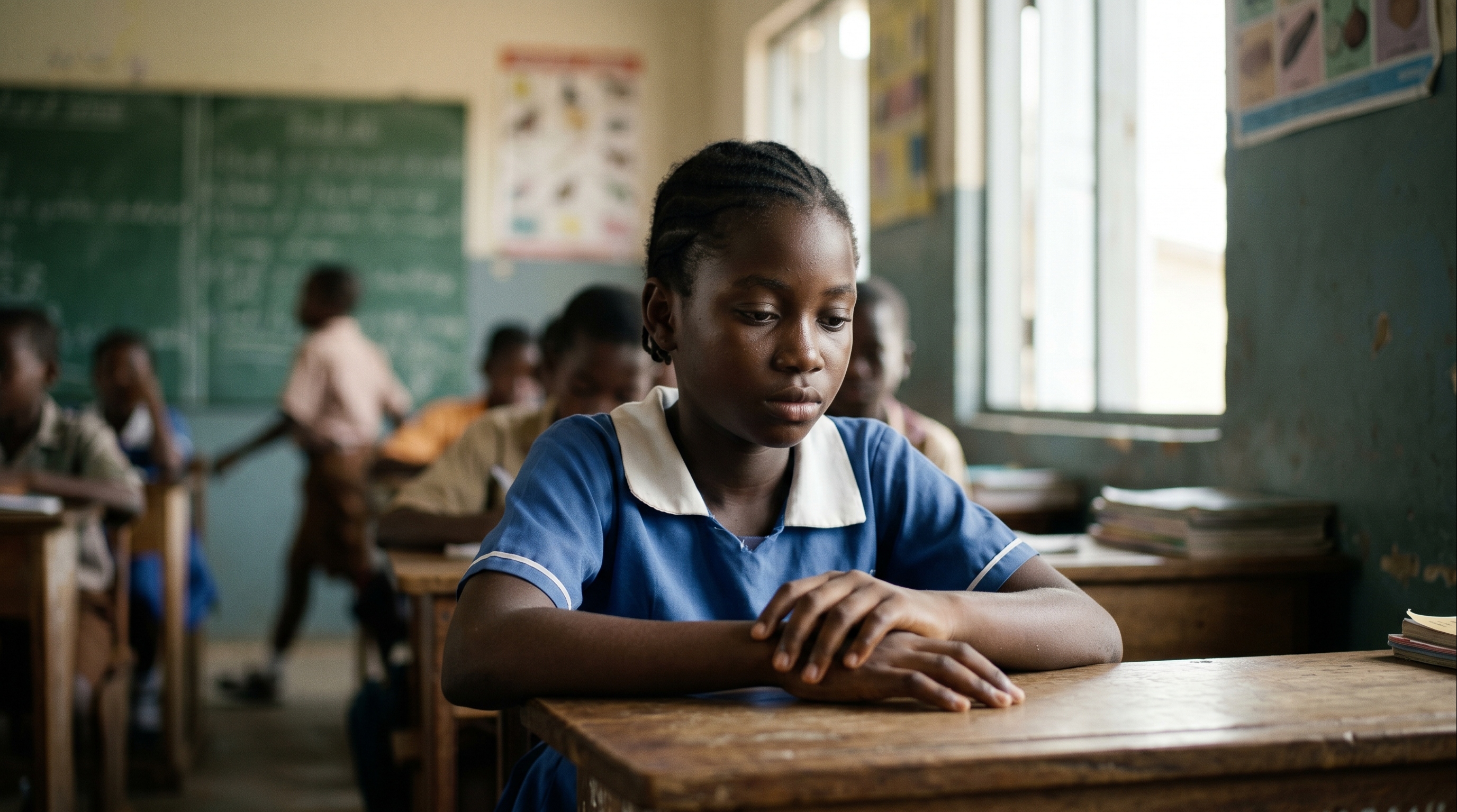
She has learned not to ask for things because asking always seemed to make things worse.
That is the wound nobody sees when Aminata’s uniform is pressed, and her homework is done.
That is the daily reality that shapes how she will see herself and the world, for the rest of her life, unless someone notices, and unless someone acts.
Using a child as a punching bag does not always mean physical hitting, though that is certainly part of it.
It means a pattern of directing your unprocessed anger, frustration, stress, and emotional overwhelm onto a person who is small, dependent, and utterly unable to defend themselves or leave.
It looks like screaming at a child for spilling a cup of water. It sounds like telling a six-year-old, “You are so stupid, can’t you do anything right?” It feels like the heavy silence that follows a child’s innocent question, punished with a cold stare that says, “Your existence is an inconvenience.”
Here are the forms it takes most often, and these are worth listing clearly so that we can recognise them:
Verbal aggression: Insults, name-calling, belittling language, threats, and shaming delivered to a child with emotional intensity.
Emotional dismissal: Consistently ignoring a child’s emotional needs, invalidating their feelings, or ridiculing them when they cry.
Rage displacement: Taking out adult stress on the nearest, most powerless person in the room.
Conditional love: Communicating love only when a child performs well, and withdrawing warmth as punishment for perceived failure.
Public humiliation: Shaming children in front of relatives, neighbours, or siblings as a disciplinary tool.
Silent punishment: Weeks of deliberate coldness designed to make a child feel invisible and unworthy.
All of these, done consistently, teach a child one devastating lesson: I am not worth being treated with care.
When a child is consistently treated as worthless, they do not simply shrug it off and grow up fine. The research on childhood emotional trauma is sobering, but more importantly, the human stories are undeniable. Here is what tends to happen, and these are real outcomes that parents must sit with:
They shrink. They stop talking, stop asking questions, stop dreaming loudly. They make themselves small because that was the safest thing to do.
They develop anxiety and chronic self-doubt. Every decision becomes agonising because they have never been allowed to trust their own instincts.
They struggle with identity. If the people who were supposed to reflect worth back to them reflected only shame, they grow up unsure of who they even are.
They attract harmful relationships. Children who were made to feel worthless often accept being treated poorly by friends, partners, and colleagues because it feels familiar, not wrong.
They underperform academically and professionally. Not because they lack talent but because somewhere deep inside, they believe they do not deserve success.
They become emotionally unavailable parents themselves. The cycle, if unaddressed, rolls forward into the next generation like a slow, crushing tide.
This is not destiny. But it is the default if no one intervenes.
To every parent reading this: Your child notices your choices. They are not just seeing the aggressor; they are watching you to understand whether they are worth defending. And when you stay silent, it tells them, even the person who loves me most does not think I am worth standing up for.
That lands in a child’s soul like a stone in still water — the ripples go out for years.
This is not about blame.
But awareness is what makes change possible.
Back to that classroom.
After Aminata gave her quiet, heartbreaking answer, Mme. Kouyaté did something that would echo through the child’s life.
She did not push, did not interrogate, did not panic.
She simply said, “I want you to know that every time you sit in my class, your presence adds something. You are not extra. You belong here.”
Then she let her go.
It sounds small. It was not small. It was the first crack in the wall Aminata had been building around herself.
Over the following months, Mme. Kouyaté did several consistent, intentional things, and these are practical steps that any adult in a child’s life can take:
She created low-pressure opportunities for Aminata to speak — small group conversations, written responses, and partner work where there was no audience for failure.
She praised process, not just results. “I noticed how hard you worked on this” — not just “well done.”
She communicated with Fatoumata. Not accusingly, but curiously, “Aminata seems withdrawn. How is she doing at home? What does she love? What makes her feel safe?”
She referred the family to a community counselling resource, not as a crisis intervention, but as support.
She kept showing up consistently because children who have been let down by adults need to see adults who do not disappear.
When you are angry, who do you take it out on?
When you are stressed, who is close enough and safe enough to absorb it?
When your child makes a mistake, is your first instinct to correct or to condemn?
When last did you tell your child, without any condition attached, that they matter?
Here are some things we know to be true, and we want you to take these seriously:
Your emotional regulation is your child’s emotional education. They are watching how you handle hard feelings, and they are learning from you whether feelings are safe or dangerous.
Discipline and denigration are not the same thing. You can correct a child’s behaviour firmly and consistently without attacking their personhood. “That choice was wrong” is different from “You are worthless.”
Your stress is real, and it deserves a proper outlet through a trusted friend, a counsellor, a community group, a journal, or a walk. Not on a child.
Repair is powerful. If you have already caused harm, it is not too late to go back. A parent who says, “I was wrong, and I am sorry”, teaches a child more about dignity and accountability than years of perfect behaviour could.
Children need your warmth as much as your provision. Feeding, clothing, and schooling a child are not enough if the emotional atmosphere of the home is hostile. Love must be expressed consistently in ways the child can feel.
Healing children who have become nonentities is not a solo project. It requires a community that understands that every child’s well-being is a shared responsibility.
Here is what that looks like in practice:
Communities must normalise emotional support for parents. Isolated, stressed, unsupported parents are more likely to harm their children. Wrap around the parent, and you protect the child.
Schools must be trained to spot the signs of emotional withdrawal, not just academic underperformance.
Neighbours and extended family must stop “minding their business” when a child is clearly suffering. Caring is culture at its best.
Community and religious leaders must preach a new definition of discipline: one that does not confuse cruelty with authority, or volume with love.
We must make counselling accessible and destigmatised. In many communities, seeking help is still seen as a weakness. We must change this narrative urgently.
Wherever Aminata is in your life, she is still there. Still watching. Still waiting to find out whether the world thinks she matters.
The answer you give her, through your words and your choices and your attention, will shape who she becomes.
That is not pressure.
That is an extraordinary privilege.
Every child deserves to grow up knowing that they are not extra, not an inconvenience, not a problem to be managed, but a full human being with a voice worth hearing and a life worth living fully.
The question is not whether we can help them get there.
The question is whether we choose to.
Choose to.



Comments (0)
Please sign in to join the conversation.
Loading comments...