

Ekow Asare-Nyarko, eleven years old, round-faced and usually the loudest person in any room he entered, stopped talking at the dinner table. It was more like a dimmer being turned down, slowly. First, his answers got shorter. "How was school?" used to produce a five-minute monologue about who said what to whom and which teacher was unfair and what game they played at break time.
Then it became, "Fine." Then it became a shrug. Then it became nothing at all.
His mother, Abena, noticed first, and she mentioned it to her husband, Kweku, "Ekow hasn't been himself. He doesn't talk anymore." Kweku looked up from his phone, considered it, and said, "Boys get like that. He's growing up. Leave him."
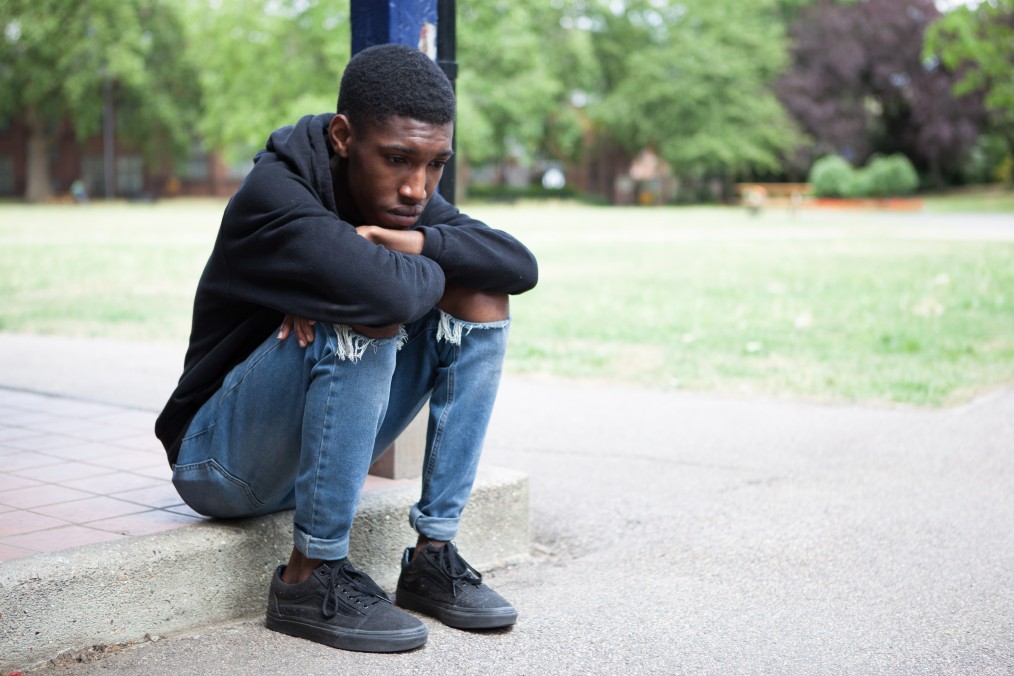
Children who used to talk and then stop, share less, laugh less, retreat more, whose silence sits in rooms like an unanswered question really do deserve to be talked with.
This is for the parents who love their children deeply but find themselves standing outside, knocking softly, not sure if anyone is coming to open it.
Let's talk about what that silence is actually saying.
1. Silence Often Means: "I Tried to Tell You, and It Didn't Go Well"
The first time Ekow tried to tell his parents that something was happening at school, his father had laughed. Kweku hadn't meant any harm. He just said, "Ah, boys will be boys, you need to toughen up," and moved on. Ekow sat very still for a moment, nodded, and went to his room. He didn't bring it up again. What Kweku saw as a light encouragement, Ekow experienced as a door closing. Children perform a quiet, constant risk assessment every time they consider sharing something: Is this safe? Will I be heard? Will they laugh? Will they dismiss it? When the answer comes back as "no", they file that information away and adjust their behaviour accordingly. The lesson Ekow learned was not that his father didn't love him. The lesson was that this particular kind of hurt was not something his father's world had space for.
2. Silence Often Means: "I Don't Have the Words, and I Need Help Finding Them"
Ekow felt something heavy in his chest when he walked into school in the mornings. He didn't know whether it was sadness, or anxiety, or embarrassment, or all three layered on top of each other. When Abena asked him what was wrong, he genuinely didn't know how to answer, so he said "nothing," because "nothing" was easier than the truth, which was: "Something is wrong, and I don't know what it is or how to explain it to you." Parents sometimes interpret this kind of silence as defiance or secrecy. It is a child standing at the edge of their own emotional vocabulary and finding it doesn't reach far enough. Your job is not to demand the words. Your job is to sit nearby and help them find a way to begin.
3. Silence Often Means: "I'm Protecting You From Something"
Abena eventually sat next to Ekow on his bed one afternoon, not to interrogate him, just to sit. She brought him a small snack, put it beside him, and said nothing for a few minutes. Then she said, "You know, when I was your age, there was a period I stopped talking to my mum too. Not because I didn't love her. Because I was trying to carry something I didn't want to put on her." Ekow looked up. Something in his eyes shifted. Children can be remarkably protective of their parents. They watch us stress about rent, about work, about family. They hear us argue about money in the next room. They absorb the emotional atmosphere of the home like sponges, and sometimes they go quiet precisely because they have decided, quietly and without being asked, that their problems are not important enough to add to the pile. That is not maturity. That is a child shrinking themselves to make room for the adults around them.
4. Silence Often Means: "Something Happened That I'm Ashamed Of Or Afraid Of"
When Abena finally created enough stillness and safety, Ekow told her. It came out in pieces, not all at once. A boy in his class. Daily unkindness. Feeling embarrassed in front of his friends. Not knowing how to make it stop. Feeling, somehow, like it was his fault. Shame is one of the most powerful silencers in a child's world. When children experience something, shame makes them turn inward. They do not come to you because they don't trust you, but because shame tells them they are the problem. Creating the conditions where a child can speak without fear of punishment, ridicule, or overwhelming parental emotion is one of the most important things a parent can ever do.
5. Silence Often Means: "The Environment at Home Feels Unsafe to Be Honest In"
This one is the hardest for parents to hear, and it deserves to be said gently but clearly. Children are exquisitely sensitive to the emotional temperature of their homes. A home where parents are frequently in tension, where emotions run high and unpredictably, where a child has learned that honesty sometimes leads to punishment or a dramatic reaction, that home teaches children that silence is the safest strategy. Kweku, in fairness to him, was not a harsh father. But he was an impatient one. His reactions to bad news were large and immediate. Ekow had learned, early, that bringing his father a problem sometimes meant a bigger reaction than the problem itself. So he stopped. This is an invitation for every parent to ask honestly: What does my child believe will happen if they come to me with something hard?
6. Silence Often Means: "I Am Struggling With Something Bigger Than I've Shown You"
There is a category of silence that needs to be taken particularly seriously, and every parent needs to know how to recognise it. When a child's withdrawal is accompanied by other signs, the silence has moved into territory that requires professional support. Abena noticed that Ekow's silence had come with two of these signs: he had stopped eating his evening meals fully, and his teacher had sent a note home about his attention in class. She did not ignore those signals. She booked an appointment with his school counsellor. Trust your gut. A child who is consistently withdrawing across multiple areas of life is a child who needs more than a conversation. They may need a professional.
7. Silence Often Means: "I Need You to Come to Me. I Don't Know How to Come to You"
After that Saturday afternoon on the bed, Ekow didn't suddenly become the chatty boy at the dinner table overnight. Change doesn't work that way. But something had shifted. He started leaving small doors open, sitting near Abena while she cooked, not talking but present. Asking his father to help him with his homework, which he usually preferred to do alone. These were not accidental. They were small, tentative, carefully extended invitations. Children who have learned to be quiet often don't know how to find their voice again all by themselves. They need a parent to meet them halfway. To notice the small doors and walk through them without making it a big deal.
8. Silence Often Means: "I Need to See That It's Safe to Be Imperfect Around You"
One evening, a few weeks after their bedroom conversation, Kweku sat down beside Ekow on the sofa and said, "The thing I told you about toughening up, I don't think that was the right thing to say. I'm sorry." Ekow stared at his father for a long moment, and then slowly, like something releasing, he smiled. That single moment did more for their relationship than a hundred advice-giving conversations could have. Children need to see that the adults they love are capable of being wrong, of admitting it, and of staying in the relationship anyway. Perfection from a parent is not reassuring to a child. It is alienating. Authenticity is what makes a parent safe to talk to.
9. Silence Often Means: "I Am Watching to See If You'll Notice Without Me Having to Ask"
There is a particular kind of hope that children carry in their silences: the hope that someone will look closely enough to see what they haven't been able to say. When Abena noticed that something had changed with Ekow, and then chose to act on it rather than explain it away, she passed a test Ekow hadn't even consciously set. He found out that he mattered enough to be noticed. That discovery became the foundation on which everything else was rebuilt. Your child's withdrawal may be, in part, a question: Do you see me? Not just my report card and my behaviour but me?
10. Silence Often Means: "I Am Learning What Kind of Person I Am, and It's Terrifying"
The thing to understand about a child's silence is this: sometimes it has very little to do with you and everything to do with them. Children in the middle years and early adolescence are in the process of forming their identities, and that process is profoundly disorienting. They are asking Who am I? What do I feel? What do I believe? Where do I belong? That kind of internal excavation can produce a very quiet child, not because they are troubled, but because they are in the middle of something enormous and they need space to be inside it. The role of the parent here is not to pull them out before they're ready, but to remain a steady, warm, available presence so that when they surface, they know exactly where to come.
If your child's silence is accompanied by signs of persistent sadness, changes in eating or sleeping, or expressions of hopelessness, please reach out to a paediatrician, school counsellor, or mental health professional. Early support makes a profound difference.


Comments (0)
Please sign in to join the conversation.
Loading comments...