

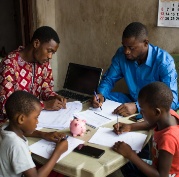
For so many of us in Lagos and across Nigeria, the year feels like a fresh chance after the rollercoaster of the past few years. Building real, lasting wealth doesn't mean suddenly winning big or stumbling on some secret formula. It's more about the small, everyday decisions we make together as a family decisions that add up over time and actually stick.
The economy is giving us a bit of breathing room this year. People are talking about GDP growing somewhere between 4 and 4.5 percent, inflation finally coming down a notch, and the naira holding steadier than before.
It's not paradise, but it's better than what we've dealt with lately. That means families who get intentional now can actually move forward instead of just treading water.
Think about it: rent is still brutal in places like Lekki, Ikeja, or even the mainland. School fees for one child can feel like paying another rent. Then there's fuel for the generator, market runs that cost double what they did a couple of years ago, plus the constant "small" requests from extended family or friends.
No wonder money conversations between husband and wife sometimes turn into arguments. But I've seen couples flip that script when they decide to face it as a team.
When both of you—and even the older kids—are on the same page, money stops being the enemy and starts feeling like something you're building together. Less stress at home, more laughter, better sleep. That's the real win.
So where do you even start? Grab a quiet evening—maybe after the kids are asleep or on a Saturday morning when nobody's rushing—and just talk. No phones, no distractions. Ask each other the honest questions: What does "notable wealth" look like for us right now?
Is it finally clearing that high-interest loan that's been choking us? Putting together an emergency fund so a sudden hospital bill doesn't send us borrowing? Saving toward a plot of land somewhere growing like Ibeju or Epe?
Making sure the children's school and maybe uni don't force us into panic mode every term? Or just having a little extra coming in so life feels less hand-to-mouth?
Make it real. Not "we want to be rich someday," but something you can measure like "let's aim to save ₦3 to 5 million toward a house or big investment by December" or "get six months of basic expenses tucked away by mid-year."
When you both own it (and maybe explain a simple version to the teens), it stops feeling like "your money" versus "my money." It's ours. Our plan. Our future.
Next, you have to know exactly where the money is going. I know, tracking sounds boring, but skip it and you'll keep wondering why things feel tight even when salary comes. Do it for a full month—two if you can.
Write down every single thing: Bolt rides to work, okada to the kids' school, data bundles, Saturday market shopping, that quick Indomie-and-egg run when you're tired, aso-ebi contributions, generator diesel, everything.
Use whatever works—PiggyVest or Kuda has those spending insights, or just a shared note on your phone or a cheap exercise book on the dining table.
Once you see it all laid out, the leaks jump out. Maybe too many small treats, or data eating more than you thought, or those endless "just this once" family requests. Then sit together and build a budget you can actually live with.
A split that feels doable for lots of Nigerian homes: 50–60 percent on the non-negotiables—rent, food, transport, school stuff, light bill, water. Take 10–20 percent off the top for savings and investments (pay yourselves before anybody else).
If there's debt hanging around, push another 10–15 percent toward killing it fast. Whatever's left is for the nice-to-haves—family jollof night out, small treats—but cap it so it doesn't creep up.
The magic happens when everyone agrees. Suddenly saying "no" to extra pressure—from friends, in-laws, or even your own impulses—feels easier because it's for the family goal, not just one person's idea.
But listen, saving alone won't cut it forever with prices the way they are. You need to grow the income pot too. Talk about it like teammates: What can we do together?
One person might run a small POS spot in the neighborhood for quick cash, another could freelance online (writing, design, managing socials for small businesses), bake cakes or small chops for events, resell phone cases or Ankara styles on WhatsApp and Instagram, tutor after school, or even start posting family vlogs or parenting tips on TikTok—some people are quietly making decent money from that now.
Don't go solo. Team up—one handles the main work, the other helps with ideas, customers, or keeping records straight. And learn free wherever you can—YouTube has endless tutorials on digital skills, social media growth, basic online selling.
Even a steady extra 20–50 percent coming in over the next year changes how the house feels. Less tension, more options.
While you're at it, protect what you're building. Get that emergency fund going—aim for three to six months of basics in something that earns good interest, like a money market fund or high-yield savings (plenty are doing 10–20 percent these days).
It means when school hikes fees or the fridge packs up, you don't have to borrow at crazy rates. If debt is weighing you down—those app loans, credit from shops, buy-now-pay-later—attack it.
Throw bonuses, side money, tax refunds straight at it. Celebrate every chunk paid off with something small as a family. Debt-free living is freedom.
When the basics feel solid, start letting money work for you. Keep it simple at first: Treasury Bills or FGN bonds for steady, low-stress returns. Try dollar stuff or local stocks in solid names (banks like Zenith or GT, everyday companies) through apps like Risevest, Bamboo, or Trove start small, ₦10k–50k a month, and keep adding.
Land in up-and-coming spots is still a favorite for many families; buy gradually if you can. And don't sleep on investing in the kids good schools, skill courses, anything that sets them up long-term.
Talk about it with the older ones too. Not heavy lectures, just casual chats so they pick up the mindset early.
Make it a habit. Once a month, over rice and stew or a relaxed evening, check in: What came in? What went out? High-five the wins a savings milestone, a debt payment done, a side gig landing a client. Fix what slipped.
Stay encouraged by remembering why: fewer money fights, more family time, ability to help others without breaking, something solid to hand over one day.
Consistency is everything. Even ₦20,000 or ₦30,000 set aside and invested sensibly each month grows surprisingly big over years. Most people who build real wealth started exactly like this—small, steady, together.
2026 isn't perfect, but it's kinder than the last few. You don't need to overhaul everything overnight. Pick one thing: track spending this week, have that goal talk this weekend. Build from there.



Comments (0)
Please sign in to join the conversation.
Loading comments...