

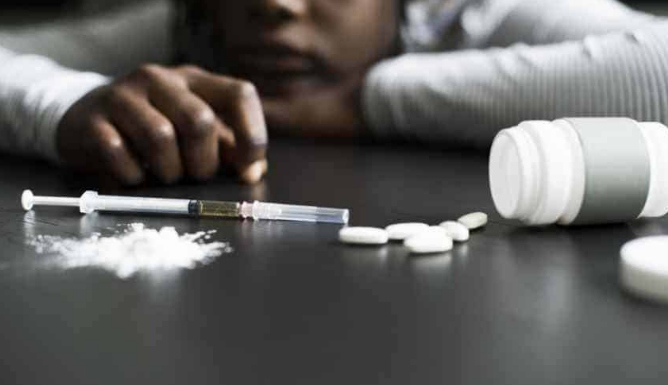
Solange Nahimana was folding chairs after her nephew's birthday celebration when her son Junior, 15 years old, pulled her aside with a look on his face she hadn't seen before. "Mum, someone offered me something at the back of the compound tonight," glancing around to make sure no one else could hear. "I said no, but I didn't know what to do after that, so I just walked away."

Solange felt her stomach drop, and her pride rise at almost the same moment, because her son had told her the truth, unprompted, on the very night it happened, and she understood immediately how easily that conversation could have gone differently.
Her husband, Fabrice Ntirampeba, joined them a moment later, and the three of them stood together near the emptied chairs, talking quietly while the rest of the compound wound down around them.
It was, in many ways, the best-case version of a moment that terrifies most parents, and it became clear to both of them that Junior's calm refusal hadn't come from nowhere. It came from months of small, deliberate conversations they'd been having with him, which prepared him, without either of them realising it fully at the time, for exactly this moment.
1. Exposure happens earlier and more casually than most parents expect. Junior wasn't approached by a stranger in a threatening setting; he was offered something by a familiar peer in a normal social gathering, which is how most first exposures actually occur.
2. Curiosity, not rebellion, is usually the real starting point. Teenagers are neurologically wired to seek novel experiences during adolescence, and understanding this removes the assumption that drug exposure only touches troubled teenagers or reflects failed parenting.
3. Peer offers are almost always framed as low-stakes and casual. The language used with Junior that night was reportedly relaxed, something like "just try a little, everyone does it sometimes," designed specifically to lower resistance rather than raise alarm.
4. Silence at home creates a vacuum that peers happily fill. When parents avoid the topic entirely out of fear of planting ideas, teenagers end up learning everything they know about drugs from friends, social media, or trial and error instead.
5. Shame-based warnings tend to backfire. Fabrice had initially planned to give Junior a stern, fear-based lecture months earlier, but a conversation with a school counsellor convinced him that information paired with trust works far better than fear paired with distance.
6. Unsupervised, unstructured time increases risk considerably. Gatherings with minimal adult presence and long stretches of free time create exactly the conditions where casual offers are most likely to occur.
7. A teenager's need to belong can override their better judgment in the moment. Junior admitted later that part of him worried about seeming uncool for refusing, even though he knew clearly that he didn't want to say yes.
What Solange and Fabrice Had Already Put in Place
1. They started talking about it long before any party invitation existed. Rather than waiting for a single big talk, they'd folded small, natural conversations into ordinary moments over many months, during car rides, while cooking, during the news.
2. They gave him a clear, simple exit line to use in the moment. Fabrice had once told him, half-jokingly, "If anyone ever offers you something, just say your parents drug-test you randomly; it's an easy lie that saves face," and Junior later admitted he'd used exactly that line that night.
3. They made clear that calling them would never lead to punishment in a crisis. Junior knew, because they'd said it directly and repeatedly, "If you're ever in a situation that feels unsafe, call us, and we deal with everything else afterwards, calmly."
3. They addressed the everyone does it narrative honestly rather than dismissively. Instead of denying that peers experiment, Solange had told him plainly, "Some teenagers do try things, and most who do aren't bad people, but trying it doesn't make it safe, and saying no doesn't make you strange."
4. They discussed real, specific risks rather than vague warnings. Fabrice explained, in plain terms, how substances can affect judgment, health, and safety in ways that are unpredictable even the first time, giving Junior concrete reasons rather than abstract fear.
5. They strengthened his sense of identity outside peer approval. Junior's growing confidence in football and his close friendship with his cousin gave him a stronger internal sense of who he was, making him less reliant on a single group's approval in any one moment.
6. They modelled honest conversations about their own boundaries. Solange occasionally mentioned her own reasons for avoiding alcohol at certain gatherings, showing Junior that saying no to something socially present wasn't unusual or embarrassing.
7. They stayed aware of his social environment without hovering over it. They knew who he was likely to be around that evening and had briefly discussed the setting beforehand, not to control him, but to stay genuinely informed.
8. They kept the lines of communication judgment-free in the aftermath. When Junior confessed what happened, Fabrice's first response was, "Thank you for telling me the moment it happened," not a lecture, which meant Junior would very likely come to them again if anything similar occurred.
Every conversation you have with your teenager long before they're ever tested is quietly building the very thing that will carry them through the moment you can't be standing beside them.
Comments (0)
Please sign in to join the conversation.
Loading comments...