

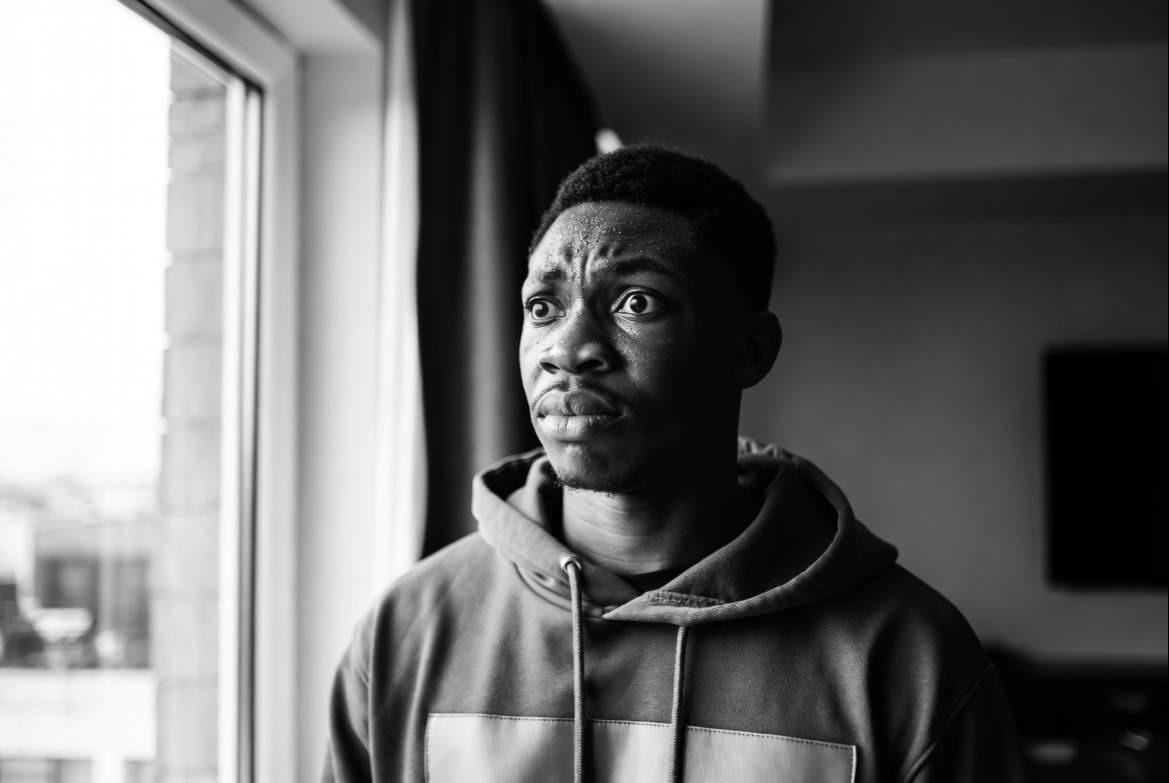
There is a particular kind of silence in a home where someone is living with PTSD. It is not the easy silence of a Sunday morning. It is the silence of everyone learning to move carefully, speak softly, and always, always, read the room before they speak. The silence of a family holding its breath.

Post-traumatic stress disorder is not simply "bad memories." It is the nervous system stuck in a moment that has already passed, unable to convince itself that the danger is over. Since home is where people spend most of their time sleeping, eating, resting, arguing, laughing, it is in the home where PTSD does much of its most visible, most painful work.
Signs of Silent Anxiety That You Should Know
This piece is for the person living with it. For the partner who does not know how to help. For the child who thinks they must have done something wrong. Also, for anyone trying to understand why a house that looks perfectly normal from the outside can feel, on the inside, like standing on ice.
The Body Does Not Know the Danger Has Passed
To understand how PTSD affects a home, you first need to understand what PTSD actually does to a person. When someone experiences something traumatic, such as a serious accident, abuse, combat, a violent crime, or a sudden bereavement, the brain files that experience differently than ordinary memories. It stores it as a present danger, not a past event.
This means that triggers, certain sounds, smells, images, phrases, or even times of day, can yank a person back into the feeling of the original trauma instantly. Not just the memory of it. The physical experience of it. Heart pounding. Muscles tensed. The world is narrowing to a point.
At home, this plays out in ways that can be deeply confusing to everyone involved.
What It Actually Looks Like, Day to Day
A partner slams a cupboard door because they're running late for work. The other person freezes at the kitchen table, white-faced, unable to speak. The partner is apologetic but also confused; it was just a cupboard. For the person with PTSD, it was the sound of a door in a place where something terrible happened.
The television is on. A news segment plays a clip of a car crash. Someone leaves the room without explanation and does not come back for an hour.
Bedtime becomes a negotiation. The person with PTSD cannot sleep in a room with the curtains fully closed. Or they cannot sleep with them open. They need to check the locks twice, then three times. They may wake up shouting. They may not wake up, just lie there rigid and silent, somewhere else entirely.
These are not dramatic moments. They are Tuesday evenings. They are Sunday lunches that go wrong for reasons nobody can name in the moment. They are the texture of daily life in a home touched by PTSD.
The House Is Never Safe Enough
One of the most exhausting features of PTSD, for the person experiencing it and everyone around them, is hypervigilance. This is the state of being permanently on alert, as though the threat that caused the original trauma could return at any moment.
In a practical sense, this might look like: always sitting with the back to a wall in a restaurant, needing to know where the exits are in every room, being unable to relax when unexpected guests arrive, reacting with intense alarm to ordinary household noises, such as a car backfiring, a phone ringing at an unusual hour, or children playing loudly outside.
At home, hypervigilance changes the atmosphere. It can feel like living in a house where the security alarm is always half-going off. Everyone begins to manage their behaviour around it. Children learn not to run indoors. Partners stop having friends over spontaneously. The house becomes smaller and more controlled, all in service of managing an invisible threat.
Emotional Numbing and Withdrawal
Not everyone with PTSD is visibly distressed. Equally common is the opposite: a kind of emotional flatness, a withdrawal, a person who is physically present but seems to have gone somewhere nobody else can reach.
This is called emotional numbing, and it is the brain's way of protecting itself from being overwhelmed. The problem is that it does not discriminate. It numbs the difficult feelings, yes, but also joy, connection, intimacy, and warmth.
For families, this can be profoundly painful. A partner may feel they are living with a stranger. A child may feel their parent does not love them, when in truth that parent is simply unable to access those feelings in the way they once could. The emotional life of the home shrinks. Conversations stay on the surface. Genuine closeness feels impossible to reach.
This is one of the cruelest aspects of PTSD: it can make a person feel utterly alone in their own home, and cause those who love them to feel equally abandoned.
Family Members Walk on Eggshells
Not all PTSD presents as sadness or fear. For many people, and this is particularly, though not exclusively, common in men, PTSD manifests largely as anger and irritability.
The nervous system, stuck in fight-or-flight, interprets ordinary frustrations as threats. Small inconveniences, such as a traffic jam, a broken household appliance, or an interruption during concentration, can produce a reaction that feels wildly out of proportion.
Families in this situation often describe "walking on eggshells." They learn the warning signs, such as a tightening of the jaw, a particular quiet, or a certain look, and they learn to navigate around them. The house takes on a kind of managed tension. Everyone is performing normally all the time.
This is exhausting, and it can be frightening for children, who do not yet have the language to understand that the anger is not about them, even when it is directed at them.
Avoidance
A less-discussed symptom of PTSD is avoidance. That is, deliberately steering away from anything that might trigger a traumatic memory. At home, avoidance can reshape family life in ways that creep up slowly.
Perhaps the person stops watching television news altogether. Then any television. Perhaps they stop cooking because the smell of a particular food is unbearable. Perhaps certain rooms are avoided, certain times of day are dreaded, certain family rituals quietly abandoned.
Over time, the world available to the person with PTSD becomes smaller and smaller. Since home is supposed to be the centre of a full life, this shrinkage is felt by the whole household. Family events get cancelled. Ordinary pleasures are quietly surrendered. Life begins to organise itself around the avoidance.
The Children in the House
It would be dishonest to write about PTSD in the home without speaking directly about children. They are often the most affected and the least able to name what is happening.
Children are extraordinarily perceptive. They notice the tension before anyone acknowledges it. They notice when a parent is unreachable. They notice the things nobody talks about. In the absence of an explanation, they often conclude that they are the cause of the problem.
Research consistently shows that parental PTSD can affect a child's own sense of safety, their emotional development, and their attachment patterns. This is not a judgment but simply the truth of how trauma moves through households. A parent doing their very best while living with PTSD can still, inadvertently, transmit anxiety to their children.
The most protective thing a family can do is name what is happening. Not in frightening terms, but honestly: "Mum is going through something difficult. It has nothing to do with you. She is getting help."
Partners and Carers
The partners and family members of someone living with PTSD carry enormous, often unacknowledged weight. They become the household manager, the emotional regulator, the person who runs interference between their loved one and a world full of potential triggers.
They often develop anxiety themselves. They may stop having their own social life for fear of what might happen in their absence. They may grieve the relationship they had before. Also, they may feel tremendous guilt about these feelings, because the person they love is the one who is suffering.
This is sometimes called secondary traumatic stress or compassion fatigue. It is real, and it matters. No one in a home touched by PTSD is unaffected. Mind you, supporting someone else's recovery is not possible if you are quietly drowning yourself.
Recovery Is Real, and the Home Can Heal
None of this is written to suggest that PTSD is permanent or that a home under its shadow cannot change. It absolutely can.
Effective treatments exist, like EMDR (Eye Movement Desensitisation and Reprocessing), trauma-focused cognitive behavioural therapy, somatic therapies, and medication, among them. Many people with PTSD go on to recover significantly, sometimes fully.
In the process of recovery, there are changes to the home. The silence becomes lighter. The eggshells disappear. The world expands again.
However, recovery requires honesty about what is happening, about the support that is needed, and about the cost that living with PTSD has on every person in the household. It requires a family culture where it is safe to say "this is hard for me too," without anyone feeling accused or guilty.
A Word for You If You Are Living This
If any of this has landed close to home, your home, your family, know that you are not alone, and you are not failing.
PTSD is not a character flaw. It is a wound, and like any wound, it responds to care. The first step is almost always the hardest, and that is naming it and deciding to seek help.
Your home does not have to stay this way and that is the most important thing you should know.



Comments (0)
Please sign in to join the conversation.
Loading comments...