

)
The West African Examinations Council is facing growing scrutiny over the integrity of its newly released 2026 West African Senior School Certificate Examination results for school candidates, following allegations of grading anomalies and technical glitches linked to the expanded Computer-Based Testing (CBT) rollout.
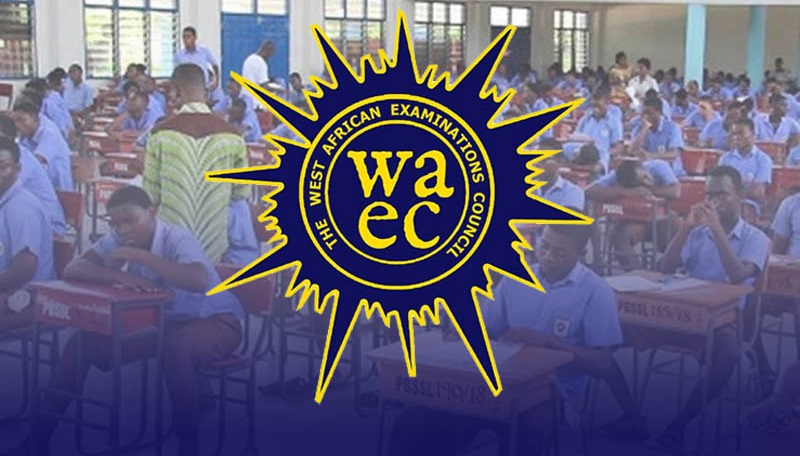
School administrators and education advocates claim that some high-performing students received lower grades than expected, based on their academic records and performance in other standardised assessments.
Among those raising concerns is the Director of Impact House Model Schools, Mowe, Ogun State, Sam Abdulazeez, who said his school had observed a decline in students' performance in the 2025 and 2026 WASSCE despite retaining its teaching staff, improving its facilities and intensifying examination preparations.
The school has presented candidates for WASSCE since 2017, recording strong performances particularly in Mathematics and English Language, with all 45 candidates it presented for Mathematics in 2024 obtaining A1.
Abdulazeez said the situation changed after the introduction of serialisation and CBT, pointing to the school's strong 2026 UTME performance as evidence that its students were well prepared.
“This year, out of the 69 children we presented for JAMB, over 30 of them had more than 300 in JAMB. And you know that JAMB is completely CBT,” he said, adding that none of the school's candidates scored below 200 in the UTME after 22 mock examinations conducted using computers to simulate the test environment.
He said the disparity became clear once WASSCE results were released.
“In Mathematics, we had children who had up to 98 in Mathematics during UTME. Now, the As we had in Mathematics, maybe about three or four out of 69. This is a school that we usually have almost everybody having A1 in Math,” he said.
He raised similar concerns about English Language results.
“We only had B and maybe a few Cs. Out of the 69, I think we have three credits, and all others are B2, B3,” he said.
Abdulazeez said the school had invested heavily in infrastructure after WAEC announced plans for computer-based exams, but ran into technical problems during a mock exam conducted by WAEC officials.
“They did it the first day; the systems could not connect to their own server. They came the second day; they did it, but it was not successful,” he said, adding that the school was eventually permitted to sit a paper examination after raising concerns with WAEC officials in Ogun State and Lagos.
He said a similar issue occurred with the 2025 WASSCE results.
“Last year, we had this same problem with WAEC. Some of my children who were expecting A1, they dropped to B. Those who were expecting B dropped to C,” he said.
He claimed the school later noticed changes to the grades on the result portal.
“When last year's result was released, I had already gone to publish the result, only for some people to call me that it's like they have made some changes. When we checked the result back again, we saw that those who they gave B had moved to A1. Those who they gave C moved to B last year,” he said.
Abdulazeez said the experience made him hold off on publishing the 2026 results initially, hoping for similar adjustments, before eventually publishing when none occurred.
He also questioned the impact of serialisation, the practice of using different versions of examination papers.
“For me, because I did not do CBT in our school, I don't know how they go about their serialisation. I think it has to be, because we saw it in the subjects that have serialisation, like Mathematics, like English, Economics, and Biology,” he said.
He joined stakeholders calling for an independent review of the results.
“If the schools and the examining bodies cannot conduct the exam properly, it should not affect these children and their future,” he said.
He also dismissed suggestions that declining performance was simply due to poor preparation for CBT.
“Some people were saying that children don't read again; it's because WAEC has gone to CBT, that's why children are failing. Sir, JAMB had been doing CBT for a long time now,” he said, adding, “When you do all that, and you now discover that the result does not justify the effort, then it calls for concern.”
Another school administrator, who asked not to be named, said several students who scored highly in the UTME and had previously passed the General Certificate Examination (GCE) were awarded D7, E8 and F9 grades in core subjects.
“Students with top scores in JAMB and verified track records are suddenly receiving D7s, E8s, and F9s in WAEC,” the administrator said, adding that two affected students already admitted to the University of Ibadan were recorded as failing Mathematics and English Language.
Educationist Fola Adekeye urged WAEC to ensure its processes and results could withstand scrutiny, warning against waiting for public outcry before addressing complaints.
“Those who are managing destinies — exams, exams are destiny issues. Children want to make their results; they want to be doctors, they want to be lawyers, they want to be astronauts. Those managing those checkpoints should do better. The public outcry shouldn't become the determinant of most of these things. They should do the right thing,” he said.
Adekeye disclosed that some students at his own school who had previously excelled were affected.
“Our head boy had 369, was the third in the federation. Our head girl and another student did so well in JAMB, but suddenly WAEC came out, and only the head boy is having five As and Bs,” he said.
He nonetheless cautioned against unsubstantiated allegations against WAEC.
“I don't question exam bodies. I always plead that they should please ensure that what they do will pass the test of integrity,” he said.
He called on WAEC to upgrade its facilities where necessary.
“If their facilities are outdated and they need to upgrade them, please let them upgrade them,” he said.
He also urged the council to clearly communicate any changes to its methods or curriculum.
“If they are coming out with a new curriculum, let them do it. If they are shifting from one particular method of questioning to a particular method of questioning, let them make it clear so that students will be on the same page with all other stakeholders,” he added.
Meanwhile, the Initiative for School Excellence and Education Foundation, through its solicitors, Zuriel Law Practice, has threatened legal action against WAEC over alleged irregularities in the conduct and processing of the 2026 Computer-Based WASSCE.
The organisation said it had received complaints from candidates alleging discrepancies in the recording and processing of their responses, and demanded the preservation of electronic records, including response databases, audit trails, server logs and scoring records, along with disclosure of the technical standards governing the exam and an independent audit of the CBE platform.
The lawyers gave WAEC 14 days to respond, warning that failure to do so would lead to court proceedings.
ISEE founder Alex Onyia also called for greater transparency, questioning whether candidates who sat exams under different conditions, amid allegations of question leakage at some paper-based centres, were fairly standardised.
“When WAEC carried out its standardisation, were candidates from fundamentally different examination conditions treated as one population?” he asked, arguing that leaked questions could have skewed score distributions and grading thresholds.
He called on WAEC to disclose raw-score distributions and grading thresholds.
“Show us the data,” he demanded, also urging the council to clarify its review mechanism for disputed results and investigate allegations of internal management problems.
“This is not an attack on WAEC. It is a demand for accountability,” he said, calling on the Federal Ministry of Education and the National Assembly to invite WAEC's leadership to explain its methodology.
However, WAEC has defended the integrity of the 2026 results amid the criticism.
The council's Head of Public Affairs, Moyosola Adesina, said the results were produced through rigorous and quality-assured processes, in line with established standard operating procedures and in collaboration with the Federal Ministry of Education.
WAEC said every script passed through a multi-tiered system of marking, moderation and auditing based on standardised marking schemes, and urged candidates, parents and the public to avoid unverified claims and instead direct concerns to its official offices and communication channels.
Nigerian examination bodies have faced repeated scrutiny in recent years over result glitches.
In 2025, former JAMB Registrar Prof Ishaq Oloyede broke down in tears while apologising for errors in that year's UTME, acknowledging "one or two errors" made during the exam.



Comments (0)
Please sign in to join the conversation.
Loading comments...