

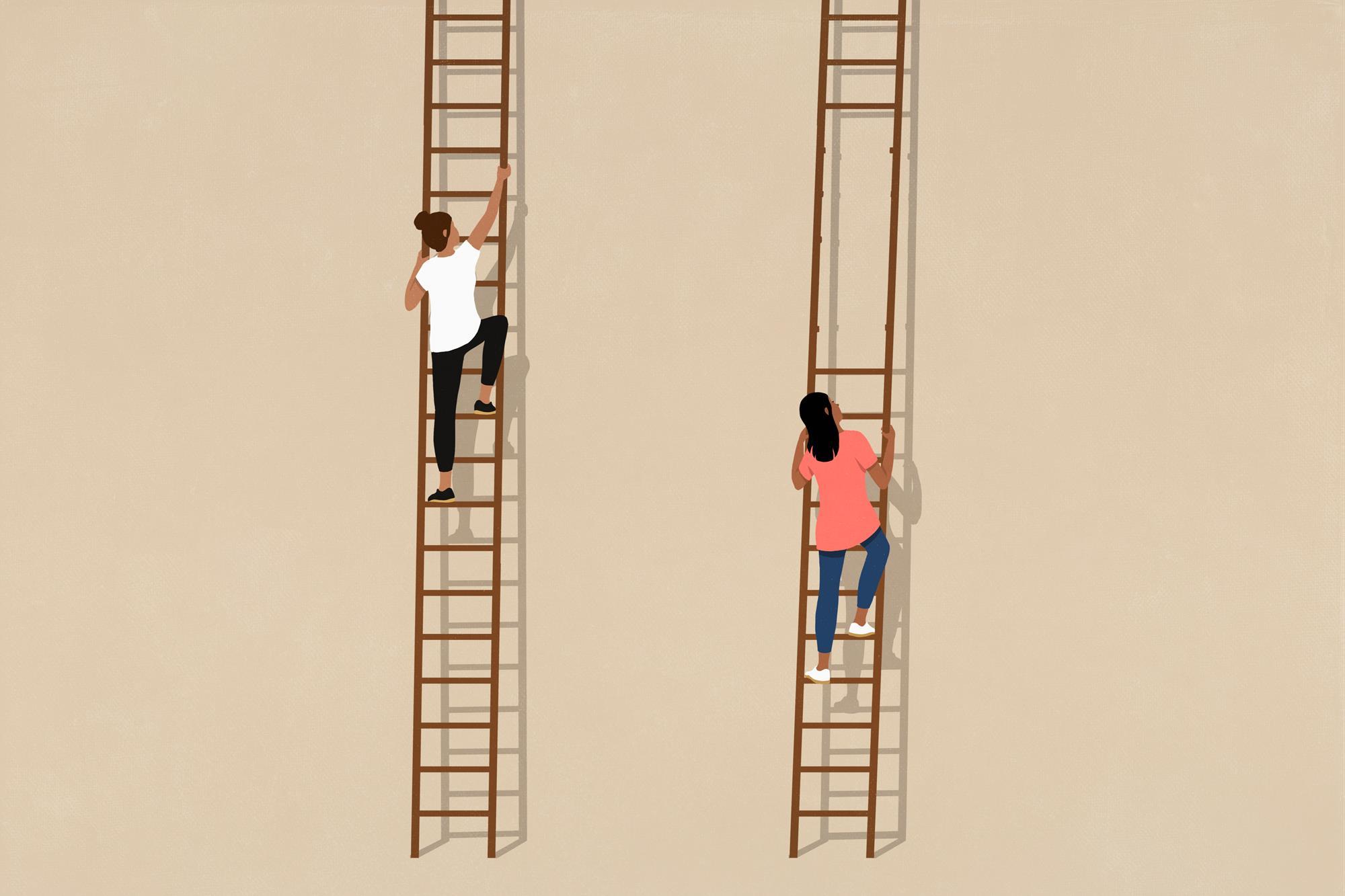
Every generation of parents has faced fears. Drought. War. Disease. Economic collapse. The threats were real, and the people who lived through them were strong in ways we still draw from today. But the threats gathering around families right now are different in a way that is difficult to explain to someone who didn't grow up inside them because many of them are invisible, they arrive through devices we bought ourselves, and they target the minds and emotions of our children before we've even realized anything is happening.

Selma is a secondary school administrator who has spent 20 years working with young people professionally, which is precisely why she thought she had a reasonable handle on what her own children were navigating.
Her husband Karim runs a small logistics business from a home office and is the kind of father who shows up at school events, at dinner every night, at the kitchen table on Saturday mornings with a pot of coffee and time to spare. Their children are Youssef and Dina.
From the outside, this is a family doing right. And they are.
But doing everything right, it turns out, is no longer sufficient protection against a category of threat that previous generations simply did not have to factor into their parenting.
It started for Selma on an ordinary evening in February. She had called Youssef for dinner three times without response, and when she finally went to his room, she found him sitting cross-legged on his bed in the dark, his face lit blue-white by the tablet screen, in the middle of what appeared to be an intense conversation with someone in a gaming chat.
When she looked more carefully at the exchange scrolling up his screen, the language being used was the language of someone drawing a pre-teen into a space where the rules were different, where the adults were friendly in a way that felt practised, and where Youssef himself seemed simultaneously excited and slightly overwhelmed.
She took the tablet from his hands very calmly, sat on the edge of the bed, and said, "Tell me about this person."
This is the reality of modern family life. An evening in February, a mother's instinct, and a conversation that changed everything about how one family understood the territory they were responsible for protecting are revealed in the 14 gems below:
1. Online Predators Have Become Sophisticated in Ways That Defy Old Warnings
The warning previous generations received about strangers was simple and physical: don't talk to people you don't know, don't get into cars, don't go anywhere alone. Those warnings still matter. But the stranger danger of 2026 wears a completely different face, and it is one that children are not instinctively equipped to recognize because it doesn't feel dangerous. It feels friendly. It feels interested. It feels like someone, finally, who really listens. The person in Youssef's gaming chat had spent three weeks learning his interests, affirming his skills in the game, asking gentle questions about his day, his school, his family. By the time Selma discovered the conversation, Youssef genuinely considered this person a friend. Not a suspect. Not a stranger. This is the architecture of modern online grooming, and it is designed specifically to be invisible to the child experiencing it. Parents need to understand that their children are not naive for being drawn in. They are human, and these approaches are engineered to exploit human needs for connection and recognition.
2. Cyberbullying Follows Children Into Their Bedrooms and Doesn't Stop at Night
Dina had experienced something in the autumn term that she had not told her parents about for two months. A group chat at school loosely organized ones where everyone from her year was technically included, had become a place where comments about specific people appeared and disappeared with enough regularity to keep everyone slightly on edge. Nothing was ever said directly to Dina. But she was tagged in a thread once, and the comments attached to it had sat in her chest like a stone for weeks. She hadn't told Selma because she didn't want to seem unable to handle it, and because she wasn't entirely sure it counted as a real problem. This is the insidious quality of cyberbullying. It creates doubt in the person experiencing it about whether what is happening to them is serious enough to name. Previous generations of teenagers could leave school and, at least physically, leave the social dynamics behind. Dina's generation carries the social ecosystem of school in their pocket, and it follows them to the dinner table, to the bathroom, to the last moment before sleep.
3. Algorithms Are Actively Shaping What Your Children Believe About the World
Here is something that does not get discussed enough in family conversations about screens: the platform your child uses is not a neutral tool. It is a system designed, with extraordinary sophistication, to keep their attention for as long as possible, and to do that, it learns what provokes a response and feeds them more of it. For some children, this means an escalating diet of content that amplifies anxiety, or distorts body image, or presents extreme viewpoints as though they were mainstream, or gradually normalizes things that were not normal to begin with. Karim discovered this when he sat beside Dina one evening and simply watched what appeared on her feed for twenty minutes without saying anything. The content was not obviously harmful in any single clip. But the cumulative direction of it was building a picture of the world that he found genuinely troubling. The algorithm was not malicious. It was just optimizing for her attention. But what it was feeding her in the process was a diet that he would not have chosen to give his daughter, and it had been running, uncurated, for months.
4. Financial Scams Are Now Targeting Teenagers and Young Adults With Precision
The scam landscape has evolved far beyond the obviously suspicious email from a foreign prince. Today's financial fraud targeting young people is polished, peer-shaped, and often arrives through the same channels where everything else in a teenager's life happens via social media, messaging apps, and gaming platforms. Youssef had already been approached twice, with offers that looked like earning opportunities. He hadn't told his parents because both times he had recognized something felt off and had closed the conversation. But the fact that he had encountered these approaches twice in a single month, at twelve years old, on platforms his parents were aware he used, illustrated something important: the people running these operations are not waiting for adults with savings accounts. They are practicing on children, normalizing the idea of easy money, and building a relationship with risk that will matter enormously when those children are older and have real financial access.
5. Misinformation Is Arriving in Your Home Through Your Child's Screen
Selma had a moment that crystallized this for her when Youssef repeated, at dinner, a piece of information he had clearly absorbed from a video as though it were fact. The information was not true, or rather, it was true in the way that many pieces of viral misinformation are true, which is to say it contained enough real elements to feel credible while leading to an entirely wrong conclusion. Selma knew enough to gently correct it. But what struck her was how confidently Youssef had said it, and how he had sourced it not with "someone told me" but with "I watched a video about it" as though the format itself conferred authority. This is the misinformation challenge of the current era: it does not arrive as obvious propaganda. It arrives packaged as information, in the same visual language as reliable content, through the same platforms where real learning also happens. Children are not equipped by instinct to sort one from the other. It is a skill that has to be actively taught.
6. Screen Addiction Is Physiologically Real, and Willpower Alone Cannot Fix It
The conversation about "too much screen time" has been happening for a decade, but it is often framed as a discipline issue as though children who struggle to put devices down simply lack self-control, and parents who allow it are simply permissive. The reality is considerably more complicated, and considerably more physical. The feedback loops built into modern apps and games are designed by teams of engineers and behavioural scientists specifically to produce compulsive engagement. The dopamine response triggered by a notification, a new level, a fresh like is not trivial. They are real neurological events, and in developing brains, their cumulative effect on the capacity for sustained attention, delayed gratification, and tolerance for boredom is significant. Karim noticed, when the family had an unplanned power outage one evening that lasted three hours, that both children initially experienced the absence of screens as something close to physical discomfort of restlessness, irritability, a blankness about what to do with themselves that lifted only after about forty minutes and was replaced, eventually, with something that looked almost like relief.
7. Mental Health Crisis Among Young People Is Not a Western Phenomenon; It Is Here Too
There is a tendency in some African family conversations to treat the surge in adolescent anxiety, depression, and emotional dysregulation as something happening in other places, to other families, shaped by cultural contexts that don't quite apply here. This is a comfort that the reality does not support. Dina's school had seen three students leave mid-year in the past eighteen months due to what were described, carefully, as "health reasons," and the teachers Selma spoke to privately were clear about what that phrase covered. The pressures shaping the mental health of young people are real, they are increasing, and they are going largely unaddressed because the cultural language for naming them is still developing. Families that can create genuine, judgment-free space for their children to name what they are feeling without immediately attempting to fix, correct, or contextualise the feeling away are providing a form of protection that matters more than most parents realize.
8. Digital Permanence Means Youthful Mistakes Now Have Lifelong Consequences
Previous generations made mistakes in semiprivate spaces, in embarrassing photos that existed in physical albums, regrettable things said in the heat of the moment were heard by the people present and, eventually, mostly forgotten. Today's young people are making their mistakes in environments where everything is potentially saved, screenshotted, shared, and searchable. A post made at fifteen can surface at twenty-five. A video shared in a moment of poor judgment can travel further and faster than the person who made it could ever have anticipated. Selma had begun having what she called "the permanence conversation" with both her children t as a framework. "Think about whether you would be comfortable with me seeing this in ten years, and with your future self seeing it too," she told them. Not to frighten them into inaction, but to build into their instincts a relationship with digital permanence that their generation simply did not inherit automatically.
9. Artificial Intelligence Is Changing What Children Can Trust Their Eyes and Ears
This is genuinely a new territory at the intersection of technology and trust having real psychological weight. When Dina showed her mother a video that had been circulating in her class that looked and sounded entirely real but that Dina suspected, correctly, had been generated, Selma was struck not by the content of the video but by the quiet exhaustion in her daughter's voice when she said, "I just don't know what's real anymore." That sentence is one that no previous generation of teenagers has ever had cause to say. The erosion of the basic reliability of visual and auditory information is a psychological burden that we are only beginning to understand, and it lands heaviest on the generation growing up inside it.
10. Radicalization Now Happens Through Recommendation Engines, Not Recruiters
One of the most alarming developments in online safety for families is the way extremist content, whether political, ideological, or social, has learned to travel through mainstream platforms by presenting itself in gradual steps. Nobody is recruited into radical thinking through an obvious invitation. They are walked there slowly, through a series of recommendations that begin somewhere reasonable and end somewhere very different. Karim had read enough about this to understand the pattern, and he paid attention to the trajectory of content rather than any individual piece. A healthy scepticism about any content that consistently positions a specific group as the source of all problems, or that frames ordinary life as a form of warfare requiring a radical response, is a useful internal alarm, and it is one that parents can help their children develop by having frank, curious conversations about the ideas they are encountering online.
11. Sleep Is Being Stolen From an Entire Generation
Devices in bedrooms after midnight are not a trivial issue. Dina was regularly sleeping four to five hours on school nights because the architecture of the platforms she used was specifically designed to make stopping feel difficult, and because the social anxiety of missing something in a group chat felt, to a sixteen-year-old brain, like a genuine risk worth staying awake for. The cognitive, emotional, and physical consequences of chronic sleep deprivation in adolescence are significant and well-documented: reduced capacity for emotional regulation, impaired learning consolidation, heightened anxiety, lowered immune function. When Selma and Karim finally introduced a household rule about devices charging outside bedrooms after ten p.m., the resistance from both children was intense for the first week and had largely dissolved by the third. Dina, unprompted, told her mother after a month that she felt "less like everything was too much", which, as a description of what adequate sleep does for a teenager's emotional landscape, is about as clear as it gets.
12. The Pressure of Performing a Life Online Is Quietly Exhausting Children
There is a specific kind of fatigue that comes from living part of your life as a performance: managing a public-facing version of yourself that has to be curated, maintained, and defended. Dina experienced this not as something she had chosen but as something she had inherited from the social environment she had grown up in. Not posting felt like disappearing. Posting required energy she didn't always have. The comments, the metrics, the visible evidence of how many people engaged with any given moment of her life created a layer of self-consciousness that followed her everywhere. Selma didn't try to talk her out of it, because she understood that simply telling a teenager to care less about social media is about as effective as telling them to care less about their friends. Instead, she started asking different questions: "What do you actually enjoy posting, separate from what gets the most response?" that helped Dina begin separating her genuine self-expression from the performance of it.
13. Online Gaming Environments Are Frequently Unmoderated and Often Hostile
The gaming world that Youssef inhabited was not the simple, contained experience it looked like from the outside. It was a social ecosystem with its own hierarchies, its own language, its own norms, and those norms were not always ones that Selma and Karim would have chosen to expose their son to. Hostile language, aggressive social dynamics, and peer pressure to behave in ways that crossed lines he hadn't been taught were part of the everyday texture of spaces that were technically age-appropriate but practically unmonitored. This doesn't mean gaming is harmful or that children shouldn't be allowed to participate in it. It means that parents who understand the social environment of the platforms their children use are better positioned to give their children the specific tools they need to navigate those environments with their values and their sense of self intact.
14. The Greatest Protection You Can Give Your Family Is a Home Where Truth Is Safe to Say
Everything that Selma and Karim learned, over those months following that evening in February, pointed to the same conclusion: the children who were most vulnerable to the new threats facing families were not the least intelligent or the least cared-for. They were the children who had nowhere to take the things they were encountering, no adult who felt safe enough to receive the complicated, sometimes embarrassing, sometimes frightening reality of what modern childhood actually involves. Youssef had not told his parents about the gaming chat immediately because he wasn't sure how they would react, and that uncertainty had cost him three weeks of unnecessary exposure. Dina had carried the group chat situation for two months because she feared being told she was overreacting. The single most powerful thing a family can do in 2026 is to build, deliberately and consistently, a home culture where children know that they can bring the hard things to the table and be met with curiosity rather than panic, with support rather than judgment, and with the steady presence of adults who are not frightened of the truth.
The threats are real. The landscape is genuinely more complex than anything previous generations navigated.
But families who face it together without the pretence that everything is fine are building something that no algorithm, no stranger, and no online threat can reach; a trust so solid and so specific that it becomes, in the end, the strongest protection any child can carry.
Keep the door open. Stay curious. Let your children know that whatever they find out there, they can always bring it home, and that home will know what to do with it.*



Comments (0)
Please sign in to join the conversation.
Loading comments...