

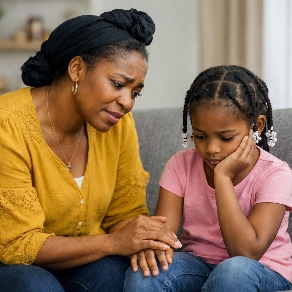
In many Nigerian homes, parents are the final authority. Their decisions are rarely questioned. Their words carry weight. They provide food, shelter, school fees, discipline, and direction. But there is one simple sentence that is often missing in the parent child relationship — “I'm sorry.”
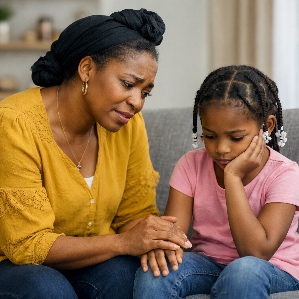
For many Nigerian parents, apologizing to a child feels uncomfortable. It can even feel wrong. Some were raised to believe that adults do not apologize to children. In their upbringing, correction came with no explanation. Mistakes made by parents were ignored or brushed aside. There was no conversation, only instruction. So when they become parents themselves, they repeat what they experienced.
In our culture, respect is deeply valued. Children greet elders properly. They lower their voices. They do not interrupt. Many parents fear that saying sorry may reduce that respect. They worry that once a child sees their vulnerability, the child may begin to challenge their authority. To them, apology feels like weakness.
But respect built only on fear creates distance. A child may obey, yet still feel unheard. A child may comply, yet quietly carry emotional wounds. When a parent never admits fault, the child learns that authority is always right, even when it is unfair.
Think of a situation many families can relate to. A child is accused of breaking something in the house. The parent reacts quickly, perhaps even punishes the child. Later, it becomes clear that the child was innocent. In many homes, the incident ends there. No apology. No acknowledgment. Life simply continues. But for the child, that moment stays longer than the parent realizes. It becomes a memory of not being believed.
Children are not asking for perfection. They are asking to feel seen and heard. When a parent says, “I overreacted” or “I should have listened first,” something powerful happens. Trust grows. The child feels safe enough to speak honestly next time. The parent remains an authority figure, but now one that models accountability.
Another reason apology is difficult is pride. Many adults struggle with admitting mistakes, not just to their children but to anyone. Society often teaches that parents must appear strong at all times. Vulnerability is mistaken for weakness. Yet true strength lies in self awareness. It takes courage to admit wrongdoing, especially to someone younger.
There is also the issue of generational patterns. Many Nigerian parents grew up in homes where emotions were rarely discussed. Love was shown through provision, not conversation. Discipline was firm, sometimes harsh. Apologies were almost nonexistent. If you were raised without hearing “I am sorry,” it may not come naturally to you as a parent.
But times are changing. Today’s children are growing up in a world where emotional intelligence matters. They are exposed to conversations about mental health, communication, and self expression. When they are silenced at home, the gap between parent and child widens.
Refusing to apologize does not protect authority. Instead, it may create emotional distance. Some children grow into adults who struggle to express feelings. Some become overly afraid of making mistakes because they were never shown that mistakes can be acknowledged and corrected. Others may become resentful, carrying silent anger into adulthood.
Saying sorry does not mean abandoning discipline. It does not mean allowing children to control the home. It simply means recognizing that parents are human too. A mother who apologizes for shouting unnecessarily still remains a mother. A father who admits he misunderstood still remains the head of his home. In fact, such honesty often deepens respect.
Imagine a home where a parent says, “I was wrong. I should have listened to you.” That child learns something far greater than obedience. They learn accountability. They learn empathy. They learn that power and humility can exist together.
Parenting has never been about being flawless. It is about growth, patience, and learning alongside your children. Breaking old patterns may feel uncomfortable at first. But every time a parent chooses connection over pride, something shifts.
Sometimes the most powerful words in a family are not commands. They are simple, honest words that say, “I am sorry.”
And in many Nigerian homes, those words may be the beginning of healing.


Comments (0)
Please sign in to join the conversation.
Loading comments...