

Abenaa, a logistics manager and mother of two, had gone to collect her daughter's phone for charging. Serwaa was already asleep, face soft and completely unbothered, the kind of sleep only teenagers can manage. But the phone screen was still lit.

And there was a half-typed Google search: why does my body feel strange when I think about boys and is that… The sentence was never finished. Serwaa had fallen asleep mid-search, mid-question, mid-confusion, and completely alone in it.
Abenaa stood in that doorway for a long time. She didn't feel anger. She didn't even feel shock. What she felt was something close to grief. For the gap between them that she hadn't even known existed, my child is looking for answers I was supposed to give.
The silence most parents keep around sex education is born out of love, discomfort, and a deeply ingrained cultural script that says some things are simply not spoken around children, not casually, not directly. Abenaa grew up in a home where her own mother never once used the word "puberty."
Information came in fragments over a hushed conversation with an aunt before her first period, a diagram in a biology textbook, and a lot of inference from things she half-overheard. That was normal. That was the template.
The problem is that the world Serwaa is growing up in is nothing like the world Abenaa grew up in. Serwaa has a smartphone, TikTok, and has classmates who speak freely and incorrectly about bodies, relationships, consent, and sexuality. A swirling flood of information that is sometimes accurate, often exaggerated, and occasionally genuinely harmful.
The silence at home doesn't protect Serwaa from any of that. It just means she navigates it without a guide. Not that children become "too curious" because children are always curious.
The real cost is that they satisfy that curiosity somewhere else, with someone else, without the values and context and love that a parent could have wrapped around the conversation.
Kofi is a secondary school teacher, father of three boys, Nana, Kwame, and little Fiifi, who is only seven but already asking everyone why dogs don't wear clothes. Kofi is the kind of man who talks easily about football, about politics, about his work frustrations.
But when Nana, who is fifteen, came home from school one day and casually mentioned that his friend Owusu had "a girlfriend situation," Kofi went completely blank.
"I didn't know how to enter," Kofi said, laughing but not entirely laughing. "I said something like, 'Mm, okay, focus on your books.' That was it. That was my whole response." He shook his head. "Nana looked at me like I'd disappeared."
What Kofi experienced in that moment is a teachable window; a natural opening in a conversation where a child is ready, even eager, to hear from a parent. Kofi saw it. He just didn't know what to put through it. And so the window closed, Nana went to his room, and the moment passed.
Parents see the opening. They freeze. The child moves on, and moves inward.
But parents are not afraid of the topic. They are afraid of themselves in the topic. Afraid of saying the wrong thing. Afraid of accidentally encouraging something. Afraid of losing the version of their child they see in their head the moment the conversation happens.
There is also a very specific fear that runs through many households, and it goes like this: if I talk about it, I am opening a door. If I open that door, something bad will walk through it.
Children who receive accurate, values-based sex education from their parents are not more likely to become sexually active earlier. They are, in fact, more likely to delay sexual activity, more likely to make thoughtful decisions when the time comes, and more likely to come back to their parent when something worries them.
The open door doesn't invite danger. It invites trust.
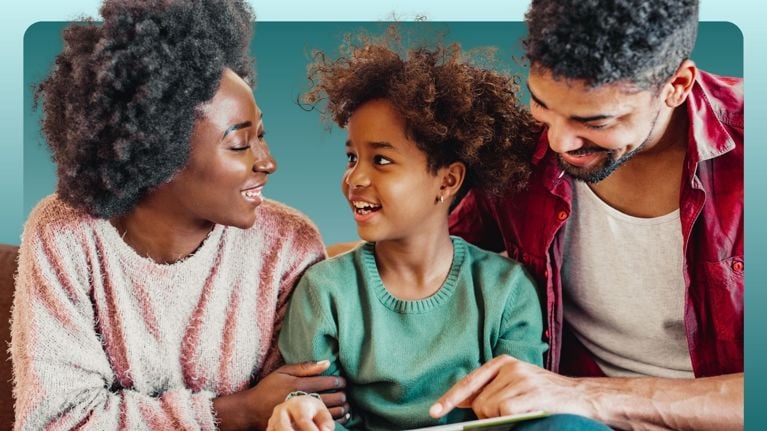
Abenaa didn't wake Serwaa that night. She placed the phone on the bedside table and went to her own room. The next evening, she made Serwaa's favourite, and after dinner, she sat down next to her daughter on the couch and said something simple.
She said: "Serwaa, I want us to be able to talk about anything. I know I haven't always made it easy, but I want to change that. Can we try?"
Serwaa looked at her mother with the particular wariness of a teenager who isn't sure if she's in trouble.
Then she said, equally simply: "Okay."
They had a small conversation, one, careful, a little awkward, punctuated by pauses about puberty, about the changes Serwaa had been noticing in her body, about why those changes happen and what they mean.
Abenaa didn't pretend to have all the answers. She said, more than once, "I'm still learning how to talk about this too." And somehow that honesty made Serwaa lean in, not away.
There is no single script for this. Every family is different, every child is different, and every parent brings their own discomfort level to the table. But there are some clear, practical places to start, and parents deserve to have them named directly.
First, normalise the body early. Long before puberty, children should know the correct anatomical names for body parts, and not cute euphemisms, not code words. This isn't about being clinical. It's about giving children language to describe their own bodies, especially if something ever feels wrong or uncomfortable. A child who knows the correct names for their body is better equipped to speak up and be believed.
Second, use the world around you as a doorway. When a storyline on a TV show raises a question, pause and ask your child what they think. When a friend's teenager is going through something, use it gently as a conversation opener. You don't need to manufacture a serious "sit-down talk" from scratch. Real life is constantly offering you small entry points, the way Kofi missed the Owusu moment, but didn't have to.
Third, say out loud that you find it awkward. Children are perceptive. They already know when you're uncomfortable. When you name it, you immediately lower the tension in the room. You also model emotional honesty, which is a lesson in itself.
Fourth, talk about values alongside facts. The facts of biology are important. But children also need to understand what healthy relationships look like, what consent means in everyday life, and how to recognise when something doesn't feel right. These conversations can start very young, and they don't require perfect language. They require showing up.
Your children are already thinking about these things, asking questions in their heads, in whispers, in search bars at midnight. The only question left for you, as their parent, is whether you want to be part of the answer.

Comments (0)
Please sign in to join the conversation.
Loading comments...