

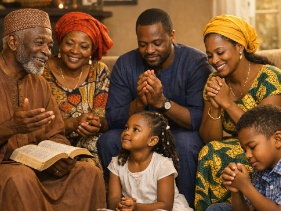
Identity does not begin in the classroom. It does not begin on social media. It does not begin in the workplace. Identity begins at home.
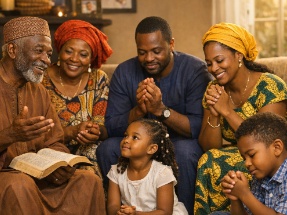
Before a child understands the language of the world, the child understands the language of family. The way parents speak. The way conflict is handled. The way celebrations are done. The way elders are treated. These repeated patterns may look ordinary, but they are silently forming something powerful inside the heart of a child.
Family tradition is not just routine. It is repeated meaning. It is values practiced consistently until they become part of who we are.
In many homes, tradition shows up in simple ways. Sunday worship together. Monthly family meetings. Eating dinner at the same table. Visiting grandparents during festive seasons. Praying before sleep. Celebrating achievements with thanksgiving rather than pride. These actions may seem small, but repetition turns them into identity markers.
When a child grows up in a home where everyone greets elders respectfully, that child carries honor into society. When a family consistently gives to those in need, generosity becomes natural. When forgiveness is practiced openly between parents, children learn that love is stronger than offense.
Tradition is a silent curriculum.
It teaches without announcing that it is teaching. It shapes without forcing. It builds character slowly but deeply.
One of the greatest gifts a family can give a child is a strong sense of belonging. In a world filled with comparison and confusion, belonging provides stability. A child who knows, This is my family and this is what we stand for, grows up with confidence. They are less likely to be swayed by every new trend because they already have a foundation.
Today, many young people struggle with identity. They are searching for validation in places that cannot truly define them. They are shaped by influencers, celebrities, and peer pressure. But when a home lacks strong tradition, the world becomes the teacher.
If parents do not intentionally shape identity, culture will do it unintentionally.
Family tradition acts as a shield. It provides moral direction. It answers questions before they are even asked. What do we believe about honesty? How do we treat people? How do we respond to failure? How do we celebrate success? These answers are not taught once. They are demonstrated repeatedly.
Consider the power of shared meals. Research continues to show that families who eat together regularly build stronger emotional bonds. Around a table, stories are shared. Laughter is heard. Corrections are made gently. Values are reinforced naturally. That table becomes more than furniture. It becomes a training ground for communication and connection.
Or consider the tradition of prayer. A child who grows up hearing parents pray during difficult times learns that challenges are faced with faith, not fear. That child develops resilience. Even when they leave home, the echo of those prayers remains in their heart.
Tradition also strengthens marriage. When couples intentionally create rhythms such as weekly check ins, anniversary reflections, or family devotion times, they build unity. Children who observe this stability grow up believing that commitment is possible and worth protecting.
In Nigeria and many African cultures, tradition once played a central role in shaping identity. Respect for elders, communal living, storytelling at night, cultural festivals, and extended family gatherings were part of everyday life. These practices built strong roots. They connected children to history and heritage.
However, modern life has introduced speed and distraction. Families are busier than ever. Technology competes for attention. Meals are rushed. Conversations are shorter. Celebrations are more about display than meaning. In the process, some traditions are fading.
The danger is not modernization itself. Growth is necessary. But when growth erases grounding, identity becomes fragile.
A family does not need to reject modern life to preserve tradition. What is needed is intentionality. Parents must ask, What do we want our children to remember about this home? What values do we want repeated so often that they become permanent?
Tradition does not have to be complicated. It can be as simple as Friday movie nights with meaningful discussions afterward. It can be annual family vision planning at the beginning of the year. It can be writing gratitude notes during birthdays instead of focusing only on gifts. It can be serving in the community together.
What makes tradition powerful is not its size. It is its consistency and its message.
Consistency creates security. When children know what to expect, they feel safe. A safe child is more open to learning. A secure teenager is more likely to confide in parents. Stability in routine communicates love.
Tradition also builds resilience. Life will bring disappointment. There will be failure, heartbreak, and uncertainty. But a child raised with strong family practices carries internal strength. They remember how conflicts were resolved at home. They remember how parents handled loss. They remember that in their family, quitting was not an option.
Identity shaped by tradition becomes an anchor during storms.
Another powerful aspect of family tradition is storytelling. When parents share stories of their struggles, victories, and faith journeys, children gain perspective. They understand that their family has overcome challenges before. They feel part of something larger than themselves.
Stories connect generations. They remind children that they are not starting from nothing. They are continuing a legacy.
In homes where tradition is absent, children often feel disconnected. They may live under the same roof but lack shared meaning. Without shared practices, there is less opportunity for bonding. Individualism grows stronger than unity.
Family tradition says, We are in this together.
It encourages collective identity rather than isolated living. It reminds each member that their actions affect the whole.
For married couples, creating tradition should be intentional from the early years. Waiting until children are older can make it harder to establish patterns. Young couples can begin by defining core values. Do we prioritize faith? Education? Service? Hospitality? Once values are clear, traditions can be built around them.
For example, a family that values generosity can create a yearly giving project. A family that values learning can establish a monthly book discussion. A family that values faith can maintain consistent devotion times.
Tradition becomes the visible expression of invisible values.
It is also important to allow traditions to evolve. As children grow, practices may need adjustment. Teenagers may resist certain routines. Rather than abandoning tradition entirely, families can adapt creatively. Involve children in planning. Let them suggest new meaningful activities that still align with core values.
When children participate in building tradition, they take ownership of it.
Ultimately, the goal of family tradition is not control. It is formation. It is about shaping hearts, not enforcing rules.
Years from now, children may forget specific instructions. They may not remember every lecture. But they will remember how home felt. They will remember whether love was expressed. They will remember whether respect was practiced. They will remember whether faith was lived sincerely.
That memory becomes part of who they are.
The power of family tradition lies in its quiet persistence. It does not shout. It repeats. It forms identity day after day, moment after moment.
In a generation searching for meaning, families must return to intentional living. Let homes become places where values are not just spoken but practiced repeatedly. Let traditions be revived, not as outdated rituals, but as life giving anchors.
When a child grows up secure in identity, confident in belonging, and grounded in values, society benefits. Strong families produce stable communities. Stable communities build strong nations.
The shaping of identity begins in living rooms, at dining tables, during shared prayers, in laughter, and even in discipline done with love.
Family tradition is not old fashioned. It is foundational.
If we desire a future generation that knows who they are and stands firm in what is right, then we must be deliberate today. Let us build homes where tradition carries meaning, where repetition carries purpose, and where identity is shaped with wisdom.
Because long before the world defines a child, the family already has.



Comments (0)
Please sign in to join the conversation.
Loading comments...