

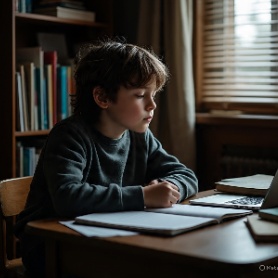
Every few months, there is a new device. A new app. A new trend. A new upgrade.

But somewhere in between software updates and screen time limits, many families are quietly asking a harder question. Are we truly raising children, or are we just managing devices?
Technology is not the enemy. It has made learning easier, businesses faster, and communication instant. A child can attend classes online, learn coding at ten, and build a brand before eighteen. That is powerful.
But here is the tension.
Many homes are digitally connected and emotionally disconnected.
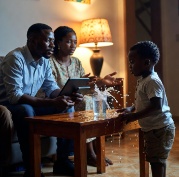
Dinner tables are quieter. Not because there is peace, but because everyone is scrolling. Parents are replying emails. Teenagers are on social media. Younger children are on tablets. Everyone is present, but no one is fully there.
Children today are growing up in a world of constant stimulation. Notifications. Short videos. Endless content. And while they are becoming more tech savvy, many are also struggling with attention span, comparison pressure, and online validation.
The deeper concern is not screen time alone. It is guidance.
Are we teaching children how to think critically about what they consume?
Are we helping them build identity beyond likes and followers?
Are we modeling healthy tech habits ourselves?
Because children do not just copy instructions. They copy behavior.
If a parent says, “Drop your phone,” but never drops theirs, the message becomes confusing.
Technology is a tool. It can educate or distract. Connect or isolate. Empower or distort. The difference is not in the device. It is in the direction.
The families that will thrive in this digital age are not the ones who completely reject technology. They are the ones who intentionally manage it. Homes where conversations still matter. Where boundaries exist. Where digital literacy is taught alongside character.
Maybe the real goal is not to raise tech smart children alone. It is to raise wise, grounded, emotionally intelligent humans who happen to understand technology.
Because in the end, the world does not just need updated children.
It needs whole ones.

Comments (0)
Please sign in to join the conversation.
Loading comments...