

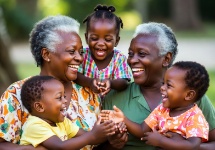
Aisha sat at her grandmother’s bedside in a quiet Lagos hospital room, holding a frail hand that had once stirred pots of fragrant egusi soup for dozens of relatives. Iya Agba was slipping away, and with her went decades of untold tales. Aisha had always meant to ask about the meaning behind the old Yoruba lullabies, the real story of how her grandfather fled the village during the war, the secret ingredient that made the family’s jollof unbeatable. But life, work, traffic, social media have always gotten in the way. Now time had run out.

It’s a scene playing out in homes across Nigeria and beyond. Elders who carry entire libraries of family memory in their heads leave us suddenly, and we’re left with photographs, clothes, and trinkets but no context. The recipes sit unused because no one wrote down the “pinch” or “dash” that made them special. The folktales that taught morals and identity are replaced by cartoons and TikTok trends. We inherit land and money, yet the stories that explain who we are and where we came from vanish like smoke.
These stories aren’t just entertainment; they’re identity. They tell us why we celebrate certain festivals, why certain names are chosen, why resilience runs in our blood. When a grandmother recounts migrating from the village to the city with nothing but faith and a mat, she’s passing down courage. When a father shares how he learned trade in the markets of Kano, he’s handing over wisdom. Without these threads, younger generations float unanchored, searching for belonging in trends instead of lineage.
The loss feels gradual, almost invisible, until it’s too late. Children grow up knowing their grandparents only through faded pictures, not living voices. Family gatherings lose their flavor when no one remembers the old songs or the jokes that made everyone roar with laughter. We become strangers to our own heritage, proud of cultures we only half-understand, sharing surface-level traditions online while the deeper meaning slips away.
Yet it doesn’t have to end this way. Families are waking up and are now recording voice notes during Sunday visits, filming cooking sessions in the kitchen, starting group chats dedicated to collecting memories. Some create private family podcasts, others compile recipe books with photos and anecdotes. A simple phone recording of an elder telling just one more story can preserve a century of lived experience for generations yet unborn.
Comments (0)
Please sign in to join the conversation.
Loading comments...