

We don't choose partners randomly. We choose them from a feeling almost always rooted in something much older than the relationship.
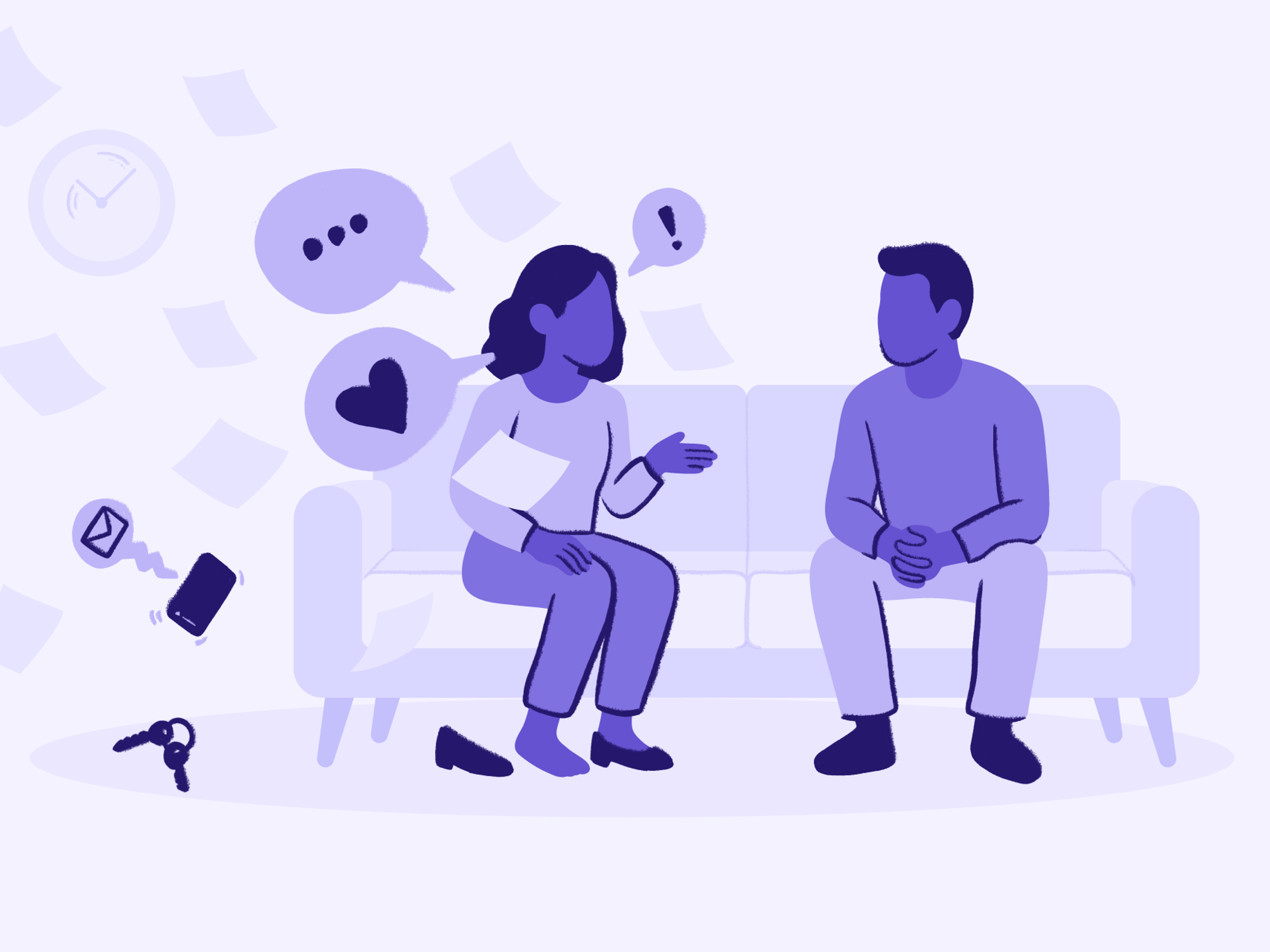
Our emotional habits, the ones formed in childhood kitchens, in secondary school hallways, in the silence of homes that didn't talk about feelings, become the invisible compass we use to navigate love. And if we never examine that compass, we keep heading in the same direction, wondering why we always end up in the same place.
It was a Sunday afternoon in Abuja, and Chiamaka was sitting cross-legged on her living room rug, phone face-down, staring at the ceiling the way you do when you're not really resting; you're processing. Her friend Kolade had just called to check on her after yet another breakup, this time with Emeka, a charming, emotionally unavailable man who had swept into her life like a harmattan breeze and left just as quickly. "Chichi," Kolade said softly over the phone, "don't you think it's time we talked about the pattern?" She didn't answer immediately. She already knew he was right.
Chiamaka, sharp as a tack, is a procurement officer at a logistics firm in Wuse 2, and by every measure a woman who had her life together. She reads, she saves, she leads. But in love, something kept steering her toward men who couldn't quite show up for her. And the haunting thing wasn't that she didn't notice. She noticed every time. She just kept going anyway. Sound familiar? Because it should. This is not Chiamaka's story alone; this is the story of millions of us who, despite our intelligence and self-awareness, keep cycling through the same emotional experiences with different people and the same results.
Kolade, for his part, had his own version of this story. He'd spent three years with Adaeze, a woman he deeply admired, but who made him feel perpetually like he was not ambitious enough, not expressive enough, not anything enough. When that relationship ended, he promised himself he'd choose differently. Two relationships later, he found himself with Ngozi, who, while different on the surface, made him feel exactly the same way. He told Chiamaka on that Sunday call: "I started to wonder whether I was picking these women, or whether I was calling them in somehow."
That question is what this piece is entirely about.
Below are fifteen of the most common emotional habits that quietly steer good people toward the wrong partners. Not because those people are broken or foolish, but because the habit is running in the background, unexamined and unchallenged. Read these not as accusations, but as a mirror. A kind one.
The 15 Habits Why We Keep Choosing Who We Choose
01. You Confuse Intensity With Intimacy
Chiamaka always described her best relationships as "electric." What she didn't realize for years is that what she called electricity was actually anxiety: the nervous, unsettled feeling of being around someone unpredictable. Genuine intimacy is quieter. It's the warmth of feeling safe, not the adrenaline of wondering where you stand. When calm feels boring, and chaos feels like passion, you will keep chasing the storm and calling it love. Intensity is the spark; intimacy is the fire that sustains a home. Learn to tell them apart.
02. You Believe Love Must Be Earned
Growing up, some of us were loved conditionally, praised when we performed, and withdrawn from when we disappointed. That experience plants a silent belief: love is a reward, not a given. So in adult relationships, you work, you prove, you contort yourself to stay worthy. And naturally, you're most drawn to partners who make you feel like you have to earn their affection because that's what love feels like to your nervous system. Until you understand that love is meant to be given freely, you will keep auditioning for roles in relationships where you were never truly cast.
03. You Prioritize Potential Over Present Reality
Kolade told Chiamaka something that stopped her mid-sip of tea: "I think I've been in love with who Adaeze could be, not who she actually was." This habit is devastatingly common. You see the raw material of someone: their intelligence, their warmth in good moments, the person they talk about becoming, and you fall in love with that version instead of the one sitting across from you right now. Potential is not a personality. Who someone is today, in ordinary moments, under pressure, when they're tired and unhappy, is who you are actually choosing. The rest is a projection.
04. You Ignore Your Body's Early Warnings
Before Emeka ever let Chiamaka down in a significant way, there were small moments; the slight dismissiveness, the way he'd go quiet for days without explanation, the feeling in her chest when he said certain things. She overrode all of it with logic and hope. Our bodies often know before our minds catch up. That low-level unease in the stomach, the slight tension in your shoulders around someone, the way you find yourself choosing your words carefully to avoid setting them off are not nervousness about falling in love. Those are signals. Slow down and listen to them early, before emotional investment makes it harder to hear.
05. You Fear Being Alone More Than You Fear the Wrong Person
This one requires real honesty. Sometimes we stay in or walk into relationships not because we genuinely see a future, but because the alternative feels worse. That fear of solitude is understandable; humans are wired for connection. But when the fear of aloneness is greater than your standard for partnership, you will accept less than you deserve, over and over, simply to fill the space. Being alone is a season. Being in the wrong relationship is a slow drain. One ends; the other compounds.
"The problem is not that you keep meeting the wrong people. The problem is that something inside you keeps feeling at home with them."
06. You Derive Your Worth From Being Needed
There is a particular type of person who thrives in relationships where their partner needs a lot from them emotionally, practically, and logistically. It feels like love, because it looks like love. You're always there, always helping, always holding things together. But underneath it is a habit of tying your self-worth to being indispensable. The moment you're with someone who is already whole and self-sufficient, you feel oddly irrelevant even if they adore you. So you drift back toward people who need fixing. And fixing someone is not the same as loving them, nor them loving you.
07. You Mistake Familiarity for Compatibility
Kolade once described meeting Ngozi as feeling like he already knew her, within the first week. He thought it meant they were meant to be. What it actually meant was that she fit perfectly into the emotional template his earlier experiences had laid down. Familiarity is not chemistry. Familiarity is pattern recognition with your brain going, "I know this, I know how to survive here." That is not the same as the relationship being good for you. In fact, the more comfortable and familiar someone feels immediately, the more worth examining that feeling is, especially if your track record is telling you something.
08. You Suppress Needs to Avoid Conflict
Chiamaka described herself as "easy-going" in relationships. What she didn't say was that she had spent years training herself to want less, ask for less, and need less because somewhere along the line she learned that having needs caused friction. So she'd smile through disappointments, say "it's fine" when it wasn't, and quietly accumulate resentment while presenting a peaceful exterior. Partners who are emotionally avoidant love this arrangement, at least at first. Over time, however, suppressing your needs doesn't make them disappear; it makes you choose people who wouldn't meet them anyway, so you never have to risk the discomfort of asking.
09. You Overvalue Being Chosen Above Being Compatible
Being pursued feels wonderful. Being wanted by someone is genuinely affirming. But there is a trap buried inside that feeling; when being chosen becomes more important than whether the person choosing you is actually right for you, you start making decisions based on their enthusiasm, not your own alignment. Chiamaka laughed, telling Kolade: "I think I said yes to Emeka because he was so sure he wanted me, and I didn't stop to check if I actually wanted him back, in the full, honest way." Being desired is not a relationship plan. It's a starting point. Compatibility, shared values, and emotional safety are the real checklist.
10. You Equate Sacrifice with Love
Many of us were raised in homes where love was demonstrated through what people gave up, endured, or carried silently. A parent working themselves thin, a relative staying in a painful situation "for the family" become our reference points for what love looks like in practice. So in relationships, you gravitate toward situations that require sacrifice, because sacrifice is how you know it's real. But love is not meant to cost you your peace, your ambitions, or your sense of self, consistently and without reciprocity. Sacrifice is occasionally part of love; it is not the definition of it.
11. You Don't Examine What You Actually Need
Most people have a vague list of what they want in a partner: kind, ambitious, funny, family-oriented. Very few have ever sat down and genuinely asked themselves what they actually need emotionally in a relationship to thrive. There's a difference between wanting someone funny and needing a partner who can hold space for your emotions without becoming defensive. One is a preference; the other is a requirement for your wellbeing. Without that clarity, you pick based on vibes and a checklist that doesn't actually map to your deepest emotional structure, and then wonder why something always feels off, even with people who seem perfect on paper.
12. You Believe You Can Love Someone Into Growth
Kolade held on to Adaeze for an extra year because he genuinely believed that if he loved her consistently, patiently, and well enough, she would eventually soften and open up. This belief is one of the most expensive emotional habits you can carry. People change when they want to change, when they're ready, when they've done the internal work. Your love cannot substitute for their willingness. You are not a rehabilitation program. Choosing to be with someone as they are right now is healthy; choosing to stay based on who they might become if you love them correctly is a gamble with your years.
13. You Attach Quickly and Deeply Before You Know Someone Well
There is something deeply human about being swept up in the early rush of a new connection: the long phone calls, the feeling of being completely understood, the sense that you've never met anyone quite like this person. But when deep emotional attachment forms before you actually know someone's character, their patterns under stress, their relationship with accountability, their capacity for consistency, you end up defending a feeling rather than evaluating a person. Chiamaka once said she knew she loved Emeka before she'd seen him handle a single hard day. She hadn't yet. And the first hard day told her everything. Slow down on the inside, even when it feels fast.
14. You Dismiss Green Flags as Boring
Sometimes the right person doesn't feel right because they feel too easy, too available, too consistent, and too uncomplicated. You keep waiting for the edge, the intrigue, the feeling of uncertainty that has always accompanied what you called love. So you overlook the person who texts when they say they will, who treats you well without you having to ask, who shows up without drama because nothing in your emotional history taught you that that kind of stability could also be exciting. Calm can be passionate. Safe can be romantic. This is a relearning, and it is absolutely worth doing.
15. You Haven't Grieved the Relationships That Formed You
The final and perhaps most important habit: carrying the unprocessed weight of past relationships into every new connection. Kolade hadn't fully grieved his father's emotional distance when he started choosing emotionally unavailable women. Chiamaka hadn't processed the relationship that broke her trust in her mid-twenties when she started keeping emotional walls up with every new person she met. Ungrieved experiences don't stay in the past; they sit quietly in your chest and influence every new decision you make. Giving yourself the space to fully feel, process, and release what happened before is the single most powerful thing you can do for the health of your future relationships.
Start with yourself with honesty, with curiosity, and with the gentle willingness to look at the habits you've been carrying without judgment. Because the goal isn't to become someone who never makes mistakes in love. The goal is to become someone who understands themselves well enough to make choices that actually align with the life and the love they're genuinely hoping to build.


Comments (0)
Please sign in to join the conversation.
Loading comments...