

In the heart of Nigeria's festive season, a storm has erupted, not from the harmattan winds, but from a single movie title that has pitted religious sanctity against the bold strokes of creative expression.
↔ Resize
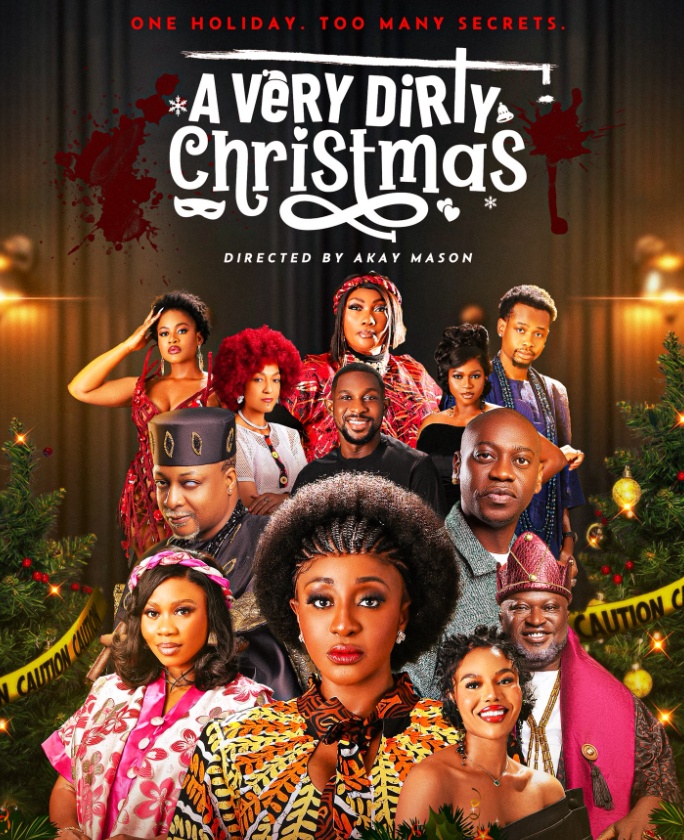
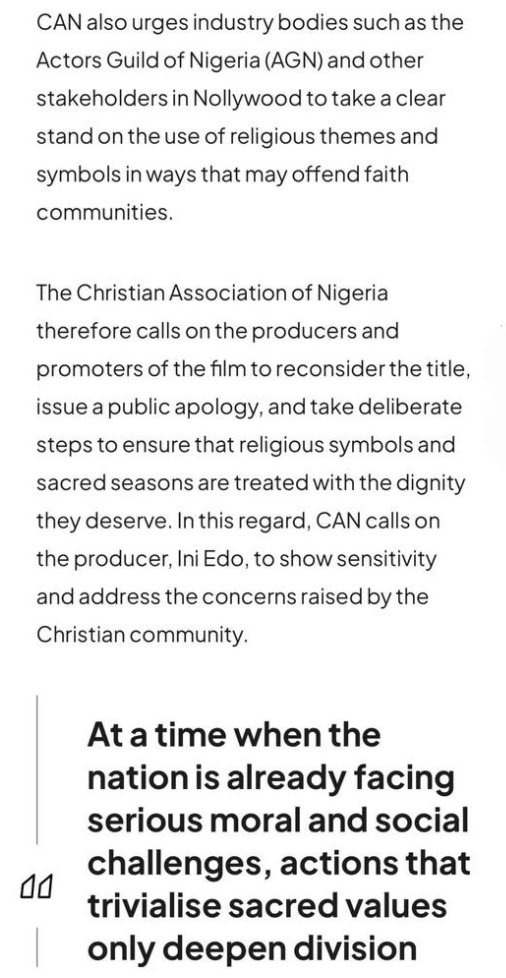
It began quietly enough. On December 16, 2025, Nollywood star Ini Edo's latest production, A Very Dirty Christmas, hit cinemas nationwide. A family drama exploring conflicts and hidden secrets unfolding during the holidays, the film promised intrigue wrapped in seasonal cheer. But the title, pairing the holy commemoration of Christ's birth with the word 'dirty', ignited outrage from the Christian Association of Nigeria (CAN).
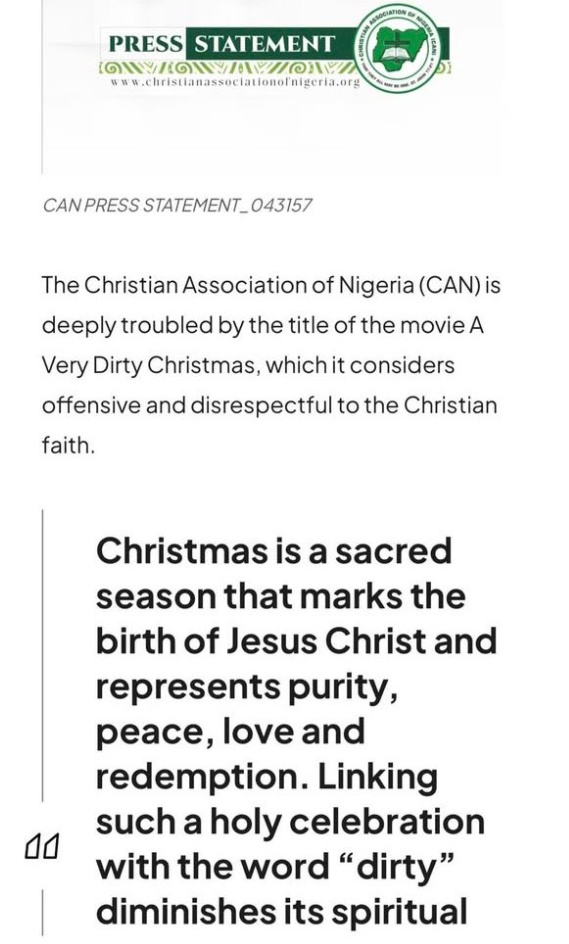
CAN's president, Archbishop Daniel Okoh, did not mince words in a statement issued days later: 'The Christian Association of Nigeria is deeply troubled by the title of the movie: ‘A Very Dirty Christmas’, which it considers offensive and disrespectful to the Christian faith. Christmas is a sacred season that marks the birth of Jesus Christ and represents purity, peace, love and redemption. Linking such a holy celebration with the word ‘dirty’ diminishes its spiritual meaning and reduces a solemn religious observance to something crude and sensational.'
↔ Resize
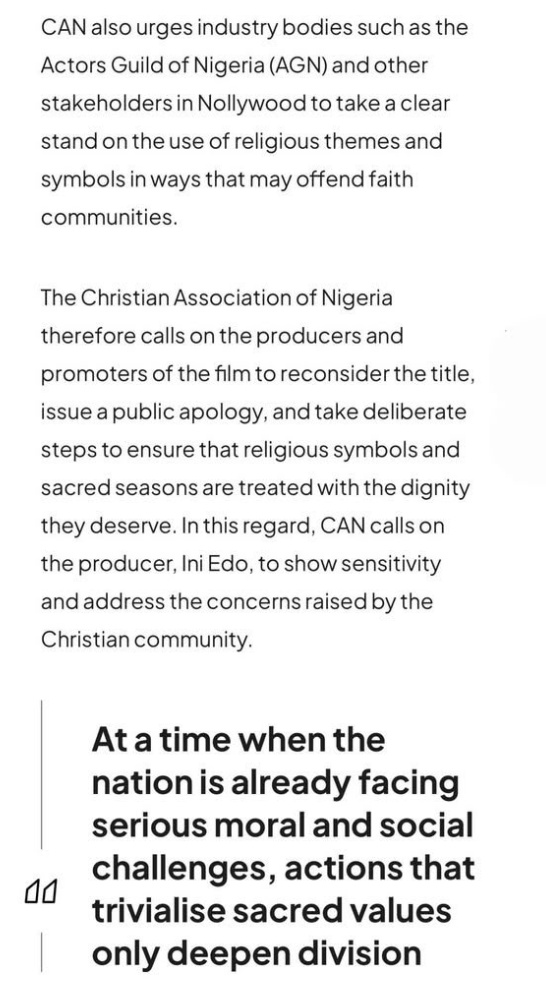
For CAN, this was more than semantics; it was a line crossed in a nation already navigating moral and social fault lines. The association urged regulators to review the approval and called on Edo to address the concerns with sensitivity.

The National Film and Video Censors Board (NFVCB), which had greenlit the film after standard review, soon found itself in the crossfire. Executive Director Shaibu Husseini acknowledged the debate in a statement on December 18: the movie had passed censorship 'within its full narrative and thematic context,' with the title viewed as 'fictional and creative expression.' Yet, he admitted, 'public interpretation of creative works can differ sharply from regulatory intent.' By December 19, the NFVCB had formally requested a title modification to avert 'unnecessary religious tension.'
↔ Resize
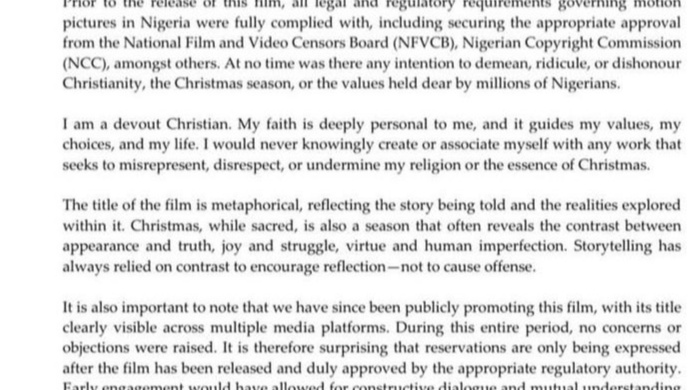
As pressure mounted, Ini Edo, a self-professed devout Christian, faced the fallout head-on. In a written response, she defended the artistic intent: the title was metaphorical, highlighting human imperfections against the backdrop of holiday ideals, never meant to demean faith.
But it was in an emotional Instagram Live session late on Sunday that the human cost of this clash became visceral. Tears streaming down her face, Edo pleaded directly with viewers and, implicitly, with CAN and regulators:
“Just don’t pull my film, please. Just allow people to watch. Watch the film and come back and say that this film degrades Christians or degrades Christianity. Then I will pull it.
“If it dishonours God or Christians in any way, I will pull it and bear the consequences. I will not be part of something like that. We chose ‘A Very Dirty Christmas.’ It was never to demean Christians or disrespect Christendom or dishonour God.
"If I had known the title ‘A Very Dirty Christmas’ would cause a problem, I would have changed it. CAN, I am sorry. I never meant to insult or disgrace Christians. I am a Christian too.
“This film has no dirt in it. It highlights family conflicts, secrets unfolding. It does not ridicule Christians.”
Her voice breaking, she highlighted the stakes: “I did take money from investors to do this film. We have over about 70 cinemas nationwide. We’ve done print, media and digital. I don’t know how we are going to do it.”
Edo confirmed requests to change the title and vowed compliance, "Christians are not the people I want a problem with because I’m one. I will try to change the title. Just give us some time. Don’t pull the film," while begging for a chance to let audiences judge the content itself.
↔ Resize
This saga encapsulates a deeper tension in Nigeria's vibrant cultural landscape: the boundary between safeguarding religious reverence and preserving artistic freedom. CAN guards the purity of a season central to millions, wary of sensationalism eroding sacred values. Edo, meanwhile, embodies the storyteller's prerogative to provoke reflection through contrast, insisting judgment should follow viewing, not presumption.
As the film remains in cinemas, the nation watches. Will dialogue prevail, allowing a title tweak to diffuse the storm? Or will this become a precedent curbing creative risks in a pluralistic society? In a country where faith and film intertwine deeply, the resolution may reveal much about how Nigeria balances devotion with expression this Christmas and beyond.
Comments (0)
Please sign in to join the conversation.
Loading comments...