


Romance scams don't succeed because their victims are foolish; they succeed because loneliness is one of the most human, most universal vulnerabilities we carry, and scammers have gotten frighteningly good at exploiting it with patience, charm, and carefully rehearsed scripts.
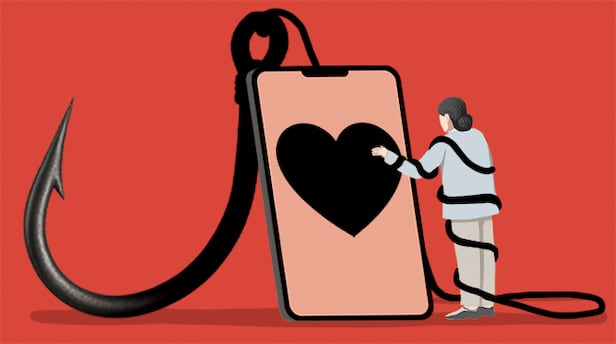
Nabirye noticed the way her mother-in-law, Wanjiru, had started smiling at her phone during Sunday lunch, quickly turning the screen face-down whenever someone walked past. Wanjiru had been widowed for three years, and for most of that time, her evenings had been quiet in a way that worried her children more than they said out loud.
So when she started mentioning "David," a charming engineer working on an oil rig off the coast, Kato and Nabirye were relieved to see her laughing again. It took two months, a "medical emergency" David couldn't explain clearly, and a request for six hundred dollars in emergency funds before the warmth in the room turned into the slow, sick realization that the man who had brought their mother back to life might not exist at all.
This isn't only a story about widowed parents; it happens to divorced uncles, single aunties, recently retired professionals, and even happily married people going through a quiet season of disconnection.
In many households, where extended family lives under one emotional roof even when miles apart, the fallout from a scam doesn't stay contained to one person: it ripples through the whole family's trust, finances, and sense of safety.
Here's how to see it coming, and how to respond with love instead of shame.
1. Understand that loneliness, not gullibility, is the real target
Scammers don't look for "weak" or "stupid" people; they look for people who are emotionally underfed. A widow eating dinner alone, a retiree whose children have moved abroad, a busy parent whose spouse works nights are simply hungry for connection, and that hunger is exactly what gets exploited.
2. Learn the early love-bombing pattern
Real relationships build slowly and unevenly. Scam relationships move fast on purpose: daily messages within days, declarations of love within weeks, and a level of attentiveness that feels almost too perfect. If it feels like a whirlwind before you've even had a real conversation about ordinary things, that speed itself is a warning sign.
3. Notice the refusal to appear on video
"My camera is broken." "The rig has bad signal." "I'll call you properly once this contract ends." A pattern of excuses around video calls, even after weeks or months of daily texting, is one of the clearest markers of a fabricated identity. Genuine people, even shy ones, eventually want to be seen.
4. Watch for the manufactured emergency
Almost every romance scam eventually arrives at a crisis: a stuck shipment, a medical bill, a visa fee, a stranded situation in an airport. The emergency is designed to feel urgent enough to bypass careful thinking, and specific enough to sound believable. The moment money enters the conversation, the relationship has shifted from romance to risk.
5. Treat "keep this between us" as a serious red flag
Scammers often encourage secrecy, framing family scepticism as jealousy or interference: "your children just don't want to see you happy." Real partners don't need to isolate you from the people who love you. Secrecy is a control tactic, not a sign of a special bond.
6. Do a simple reverse-image check before anything else
A screenshot of the profile photo run through a reverse image search takes two minutes and often reveals the same picture used under five different names on five different sites. It is the digital version of asking someone for ID.
7. Never send money to someone you have not met in person
This is the single non-negotiable rule that ends most scams before they start. However convincing the story, however real the affection feels, money should never move toward someone whose physical existence you cannot verify with your own eyes.
8. Approach concerned conversations with warmth, not ridicule
When Kato finally sat with his mother, he didn't say, "How could you fall for this?" He said, "Mum, I love how happy you've been, and that's exactly why I want to make sure this person is real." Shame shuts people down; gentle concern opens the door for honesty.
9. Bring in a second, trusted opinion before big decisions
Encourage a habit for parents, siblings, or friends of running any online relationship that starts involving money past one trusted family member first. It's not about control; it's about having a second pair of eyes when emotions are running the show.
10. Report it, without turning it into a family scandal
Most countries have cybercrime units, and most platforms have reporting tools built specifically for this. Reporting isn't an admission of stupidity. It's an act that can protect the next lonely person the same scammer targets.
11. Rebuild real-world connection as the actual solution
The scam is the symptom; loneliness is the disease. Regular calls, a weekly visit, a church group, a walking club with age-mates fill the emotional gap that made the scam attractive in the first place, and they do more long-term good than any warning speech ever could.
12. Support the emotional recovery, not just the financial one
Discovering a romance scam often brings a grief that looks a lot like heartbreak, layered with embarrassment. Wanjiru didn't just lose money; she lost a version of companionship she had let herself believe in. Give that loss room to be mourned, rather than rushing straight to "lesson learned" language.
13. Make check-ins a habit, not a one-time lecture
One conversation rarely changes a pattern. Build small, regular touchpoints: a weekly call, a shared family group chat, an occasional "how's David treating you?" asked with genuine warmth, so vigilance becomes part of ongoing care rather than a single uncomfortable talk that never gets revisited.
Guiding a lonely loved one back to safety is about proving, again and again, that real love was never that far away to begin with.



Comments (0)
Please sign in to join the conversation.
Loading comments...