

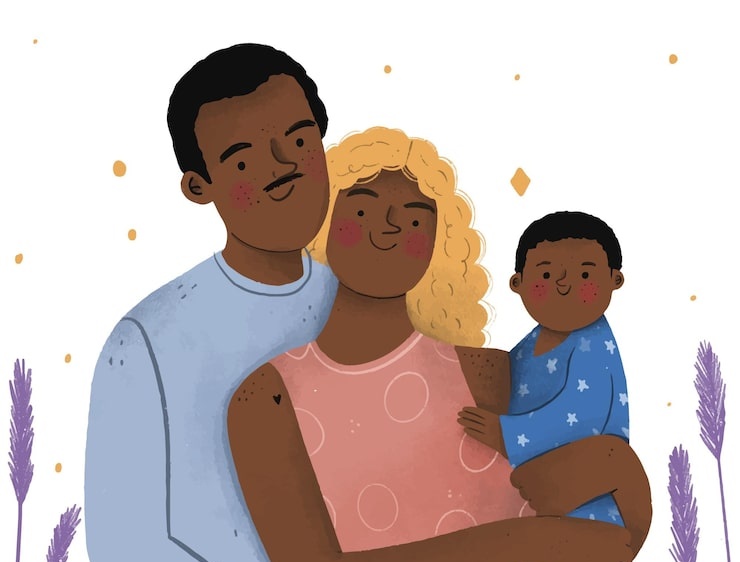
The rise of gentle parenting captures something profound in our shared human story: a collective yearning to raise children differently from how many of us were raised. It speaks to the exhaustion we feel from fast-paced lives, the quiet ache of wanting deeper connection amid constant distraction, and the hope that empathy might heal what past generations endured in silence.

As we navigate raising children in modern times — amid economic pressures, digital overload, cultural shifts, and a world that feels more uncertain than ever—this approach has surged in visibility and debate. It isn't just a trend; it's a mirror reflecting our evolving understanding of what family can mean across class, culture, faith, and social lines.
We see it in playground conversations that cross neighborhoods, in late-night scrolls through advice that promises calmer homes, and in the way parents from diverse backgrounds quietly adapt pieces of it to their realities. Gentle parenting, at its core, emphasizes empathy, respect, understanding, and firm yet compassionate boundaries. It views a child's behavior not as defiance to crush but as communication to decode—often rooted in unmet needs, big feelings, or developmental stages. Popularized by voices like Sarah Ockwell-Smith and amplified through social media, it draws from attachment theory, developmental psychology, and a rejection of rigid, punitive methods that many remember from childhood.
Yet its rise isn't accidental. Recent years have intensified modern parenting struggles: the pandemic's isolation, social media's relentless standards, economic strain that stretches time and patience thin, and a cultural shift toward prioritizing emotional health. Many of us—parents and non-parents alike—witness families grappling with these realities. Nearly half of parents report wanting to parent differently from their own upbringing, seeking more warmth and less fear-based control. Gentle parenting offers a response: a framework that honors a child's inner world while still guiding them toward responsibility.
But understanding its ascent requires looking beyond the surface. We must ask what it reveals about us as a society.
First, it highlights our growing awareness of emotional intelligence. We now know that children's brains wire through attuned relationships—where feelings are named, validated, and regulated together. When we respond to a meltdown with curiosity rather than shutdown, we're teaching self-regulation, not just obedience. This isn't indulgence; it's investment in future resilience. Studies on authoritative parenting (which gentle approaches often align with) show children develop stronger emotional skills, better social competence, and even academic outcomes when warmth pairs with structure.
Gentle parenting is often framed as a new way to treat children but its real center of gravity is adults. It asks us to pause before reacting, to listen before correcting, to regulate ourselves before attempting to regulate a child.
In many ways, it is less about raising emotionally secure children and more about confronting our own emotional inheritance. For the first time in generations, many of us are asking: Why do we respond the way we do? That question alone marks a cultural turning point.
Second, it reflects a backlash against inherited patterns. Many of us carry memories of authoritarian echoes—"because I said so," sharp corrections, or suppressed emotions. Gentle parenting invites us to break those cycles, not out of rebellion, but out of recognition that what felt normal then may not serve now. This resonates universally: in bustling urban homes, rural communities, across faiths that value compassion, and in families of every socioeconomic layer striving for connection despite limited resources.
Third, it exposes the tension between empathy and exhaustion. Gentle parenting demands presence—staying regulated when a toddler tantrums, explaining limits calmly during fatigue. Research shows many who embrace it report high satisfaction yet also burnout risks, especially when idealized versions ignore real-life constraints like work demands or multiple children. The approach isn't effortless; it requires self-awareness and support systems that modern life often lacks. We feel this pull: wanting to respond gently but sometimes reaching our limits, wondering if we're failing at both kindness and firmness.
Fourth, it challenges the myth of one-size-fits-all. Gentle parenting isn't monolithic. In some cultures, collectivist values already emphasize harmony and respect without Western labels—boundaries flow from community expectations rather than individual negotiation. In others, traditional hierarchies blend with emerging empathy. The rise invites us to adapt thoughtfully, honoring cultural strengths while integrating psychological insights. It isn't about erasing heritage but enriching it.
Fifth, it underscores boundaries' essential role. Contrary to caricatures of permissiveness, true gentle parenting insists on limits—set with empathy, enforced consistently, and explained developmentally. Boundaries provide safety; without them, children feel adrift. The confusion arises when "gentle" gets misconstrued as "no consequences," leading to frustration for parents and insecurity for kids. We learn that kindness and structure aren't opposites—they're partners.
Sixth, it reveals social media's double edge. Platforms democratize ideas, connecting isolated parents to supportive voices. Yet they amplify perfectionism—curated moments of calm amid chaos, fueling guilt when reality doesn't match. We scroll, compare, and question our instincts. The rise reminds us to seek wisdom beyond algorithms, trusting our attuned hearts.
Seventh, it speaks to future implications. In a world demanding adaptability, emotional literacy may be the greatest inheritance. Children raised with validated feelings often grow into adults who empathize deeply, resolve conflict collaboratively, and navigate uncertainty with grace. Yet we must balance this with preparation for a world that isn't always gentle—teaching resilience through supported challenges, not shielded ones.
Eighth, it invites reflection on power dynamics. Gentle parenting democratizes the family: children's voices matter, fostering mutual respect. This shifts from hierarchical control to collaborative guidance, aligning with values of dignity across beliefs and backgrounds.
Ninth, it acknowledges privilege and access. Not every family has bandwidth for lengthy emotional coaching amid survival demands. Gentle principles can adapt—small moments of attunement matter more than perfect scripts. Its rise pushes us toward systemic supports: affordable childcare, mental health resources, community networks that ease the load.
Tenth, it mirrors our collective healing. Many parents practice gentle approaches as reparenting themselves—offering the understanding once withheld. This intergenerational repair ripples outward, creating homes where vulnerability is safe.
Eleventh, it highlights common ground. Beneath debates—gentle versus traditional—most of us want the same: secure, capable, compassionate children. The rise isn't about superiority but evolution—integrating timeless wisdom with new understandings.
Twelfth, it warns against extremes. When empathy overrides structure, children may struggle with limits; when structure lacks warmth, emotional walls form. Balance is the art we all pursue.
Thirteenth, it celebrates small wins. A deep breath before responding, a named feeling during conflict—these build trust incrementally.
Fourteenth, it reminds us parenting is relational, not performative. Connection trumps technique.
Fifteenth, it offers hope. Amid modern chaos, choosing gentleness—tempered with wisdom—affirms our belief in human goodness. We can raise children who feel seen, who extend that seeing to others.
As we close, consider this: the rise of gentle parenting isn't about flawless execution but honest intention. We stumble, repair, and try again. In doing so, we model the very resilience we hope to instill. Our children don't need perfect parents; they need present ones—who feel deeply, set loving limits, and believe in growth. In a fragmented world, that may be the most revolutionary act of all.
This explains what we feel but never knew how to say: parenting today is hard because the stakes feel higher, yet the heart's longing for connection remains timeless. May we meet that longing with grace—for our children, for ourselves, for the families we're building together.



Comments (0)
Please sign in to join the conversation.
Loading comments...