

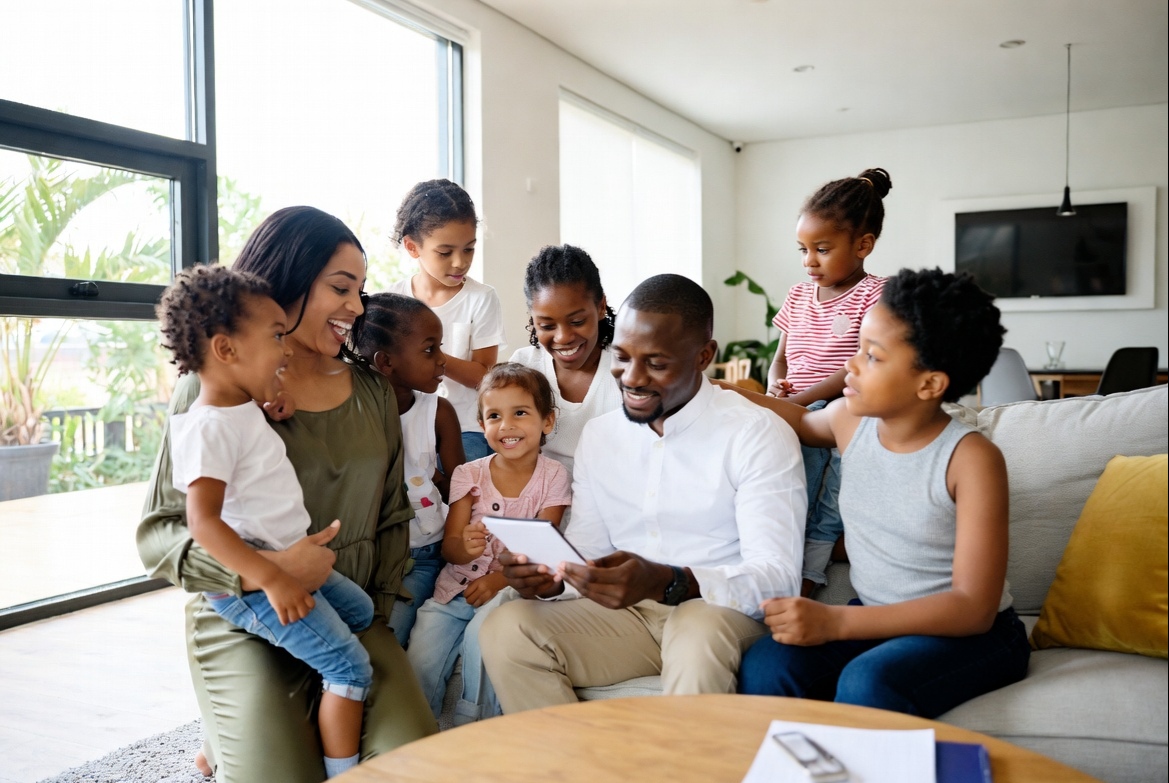
A family is a group of people who are related by blood, such as father, mother and their children. The family is the smallest unit of a society. A family is formed when a man and a woman, through marriage, agree to live together. This was the definition many were taught in school years back.
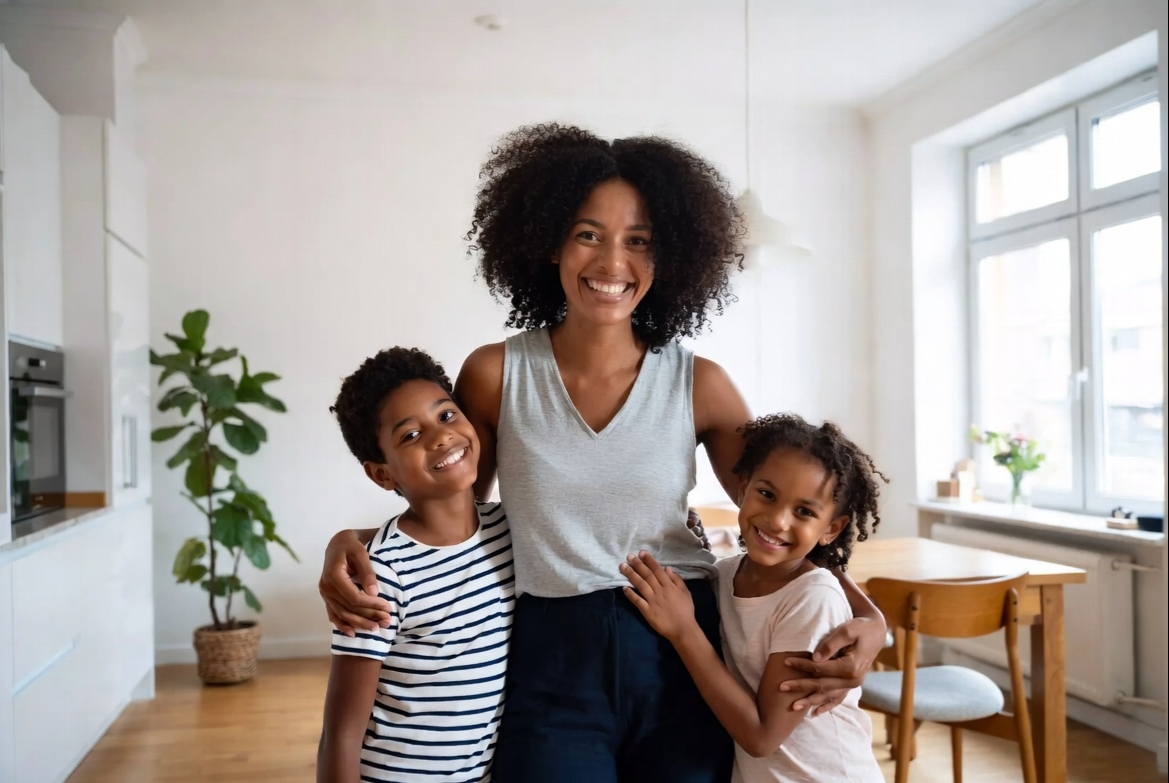
We all grew up with some idea of what a "family" was supposed to look like. Perhaps it was the image from a television advert, two parents, two children, a dog, and a semi-detached house with a tidy front garden. However, step outside and look around. Families today come in every shape, size, and colour imaginable. They are loud and quiet, small and sprawling, traditional and wonderfully unconventional, and each one is doing something remarkable: trying to love well.
This piece explores 12 types of family structures in today's world, what makes each unique, and why understanding them matters more now than ever.
1. The Nuclear Family
This is the one most people picture first. A nuclear family consists of two parents, traditionally a mother and a father, and their biological children, all living under one roof. For decades, this was considered the gold standard of family life, particularly in Western societies.
Don't Give Your Heart Away Until You've Asked These 8 Questions
The nuclear family offers a clearly defined structure, which can bring stability, consistent routines, and a shared sense of identity. Children often grow up with two role models navigating life together, which can be deeply reassuring. However, the pressure placed on just two adults to be everything from the financial providers to the emotional supporters, disciplinarians, and friends can be immense. The nuclear family works beautifully when it works, but it is far from the only model worth celebrating.
2. The Single-Parent Family
A single-parent family is headed by one adult who raises a child or children largely on their own. This might happen following a divorce or separation, bereavement, or simply by personal choice.
Single parenthood is one of the most demanding roles a person can take on, yet it is also one of the most misunderstood. The stereotype of struggle and hardship does not tell the full story. Many single-parent households are rich with love, resilience, and extraordinary closeness between parent and child. Children raised in these environments often develop remarkable independence and emotional maturity. What they need most is not a second parent. Rather, they need support, community, and for society to stop treating their family as somehow incomplete.
3. The Blended Family (Stepfamily)
When two people who already have children from previous relationships come together to form a new household, the result is a blended family. Step-parents, step-siblings, and half-siblings become part of the picture, sometimes overnight.
Blended families are increasingly common, and while they can be deeply rewarding, they also come with a unique set of adjustments. Loyalties can feel divided. Routines clash. Children may grieve the family they once knew, even as they grow fond of their new one. The key ingredient in a thriving blended family is patience, enormous and unhurried patience, alongside clear communication and a genuine willingness to respect everyone's feelings, including the difficult ones.
4. The Extended Family
In many cultures around the world, the extended family is not a secondary arrangement. It is the primary one. Grandparents, aunts, uncles, and cousins do not simply visit at Christmas; they live together, raise children together, and share the weight of daily life.
In South Asian, African, Latin American, and many other communities, extended family living is not just practical. It is a deeply held value. Grandparents pass down language, tradition, and wisdom. Cousins grow up more like siblings. The load of childcare and elder care is distributed across multiple shoulders rather than resting on just two. For many families across the world, this model is not old-fashioned but simply how love is organised.
5. The Childless (or Child-Free) Family
Not every family includes children, and that is a perfectly valid choice. A childless family may refer to a couple, married or otherwise, who have decided not to have children, or who have been unable to do so despite wanting to.
Society has historically been unkind to couples without children, particularly women, who often face intrusive questions and quiet judgement. However, a partnership built on mutual love, shared goals, and chosen companionship is a family in every meaningful sense. These households often invest deeply in friendships, community, and the lives of the younger people around them, such as nieces, nephews, godchildren, in ways that are profoundly nourishing for everyone involved.
6. The Grandparent-Led Family
Sometimes, grandparents step in to raise their grandchildren when parents are unable to do so, whether due to illness, addiction, incarceration, or other circumstances. These are known as grandparent-led or kinship families.
This arrangement asks a great deal of older adults who may have expected a quieter chapter of life. Yet grandparents who take on this role often do so with fierce dedication. For the children involved, being raised by a grandparent can provide safety, continuity, and a powerful sense of belonging to something larger than themselves. These families deserve far more recognition and practical support than they typically receive.
7. The Same-Sex Parent Family
A same-sex parent family is one in which a child is raised by two parents of the same gender. In the UK, same-sex couples have had the legal right to adopt since 2005 and to marry since 2014, and many thousands of families have been built on this foundation.
Decades of research consistently show that children raised by same-sex parents fare just as well emotionally, socially, and academically as those raised by opposite-sex parents. What shapes a child's well-being is not the gender of their parents but the quality of love, the stability of the environment, and the warmth of the home. These families also tend to raise children with a broader sense of empathy and a more open understanding of the world, qualities that, frankly, we could all do with more of.
While many religions and cultures around the world may not accept this type of family structure, its existence cannot be denied, nor does it make it any less of a family to those within it.
8. The Cohabiting Family
A cohabiting family consists of two parents who live together and raise children together but have chosen not to marry. In some places, cohabiting couples are the fastest-growing family type. Many of these families are every bit as stable and committed as their married counterparts and the absence of a wedding certificate says nothing about the depth of the relationship.
It is worth noting, however, that cohabiting couples currently have fewer legal protections than married ones, which can create vulnerability if the relationship breaks down. Understanding these legal differences is important, particularly for couples raising children together.
9. The Multigenerational Family
Distinct from the extended family in its specific focus, the multigenerational family describes a household where three or more generations live together. It usually entails grandparents, parents, and children under one roof. This model has seen a significant revival in recent years, driven in part by the rising cost of housing and in part by a renewed appreciation for what older generations bring to family life.
There is something quietly powerful about a home where a grandparent and a toddler share breakfast each morning. Knowledge is passed down naturally. Children develop patience and empathy by spending real time with elderly relatives. Grandparents feel less isolated and more purposeful. When it functions well, the multigenerational home is one of the most human environments imaginable.
10. The Foster Family
Foster families provide a temporary home for children who cannot, for whatever reason, live with their birth parents. Foster carers are assessed, trained, and supported by local authorities to care for some of the most vulnerable children in society.
Fostering is not adoption. The arrangement is, by design, temporary but the impact a foster family can have on a child's life is anything but small. A stable, loving foster placement during a period of crisis can fundamentally alter the trajectory of a child's future. Foster families come in all shapes, and they give something irreplaceable: safety, when a child needs it most.
11. The Adoptive Family
An adoptive family is one where a parent or parents have legally adopted a child, making that child a permanent and full member of the family in every legal and emotional sense. Adoption may happen through domestic routes or internationally, and adoptive children may join families as infants or as older children with their own complex histories.
Adoptive families often navigate questions of identity, heritage, and belonging with great thoughtfulness. Many adoptive parents work hard to keep their child connected to their birth culture and history, understanding that a child can hold more than one story at once. Love in an adoptive family is no less for being chosen. If anything, it is a love that has been deliberately, wholeheartedly sought.
12. The Chosen Family
Perhaps the most quietly radical family structure of all, the chosen family is one made not of blood or legal ties but of deliberate, mutual commitment. These are the friends who show up in the middle of the night. The neighbours who become aunties and uncles. The community that holds you when your biological family cannot or will not.
Chosen families are especially significant within communities where estrangement from biological relatives remains painfully common. However, the concept extends far beyond any one group. In an increasingly mobile, disconnected world, chosen families represent something ancient and deeply human. That is, the understanding that love, care, and belonging can be built from scratch, by anyone, anywhere.
Why This All Matters
Understanding the many forms a family can take is not merely an academic exercise. It has real consequences for policy, education, the way we speak to one another at the school gates, and across the office. When you expand your definition of family, you expand your capacity for empathy. Also, you make more room for people to live honestly, to raise children without shame, and to find belonging in a world that can feel very isolating.
There is no single correct way to be a family. There never was. What every family structure on this list shares, what every human being raising another human being shares, is the desire to do it well. To show up, love imperfectly but sincerely, and make a home out of whatever you have.
Honestly? That is enough and has always been enough.

Comments (0)
Please sign in to join the conversation.
Loading comments...