

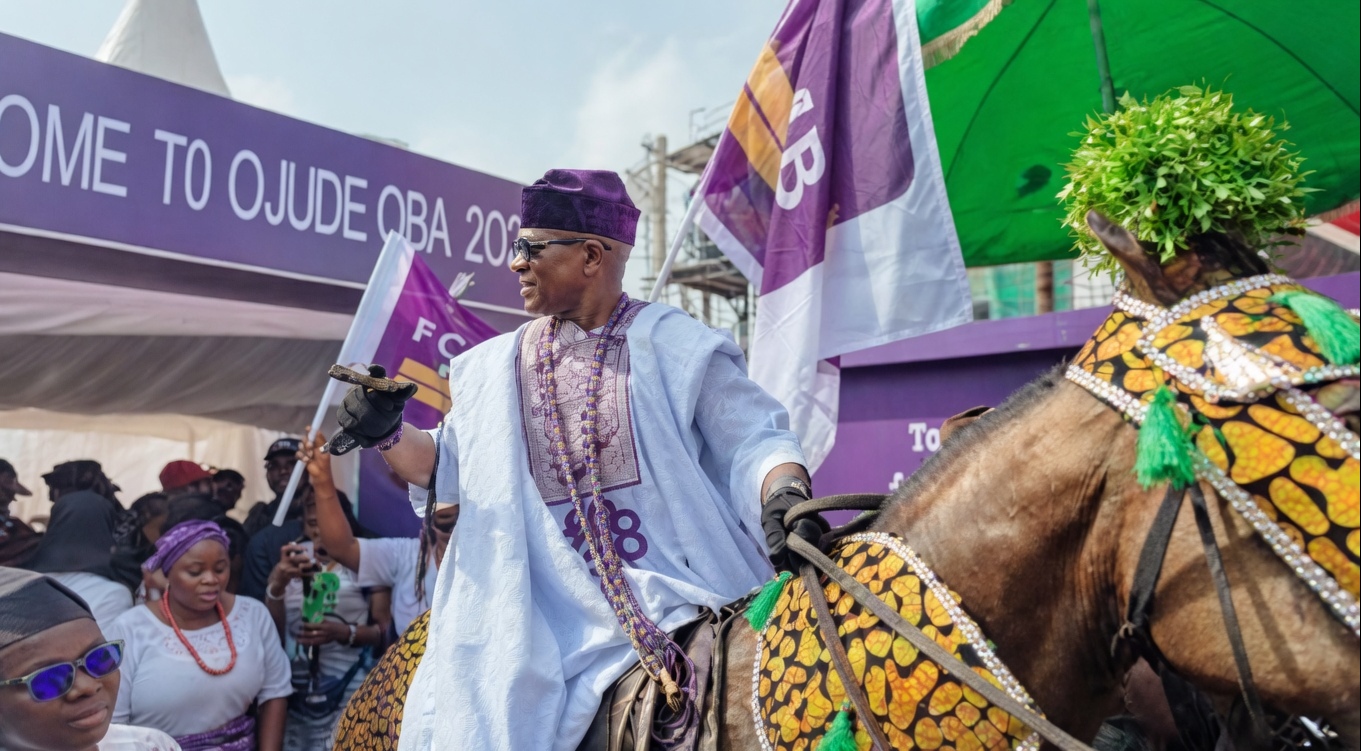
Every year, the ancient town of Ijebu-Ode in Ogun State, south-western Nigeria, transforms into something truly extraordinary. Tens of thousands of people descend on the palace forecourt of the Awujale, the paramount king of the Ijebu people, dressed in their finest fabrics, their most elaborate headwear, and their most fiercely proud expressions. This is Ojude Oba, which translates simply from Yoruba as "the King's Forecourt." But there is nothing simple about what unfolds there.
How It All Began
The roots of Ojude Oba are both fascinating and deeply human. Long before the festival took its current form, the Ijebu people held a celebration called the Ode Nla Festival, in which subjects would pay homage to the Awujale alongside worship of traditional deities such as Sango, Egungun, Osun, Ogun, and Yemule. It was a joyous, sacred tradition, but the world was about to change.
An Ancient Tale of The Argan Tree
In the 1800s, both Christianity and Islam were spreading into Ijebu-Ode. Christian missionaries baptised converts and insisted on monogamy, a condition that proved unacceptable to many wealthy Ijebu men, including the powerful Chief Balogun Kuku, who reportedly had more than thirty wives and hundreds of slaves under his household. He turned instead to Islam, which had no such restriction, and took many Ijebu people with him.
However, Islam discouraged participation in the Ode Nla Festival, with its traditional deity worship. Rather than simply walking away from the celebration entirely, Chief Kuku did something remarkable. He created a brand new event, a festival that allowed Muslim converts to honour the Awujale without conflicting with their faith. He called it the Ita-Oba Festival. It was later renamed Ojude Oba, and it has never looked back since.
What began as a modest gathering of early Muslim converts coming to thank the Awujale for his tolerance of their faith has, over the decades, grown into something vastly bigger. Christians, followers of traditional religion, and people of no religious affiliation at all now attend side by side. A festival born of religious transition became a celebration of unity, which, when you think about it, is quite a beautiful thing.
Regberegbe Takes the Stage
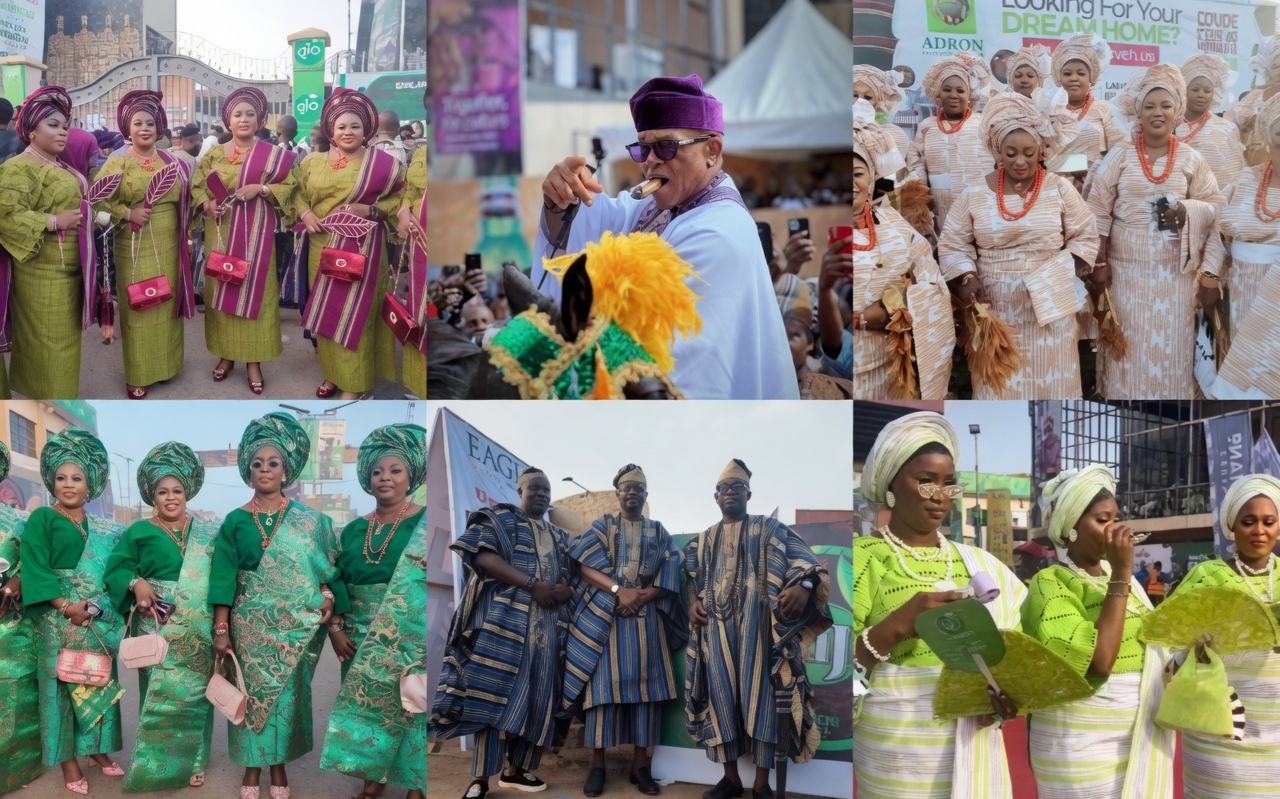
If there is one thing that defines the visual spectacle of Ojude Oba, it is the regberegbe. That is, the age-grade groups that parade before the Awujale in a riot of colour, coordination, and collective pride. These are social groups organised by generation, and each one has its own name, its own distinctive colours, and its own sense of identity.
The tradition of the regberegbe groups was formalised in the 18th century by Oba Adetona as a way of encouraging unity and development within Ijebu society. Each group saves and plans for the festival all year, sourcing matching fabrics, coordinating accessories, and rehearsing. On the day itself, they process before the king in a display that is part cultural salute, part fashion parade, and entirely unforgettable.
What makes this particularly special is the social levelling it creates. Fashion influencer Farooq Oreagba, widely known as Mr. Steeze, who has become a prominent face at the festival in recent years, has described Ojude Oba as a "leveller". A space where it does not matter whether you are rich or barely making ends meet. Within your age group, you dress the same, you march the same, and you celebrate the same. There is something almost radical about that.
The Horsemen
If the regberegbe groups provide the colour, the horsemen provide the thunder. Among the most dramatic moments of the entire festival is the equestrian parade of the Baloguns, descendants of the Ijebu warrior class, who ride into the festival arena dressed in full traditional battle regalia. We are talking about richly dyed agbadas, long flowing capes, coral bead necklaces, and elaborately embroidered caps or crowns that would not look out of place in a museum.
These riders choreograph their entrance to the beat of drums and the chanting of praise singers. Watching them is like watching history move. The Ijebu kingdom was once one of the most formidable in the region, and in these moments, you feel it. The equestrian display is not simply entertainment. It is a living archive, a declaration that the martial heritage and dignity of the Ijebu people have not been forgotten.
Yoruba Haute Couture at Its Finest
It would be a serious mistake to come to Ojude Oba underdressed. The festival has evolved into one of the most important fashion moments on the Nigerian cultural calendar, a living, breathing runway for Yoruba haute couture. Aso-oke, damask, lace, and embroidered brocade fabrics are draped and wrapped with extraordinary artistry. Gele headwraps are tied in sculptural formations. Fila hats for men come in every shade and style imaginable.
People plan their outfits months in advance. Tailors work overtime. Finally, on the day, the collective effect is absolutely jaw-dropping. The festival has attracted fashion influencers, photographers, and style journalists who come not just to observe but to document what is, without question, one of the most stunning displays of traditional African fashion anywhere on the continent.
Paying Homage to the Awujale
Beneath all the spectacle, Ojude Oba remains, at its heart, a ceremony of homage. The Awujale of Ijebuland receives his subjects with quiet dignity. Groups bow before him. Prayers are offered. Blessings are given in return.
Politicians, governors, and dignitaries also attend, knowing well that the Ijebu people are not to be taken lightly. The Ijebu are widely known for their business acumen, their education, and their strong communal bonds. When their king celebrates, they all celebrate, and they do not do anything by halves.
There is something profoundly moving about watching a monarch bless his people in the open air, surrounded by thousands who have come from across Nigeria and from the diaspora in the United Kingdom, the United States, and beyond. The Awujale does not just receive homage. He gives it back through prayers, through presence, through the affirmation that this community matters.
Why Ojude Oba Is Relevant Right Now
In a world increasingly anxious about cultural erosion, festivals like Ojude Oba carry a quiet but powerful message. Here is a celebration that has survived colonialism, religious transformation, urbanisation, and the pressures of modern life, and not just survived, but flourished. Each year, it gets bigger. Each year, more members of the diaspora make the journey home.
It also offers something increasingly rare in public life: a space where people of different religions, different social classes, and different generations come together without conflict. In Nigeria's complex social landscape, that is no small thing. As one governor noted at the 2025 festival, the celebration "showcases the rich cultural heritage, unity, and pride of Ijebuland." That is an understatement, but it points in the right direction.
If You Ever Get the Chance, Go
Ojude Oba is not a tourist trap. It is not packaged for outside consumption. It is a living, breathing tradition that belongs entirely to the Ijebu people. Hence, attending it feels like a genuine privilege. You will see things that no documentary can fully prepare you for. You will hear drums that seem to come from somewhere deep in the earth. You will watch horses dance, and old men weep with joy, and young women spin in fabrics so beautiful they seem to defy gravity.
Ijebu-Ode is approximately 90 kilometres from Lagos, close enough for a day trip, far enough to feel like a different world. The festival itself is free and open to all. What it asks in return is respect, presence, and the willingness to let yourself be moved.
If Africa has a soul, and it absolutely does, festivals like Ojude Oba are where you go to feel it.

Comments (0)
Please sign in to join the conversation.
Loading comments...