

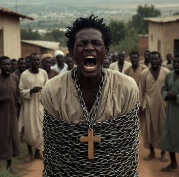
There is a quiet struggle many people carry in their hearts, especially in homes where faith shapes everything from what you wear to who you speak to and even how you think. Religion can be beautiful. It can give structure, community, hope, and a sense of identity. But when it becomes rigid and controlling, some begin to wonder: does a strict religious upbringing hinder personal freedom?
The answer is not simple. For some, strict faith based homes build discipline, character, and strong moral foundations. For others, the same structure feels like a cage they have to break out of in order to discover who they truly are.

In many families, religion is not just a belief system. It is the air the children breathe. Church or mosque attendance is not optional. Questions are often discouraged. Doubt can be interpreted as rebellion. Children grow up learning what is right and wrong, sometimes without being given room to explore why.
On the outside, these children may appear well behaved, respectful, and obedient. But internally, some of them are wrestling with confusion, guilt, or fear. They may be afraid of disappointing their parents. Afraid of divine punishment. Afraid of being labeled wayward. So they learn to suppress parts of themselves.
One young woman once shared that she grew up in a home where everything was sin. Watching certain movies was sin. Listening to secular music was sin. Having male friends was sin. By the time she got to university, she did not even know how to make simple choices without feeling anxious. “I felt like I had been programmed,” she said softly. “I did not know what I liked because I was never allowed to explore.”
That is where the conversation about freedom begins.
Personal freedom is not about abandoning values. It is about having the space to think, to question, to grow, and to make choices based on understanding rather than fear. When children are raised in environments where questioning is punished, they may grow into adults who either rebel completely or struggle with decision making.
Some rebel in extreme ways once they leave home. They try everything they were once forbidden from doing, sometimes recklessly. It is not always because they truly want those things. Sometimes it is simply because they never had the chance to choose for themselves.
Others go in the opposite direction. They remain outwardly compliant but inwardly conflicted. They may stay in careers, marriages, or lifestyles that make them unhappy because they were taught that personal desire is selfish. They may struggle with boundaries, unable to say no because obedience was deeply ingrained.
But it is important to pause here and be fair.
Strict religious upbringing does not automatically destroy freedom. For some, it builds resilience. Structure can provide safety. Clear moral lines can protect young people from harmful behaviors. Many adults look back with gratitude for the discipline and guidance they received. They say it kept them grounded when peer pressure was intense.
The real issue is not religion itself. It is rigidity without compassion.
When faith is taught with love, conversation, and understanding, it can coexist beautifully with personal freedom. A child who is allowed to ask hard questions about faith without being shamed often develops a deeper, more personal belief system. They follow because they understand, not because they are terrified.
Mental health experts often speak about autonomy, the ability to make independent choices, as a core part of emotional well being. When autonomy is consistently suppressed, anxiety and self doubt can grow. Imagine constantly second guessing your thoughts because you were told your natural curiosity was wrong. Imagine feeling guilty for having dreams that do not fit into your family’s religious expectations.
Some people raised in strict religious homes struggle with identity. They may ask themselves, “If I remove the rules, who am I?” That question can feel frightening. Without space to discover personal interests, values, and preferences, adulthood can feel like starting from zero.
There is also the issue of shame.
In some strict settings, mistakes are not treated as part of growth but as moral failures. A teenager who makes a normal error may be labeled rebellious or sinful. Instead of learning from the experience, they learn to hide. Hiding breeds secrecy. Secrecy breeds isolation.
And isolation can quietly damage mental health.
However, many parents who enforce strict religious standards do so from a place of love. They genuinely believe they are protecting their children’s souls and futures. They may have grown up in similar systems and see no harm in it. Sometimes, they are unaware of the emotional impact.
The challenge, then, is balance.
Can faith be firm without being suffocating? Can parents hold strong values while still allowing their children room to grow? Can young adults raised in strict homes learn to separate inherited beliefs from personal convictions?
The answer lies in conversation.
Families that create safe spaces for dialogue often raise individuals who feel both rooted and free. A child who can say, “I do not understand this teaching,” and be met with patience instead of anger is less likely to feel trapped. They learn that faith and thinking can coexist.
Personal freedom does not mean disrespecting culture or religion. It means having ownership over your choices. It means your “yes” and your “no” come from conviction rather than fear.
For adults who feel their strict upbringing limited them, healing often begins with self reflection. It may involve gently questioning beliefs. It may involve therapy. It may involve forgiving parents who did their best with what they knew. Growth does not always require rejection of faith. Sometimes it simply requires redefining it.
There is something powerful about choosing your beliefs as an adult. When faith is chosen rather than imposed, it becomes personal. It becomes alive.
And for parents reading this, it is worth asking: Are we raising children who obey us, or children who understand us? Are we teaching them what to think, or how to think?
The world is changing rapidly. Young people are exposed to ideas and cultures beyond what previous generations experienced. Trying to control every influence may no longer be realistic. Guiding them with wisdom while trusting them to develop their own moral compass might be the healthier path.
Strict religious upbringing can either be a strong foundation or a heavy weight. The difference often lies in how it is practiced. Love softens rules. Compassion opens doors. Dialogue builds trust.
At the heart of it all, every human being longs for two things: belonging and freedom. Religion can provide belonging. But without room to breathe, that belonging may feel conditional.
Perhaps the better question is not whether strict religious upbringing hinders personal freedom, but whether we are willing to evolve how we teach faith. Can we move from control to guidance? From fear to understanding?
When faith is wrapped in empathy, it does not imprison. It empowers. It becomes a choice that strengthens identity rather than erasing it.



Comments (0)
Please sign in to join the conversation.
Loading comments...