


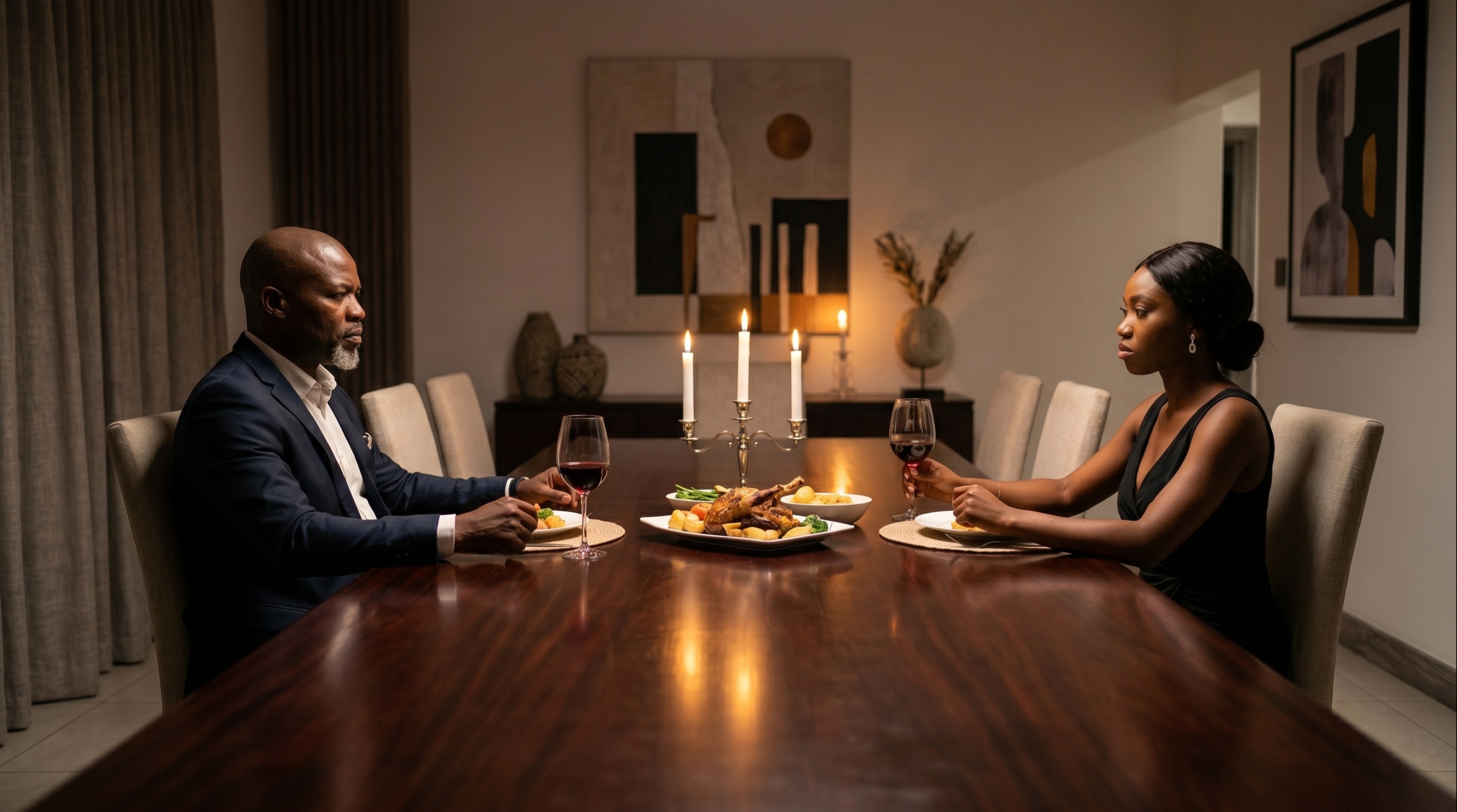
Hassan stood by the window the night his wife, Amina, brought up the budget again, his arms folded, his jaw set, his eyes fixed on nothing in particular outside. Amina had asked him three times that week why money kept disappearing from their joint savings, and three times he had answered with a shrug, a half-sentence, or silence dressed up as calm.

She wasn’t even angry, not really, just tired and a little scared, the way anyone gets when they sense a conversation slipping away from them before it even starts. “Talk to me,” she said softly, and Hassan turned, looked at her, and said, “There’s nothing to talk about. I’m fine.”
He wasn’t lying, not exactly. He genuinely believed he was fine.
That belief was the problem.
What Amina was living through is what psychologists call dismissive avoidant — someone who learned, often very early in life, that needs are inconvenient, that emotions are messy, and that the safest way to survive closeness is to need it as little as possible.
This is a survival strategy, built in childhood, that worked once and now runs on autopilot inside an adult marriage where it does far more harm than good.
A dismissive avoidant partner does not withdraw because they don’t love you. They withdraw because closeness, especially during conflict, feels like danger their body remembers even when their mind has forgotten why.
Amina’s mother, Hauwa, had been married for 31 years, and when her daughter called her crying one evening, she asked a question that reframed the whole situation: “When Hassan goes quiet, where do you think his mind goes?”
Amina hadn’t considered that his silence was an answer rather than an absence of one.
For someone with a dismissive avoidant pattern, conflict doesn’t register as “we need to solve this together.” It registers as “I am about to be overwhelmed, criticised, or trapped, and the fastest way out is to stop engaging.”
Several things tend to be happening underneath that stillness, and naming them matters:
Their nervous system genuinely floods faster than their partner’s during emotional confrontation, even when nothing about the conversation is objectively hostile.
Many were raised in homes where emotional expression was discouraged in favour of composure, respect, and “handling your business quietly.” They equate vulnerability with weakness, so admitting “this conversation scares me” feels more dangerous than the conflict itself.
They’ve learned, sometimes from watching their own parents’ marriages, that bringing up problems leads nowhere good, so they preemptively opt out.
And underneath all of it sits a quiet, persistent fear: that if they let someone fully in during a hard moment, that person will eventually see too much and leave anyway.
The dismissive avoidant partner’s withdrawal often leaves the other person carrying the entire emotional weight of the relationship alone, repeating themselves, escalating just to get a reaction, or eventually going quiet too, not out of peace but out of defeat.
This is where many marriages quietly erode, not through one explosive fight but through years of conversations that never finish, needs that never get named, and a growing sense that one partner is solving problems for two people.
Things began changing for Hassan and Amina because she changed her approach entirely, with guidance from a counsellor they eventually saw together.
Here’s what made the difference, and what we’d encourage any couple to try.
Stop chasing the withdrawal. The instinct to follow a partner who’s pulling away, to demand engagement in the heat of the moment, almost always backfires, because it confirms their fear that conflict equals being cornered.
Give the conversation a pause with a promise attached, something like “Let’s come back to this in 20 minutes. I’m not letting it go; I just want us both calmer.”
Build small moments of emotional practice into ordinary days so vulnerability becomes familiar rather than only appearing during crisis.
Avoid framing disagreements as character attacks; “you always shut down” lands very differently than “I notice you go quiet, and I want to understand what’s happening for you in that moment.”
And critically, the avoidant partner has work to do recognising that stillness is not neutrality, that a marriage cannot be solved by one person doing all the reaching.
Conflict in marriage is meant to be evidence that two people care enough to stay in the room, even when the room feels uncomfortable.
That’s the real, unglamorous, achievable version of love, and not a partner who never withdraws, but two people willing to keep walking back toward each other, one honest conversation at a time.
Excerpt: Hassan goes quiet during every disagreement, and his wife Amina mistakes it for indifference. It isn’t. This is the honest story of dismissive avoidant partners in marriage — why withdrawal happens, how it wounds the other partner, and the practical, judgment-free path couples and parents can take toward real, lasting closeness.


Comments (0)
Please sign in to join the conversation.
Loading comments...