

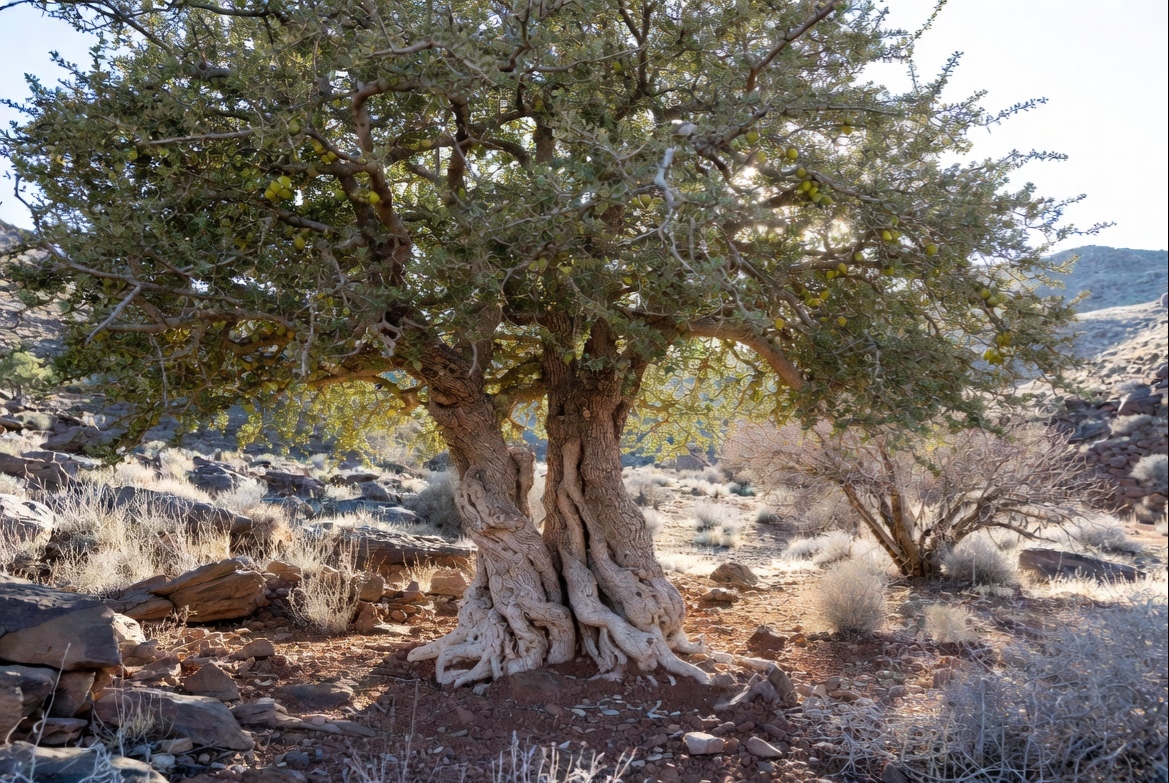
Some trees give shade. Others give fruit. Then there is the argan tree, a living wonder that gives medicine, beauty, food, livelihoods, and even hope to an entire region. Most people have heard of argan oil. Few people truly understand where it comes from, what it does, or why losing it would be one of the quietest catastrophes on earth.
Every year on the 10th of May, the United Nations observes the International Day of Argania, a day dedicated to celebrating and protecting Argania spinosa, the argan tree. That's how important the tree is. It might sound like a niche observance, but the story behind it is anything but small.
A Tree That Has Survived for Millions of Years
The argan tree has been rooted in Moroccan soil for tens of millions of years. It grows almost exclusively in the south-western part of Morocco, in a region so unique that UNESCO designated it a Biosphere Reserve as far back as 1998. In 2014, the traditional knowledge surrounding the argan tree was inscribed on UNESCO's Representative List of the Intangible Cultural Heritage of Humanity. Thus, placing it alongside flamenco dancing and the Mediterranean diet as something the world must not lose.
Dancing Between Cultural Expectations And Personal Boundaries
What makes this tree so remarkable is its sheer toughness. It thrives in soils where almost nothing else will grow. It endures temperatures of up to 50 degrees Celsius. Its deep, searching roots push through cracked, dry earth to find water, and in doing so, they hold the soil together, prevent erosion, and push back against desertification. In a world where climate change is turning fertile land to dust at an alarming rate, the argan tree is, quite literally, holding the ground.
Liquid Gold and Why That Phrase Is Actually Earned
Argan oil has been called "liquid gold" so often that the phrase risks becoming a cliché. But when you understand what goes into producing even a single bottle of it, the description starts to feel entirely fair.
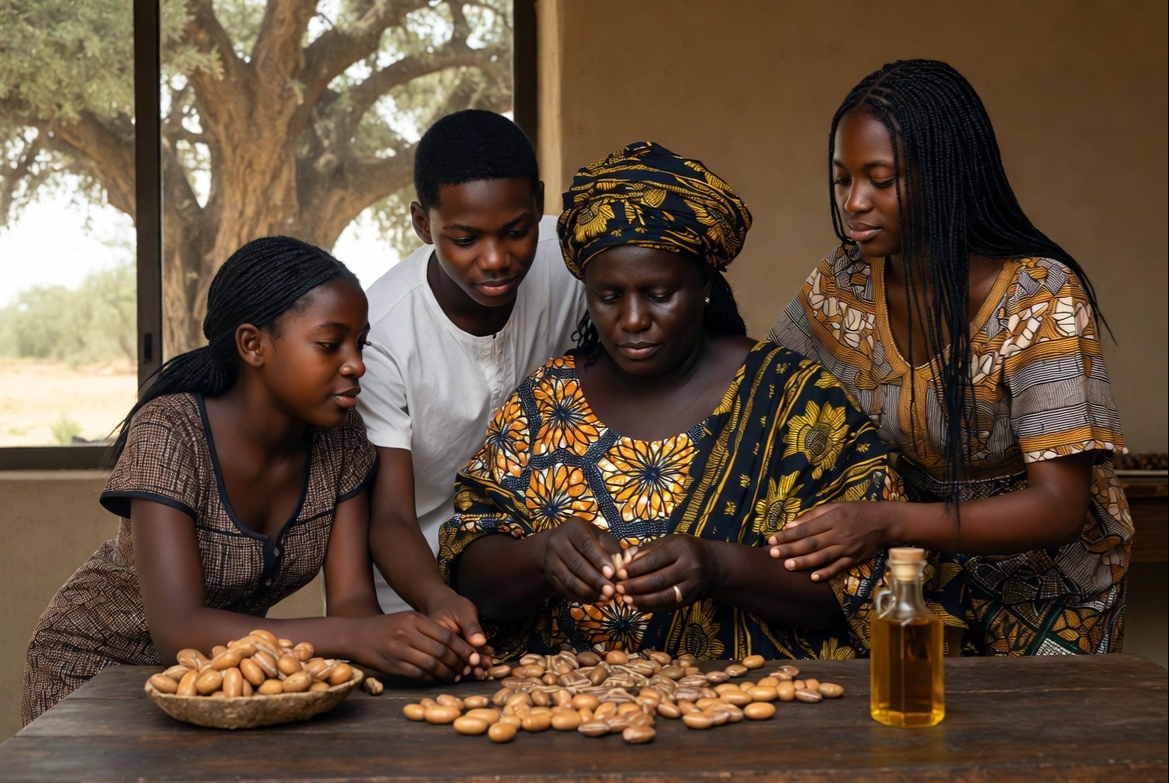
The oil is extracted from the kernels inside the hard nuts of the argan fruit. Traditionally, Berber women, the indigenous Amazigh communities of Morocco, have cracked these nuts by hand, removed the kernels, cold-pressed them, and produced an oil so rich in nutrients that it has sustained communities for centuries. Today, women's cooperatives across Morocco continue this work, and the industry provides vital income to thousands of rural families. The UN Food and Agriculture Organisation has noted that argan production is one of the most powerful economic tools available to rural women in the region, supporting their financial independence and strengthening entire communities.
Morocco is, by a significant margin, the world's leading exporter of argan oil. Also, demand has surged dramatically since the early 2000s, when the global beauty industry discovered what Moroccan women had known all along.
What Argan Oil Actually Does for Your Skin
There is no shortage of beauty ingredients that make grand promises. Argan oil is different because science has largely kept pace with tradition. The oil is packed with vitamin E, oleic acid, linoleic acid, polyphenols, and antioxidants. A combination that makes it genuinely useful for the skin, not just commercially appealing.
It is deeply hydrating. The fatty acids in argan oil strengthen the skin's natural barrier, locking in moisture and leaving skin softer without clogging pores, which makes it suitable even for people with oily or combination skin. Applied regularly, it can improve the skin's elasticity, reduce the appearance of fine lines, and help the complexion look more even and radiant.
Its anti-inflammatory properties are well documented. People dealing with eczema, acne, or general irritation have found genuine relief from its use. Research has shown that argan oil can soothe sunburned skin, help manage the symptoms of psoriasis, and even support healthier nail strength after only a few applications.
Perhaps most impressively, studies have found that argan oil improves skin elasticity in post-menopausal women. A finding that speaks to how deeply nourishing it is at a biological level, not just on the surface.
What It Does for Your Hair
The hair benefits of argan oil are equally well-established. Rich in vitamin E and essential fatty acids, it penetrates the hair shaft rather than simply sitting on top of it. This means it strengthens hair from within, reducing breakage, taming split ends, and protecting against the kind of damage that comes from heat styling and chemical treatments.
A study published as far back as 2013 found that argan oil measurably improved the condition of intensely coloured or dyed hair. For people dealing with frizz, dryness, or a troubled scalp, it works as a natural alternative to many of the silicone-heavy serums on the market. Therefore, calming irritation, reducing dandruff, and encouraging healthier growth, all without synthetic chemicals.
Other Health Benefits You May Not Know About
Argan oil has not only been used cosmetically; it has been a cooking staple in Morocco for generations. It carries a subtle, nutty flavour that works beautifully drizzled over couscous, bread, or salads. And the health benefits of eating it are just as compelling as the skin benefits of applying it.
The oil is high in unsaturated fatty acids, which are associated with good cardiovascular health. Early research suggests it may help with blood sugar regulation and has antioxidant effects that benefit overall health. Studies have also found that it promotes the growth of beneficial gut bacteria while reducing harmful ones, supporting digestion and maintaining a healthier gut environment.
The Environmental Case for Protecting the Argan Tree
Here is something the beauty industry does not often mention. Every time an argan forest disappears, a community loses its livelihood, a patch of land edges closer to becoming desert, and the planet loses a tiny but meaningful defence against climate change.
The argan tree ecosystem, known as the arganerie, is irreplaceable. It supports a specific biodiversity that exists nowhere else on earth. Its root systems retain water in parched soil, stabilise land against erosion, and create conditions that allow other plants, animals, and insects to flourish. When the trees are gone, the land they held together often becomes barren within a generation.
The United Nations recognised this urgency when it proclaimed the 10th of May as the International Day of Argania in 2021. The resolution was submitted by Morocco and co-sponsored by 113 member states, a signal that the international community understands what is at stake. The Day exists not just to celebrate the tree, but to catalyse cooperation, protect the arganerie, and ensure that future generations inherit both the tree and the knowledge surrounding it.
Why This Matters to All of Us
You do not have to live in Morocco to have a stake in the survival of the argan tree. If you use argan oil, whether in a serum, a shampoo, or your kitchen, you are connected to this ecosystem and to the women who tend it.
Choosing products that use sustainably harvested argan oil, and looking for those linked to fair-trade cooperatives, is one of the most direct ways any consumer anywhere in the world can support both the tree and the communities that depend on it.
The argan tree has survived millions of years. It has weathered harsh climates, poor soils, and blistering heat without complaint. The one thing it cannot weather alone is human neglect.



Comments (0)
Please sign in to join the conversation.
Loading comments...