

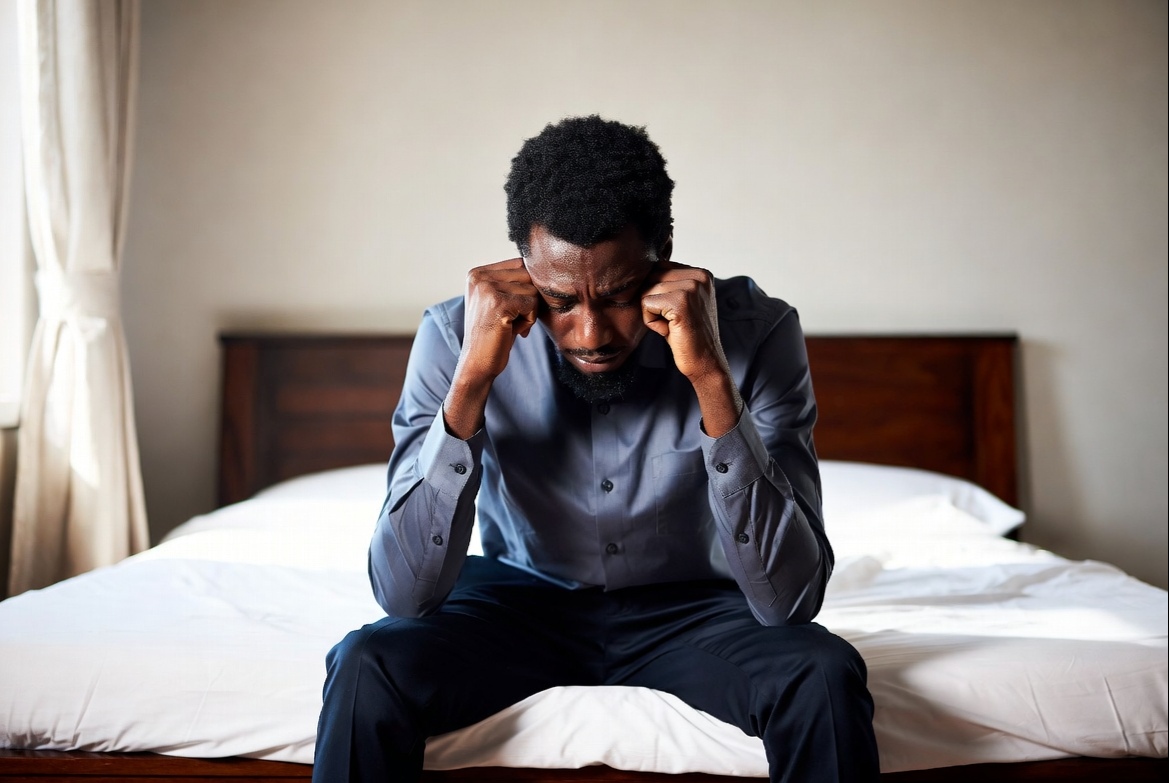
Most conversations about cheating focus on the relationship, the arguments, the aftermath, the question of whether to stay or leave. But there is something far more personal being destroyed in the middle of all of that.

Something that doesn't make it into the arguments or the tearful confrontations. When you cheat on someone, you do not just betray the relationship. You do something far more intimate and far more damaging: you alter the way they see themselves. Here is what that really looks like.
They Start to Question Their Own Judgement About Everything
Before they found out, they trusted themselves. They trusted their instincts, their gut feelings, their read on situations. Now? That trust is gone. If they couldn't see that the person closest to them was living a double life, what else have they missed? What else are they wrong about?
The Price You Pay for Taking a Paternity Test
This goes far beyond the relationship. People who have been cheated on often describe second-guessing themselves at work, in friendships, in everyday decisions. The internal compass they relied on feels broken. The cruellest part is that it was never broken to begin with; they were simply lied to by someone they had every reason to trust.
They Begin to Feel Fundamentally Unlovable
The logic is painful, but it is very human. If the person who promised to love them chose someone else, repeatedly and deliberately, then there must be something wrong with them. Something lacking. Something that makes them not quite enough.
This is not rational, but grief rarely is. The feeling of being replaced is one of the most crushing blows a person can experience. It whispers the lie that they were never truly wanted in the first place; that they were simply convenient, or comfortable, but not truly loved. That lie, left unchallenged, can settle into the bones and stay there for years.
Their Body Becomes a Source of Shame
Almost inevitably, the person who has been cheated on starts comparing themselves to the affair partner. Am I thinner? Am I more attractive? Are they younger? More exciting? More confident? The mirror becomes a place of interrogation rather than familiarity.
Even people who have never struggled with body image can find themselves suddenly, acutely aware of every perceived flaw. It happens because the brain, searching desperately for an explanation, often lands on the most visible and personal one: the body. This is one of the most heartbreaking side effects of infidelity. In that, a person who was comfortable in their own skin is suddenly a stranger to themselves.
They Lose Their Sense of Safety in Intimacy
Intimacy, real intimacy, requires vulnerability. It asks you to lower your walls, show your softest parts, and trust that you won't be punished for doing so. Cheating shatters that completely. Suddenly, opening up feels genuinely dangerous. Loving someone fully feels like handing them a weapon.
The result is that many people who have been cheated on develop a kind of emotional armour. They keep new partners at a slight distance. They struggle to be fully present because part of them is always on guard, scanning for signs, bracing for the worst. Their self-esteem as a partner, their confidence in their ability to be loved without conditions, is deeply shaken.
They Start to Shrink Themselves Replaying the Past
One of the most common responses to being cheated on is obsessive retrospection. They go back through every memory; every holiday, quiet evening, moment of closeness, and begin to rewrite it. Were you with them then? Was that a lie too? Was any of it real?
This endless replaying is exhausting and corrosive. It robs them of good memories. It makes them feel foolish for having been happy. Crucially, it chips away at their confidence in their own perceptions of reality, a form of unintentional gaslighting that continues long after the relationship ends.
They Stop Believing They Deserve Better
This is perhaps the most quietly devastating effect. Instead of anger, many people who are cheated on turn the blame inward. They begin to believe, on some deep, half-conscious level, that this is simply what they deserve. That they are not the kind of person who gets to be treated well.
Left unchecked, this belief system draws them towards relationships that confirm it. They tolerate less, expect less, and accept behaviour that would once have been unthinkable. The cheat didn't just hurt them once; the cheat set a new, lower standard for how they expect to be treated.
Their Social Confidence Takes a Hit Too
It is easy to assume the damage stays within the romantic sphere. However, self-esteem doesn't work in neat compartments. When someone's core sense of worth is shaken, it radiates outward. They may become quieter in social settings, more self-conscious, quicker to assume they are unwelcome or unimpressive.
They might withdraw from friendships, particularly those connected to the relationship. They might stop pursuing opportunities at work and even in social circles because a part of them now doubts whether they are good enough. The infidelity, which happened in private, begins to reshape their public life in ways that are subtle but significant.
They Struggle to Trust Their Own Emotions
After being cheated on, many people describe feeling emotionally confused, not just about the relationship, but about their own inner life. Were their feelings of happiness real, or were they built on a lie? Is their current sadness valid, or are they being dramatic? Should they be angrier? Less angry?
This disconnection from their own emotional responses is a direct product of betrayal trauma. Their emotional world was built, in part, around a relationship that turned out to be a fabrication. Rebuilding confidence in their own feelings, trusting that what they feel is real and valid, becomes a long, slow process.
They May Develop Anxiety or Depression and Not Connect the Two
Betrayal trauma is a recognised psychological response to infidelity, and its symptoms overlap significantly with anxiety and post-traumatic stress. Difficulty sleeping. Intrusive thoughts. Hypervigilance. A constant, low-level sense of dread. Yet, many people don't connect these symptoms to the affair, especially if time has passed.
They chalk it up to being "not a relationship person" or simply "a worrier". They don't realise that their nervous system is still responding to a wound that was never properly addressed. Their mental health deteriorates, and the root cause, the destruction of their self-worth at the hands of someone they trusted, goes unnamed.
They Have to Rebuild an Entire Identity, Piece by Piece
For many people, their sense of self was woven into the relationship. They were someone's partner. Someone's person. Someone chosen and valued. When that is taken away through betrayal, a part of their identity collapses with it.
Rebuilding isn't just about getting over it. It is the slow, painstaking work of reconstructing self-worth from scratch, figuring out who they are outside of that relationship, learning to trust themselves again, and finding their way back to believing that they are worthy of genuine and faithful love. It is possible. However, it takes time, courage, and, often, professional support to get there.
A Final Word
Cheating is never just a mistake made in isolation. It sends shockwaves through another person's entire sense of self, their confidence, their emotional security, their identity, and their ability to love freely in the future. The relationship may end, the tears may dry, and life will eventually move on. But the inner work required to undo the damage to someone's self-esteem? That is a longer journey than most people realise.
If you are the one who has been betrayed, please know this. The story you are telling yourself, that you weren't enough, were foolish, or don't deserve better, is not the truth. It is the wreckage of someone else's choices being laid at your door. You are allowed to set it down.
So, if you are reading this as the one who cheated, or who is considering it, let this be a window into what is actually at stake. Not just the relationship. The person.


Comments (0)
Please sign in to join the conversation.
Loading comments...